Sioux City staff outline lead/copper replacement pilot; council debates who pays
January 17, 2026 | Sioux City, Woodbury County, Iowa
This article was created by AI summarizing key points discussed. AI makes mistakes, so for full details and context, please refer to the video of the full meeting. Please report any errors so we can fix them. Report an error »
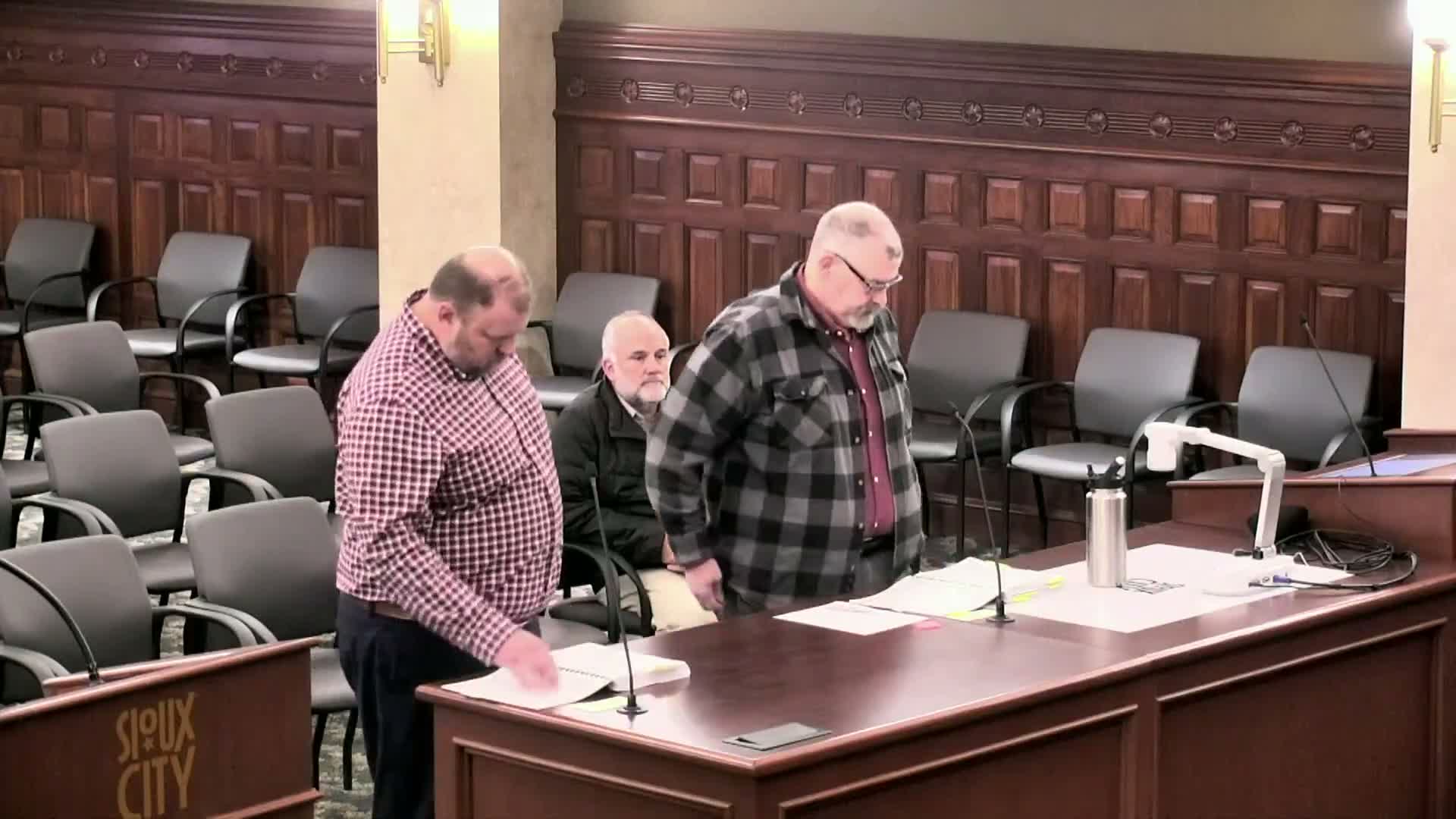
Water Department staff described a proposed lead‑service‑line program for fiscal year 2027 that would investigate up to 250 service connections to determine lead presence and replace about 100 known or likely lead lines in the first year. Brad Pitts and other staff noted that under the agency’s current planning assumptions the SRF (State Revolving Fund) intended‑use plan shows roughly a 49% forgiveness portion and 51% borrower responsibility; staff said these splits and eligibility rules mean a program design decision is required about how to allocate the borrower share.
Questions from council focused on how the first 100 properties would be selected, whether homeowners would be billed directly or if the city would pay the non‑forgiven portion, and whether the cost burden would shift to ratepayers. Pitts said that the program administration and many rule details remain to be clarified and recommended not moving forward to full implementation until council decides how to handle the borrower share and eligibility rules.
Council members raised equity concerns: several said low‑income homeowners are most likely to have lead service lines and would have difficulty paying a homeowner share; others proposed competitive flat‑price procurement or negotiated contractor rates to lower homeowner exposure. Staff agreed to return with options enumerating possible cost allocations (homeowner share, city-funded share, rate impacts, or a mixture), and with an implementation timeline that reflects SRF rules and the January 2027 regulatory start date.
Questions from council focused on how the first 100 properties would be selected, whether homeowners would be billed directly or if the city would pay the non‑forgiven portion, and whether the cost burden would shift to ratepayers. Pitts said that the program administration and many rule details remain to be clarified and recommended not moving forward to full implementation until council decides how to handle the borrower share and eligibility rules.
Council members raised equity concerns: several said low‑income homeowners are most likely to have lead service lines and would have difficulty paying a homeowner share; others proposed competitive flat‑price procurement or negotiated contractor rates to lower homeowner exposure. Staff agreed to return with options enumerating possible cost allocations (homeowner share, city-funded share, rate impacts, or a mixture), and with an implementation timeline that reflects SRF rules and the January 2027 regulatory start date.
Don't Miss a Word: See the Full Meeting!
Go beyond summaries. Unlock every video, transcript, and key insight with a Founder Membership.
✓
Get instant access to full meeting videos
✓
Search and clip any phrase from complete transcripts
✓
Receive AI-powered summaries & custom alerts
✓
Enjoy lifetime, unrestricted access to government data
30-day money-back guarantee
