State Board proposes framework to decide when schools are "small by necessity" for Act 73 funding
January 17, 2026 | Education, HOUSE OF REPRESENTATIVES, Committees, Legislative , Vermont
This article was created by AI summarizing key points discussed. AI makes mistakes, so for full details and context, please refer to the video of the full meeting. Please report any errors so we can fix them. Report an error »
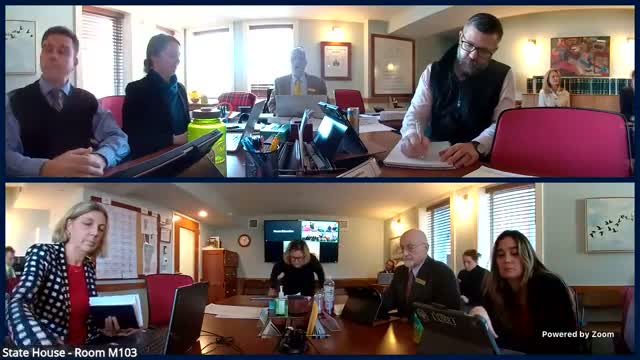
Tammy Colby, who led the State Board special committee, presented the board's recommendations to the House Education Committee on Jan. 16 as part of the board's assignment under Act 73 Section 37.
Colby said the board’s approach does not change statutory size thresholds — "a small school is one that’s less than 100 students and a school located in a sparsely populated area is less than 55 persons per square mile" — but recommends a framework to determine when small or sparse status is driven by geography or isolation (and therefore qualifies for additional funding) versus local policy choices or organizational decisions.
Key proposed criteria: The committee recommended that a school be considered "small by necessity" if one or more of these conditions apply: average one-way travel times exceeding 45 minutes for pre-K–6 or 60 minutes for grades 7–12 (or roughly 10–15 road miles, depending on terrain); transportation hazards such as winter-impassable roads certified by the supervisory union or Agency of Education (AOE); lack of nearby school capacity without major capital investment; demographic projections showing persistent low enrollment; or if closure or consolidation would substantially raise district costs or reduce program access for students with disabilities.
Operational and implementation points: Colby recommended that the AOE be responsible for annual determinations, that documentation and timelines be specified in rule and placed in Educational Quality Standards (EQS), and that determinations be timed so districts know eligibility before budget adoption. She emphasized the committee intentionally provided a framework rather than statutory language and offered the board’s assistance in drafting bill or rule text.
Questions from lawmakers focused on measurement choices (averages vs. absolutes for travel time), whether travel time counts pickup and transfer time (Colby said travel time should begin when the child becomes the district’s responsibility), how tuitioning or nonpublic-school costs figure into closure-cost calculations, and whether EQS includes an appeal process (Colby and Samuelson said public schools currently lack a statutory appeal; independent schools have an appeal path under cited statute).
Next steps: The State Board shared a memo, data exhibits (including school proximity data), and an appendix on other states' practices; the committee said it would review the materials and consider statutory language and jurisdictional fit in advance of budgeting timelines.
Colby said the board’s approach does not change statutory size thresholds — "a small school is one that’s less than 100 students and a school located in a sparsely populated area is less than 55 persons per square mile" — but recommends a framework to determine when small or sparse status is driven by geography or isolation (and therefore qualifies for additional funding) versus local policy choices or organizational decisions.
Key proposed criteria: The committee recommended that a school be considered "small by necessity" if one or more of these conditions apply: average one-way travel times exceeding 45 minutes for pre-K–6 or 60 minutes for grades 7–12 (or roughly 10–15 road miles, depending on terrain); transportation hazards such as winter-impassable roads certified by the supervisory union or Agency of Education (AOE); lack of nearby school capacity without major capital investment; demographic projections showing persistent low enrollment; or if closure or consolidation would substantially raise district costs or reduce program access for students with disabilities.
Operational and implementation points: Colby recommended that the AOE be responsible for annual determinations, that documentation and timelines be specified in rule and placed in Educational Quality Standards (EQS), and that determinations be timed so districts know eligibility before budget adoption. She emphasized the committee intentionally provided a framework rather than statutory language and offered the board’s assistance in drafting bill or rule text.
Questions from lawmakers focused on measurement choices (averages vs. absolutes for travel time), whether travel time counts pickup and transfer time (Colby said travel time should begin when the child becomes the district’s responsibility), how tuitioning or nonpublic-school costs figure into closure-cost calculations, and whether EQS includes an appeal process (Colby and Samuelson said public schools currently lack a statutory appeal; independent schools have an appeal path under cited statute).
Next steps: The State Board shared a memo, data exhibits (including school proximity data), and an appendix on other states' practices; the committee said it would review the materials and consider statutory language and jurisdictional fit in advance of budgeting timelines.
View the Full Meeting & All Its Details
This article offers just a summary. Unlock complete video, transcripts, and insights as a Founder Member.
✓
Watch full, unedited meeting videos
✓
Search every word spoken in unlimited transcripts
✓
AI summaries & real-time alerts (all government levels)
✓
Permanent access to expanding government content
30-day money-back guarantee
