VLCT tells House committee municipalities need authority, resources and education to manage short‑term rental safety
January 16, 2026 | General & Housing, HOUSE OF REPRESENTATIVES, Committees, Legislative , Vermont
This article was created by AI summarizing key points discussed. AI makes mistakes, so for full details and context, please refer to the video of the full meeting. Please report any errors so we can fix them. Report an error »
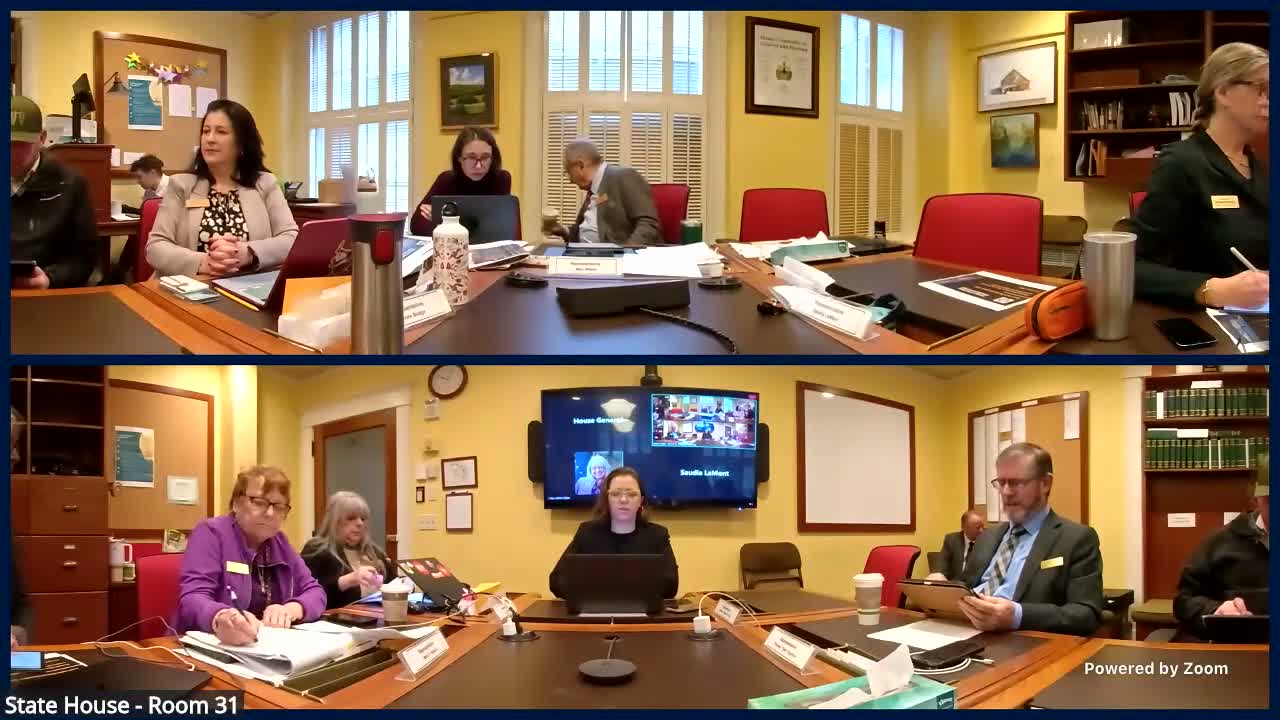
Samantha Chan, municipal policy and advocacy specialist with the Vermont League of Cities and Towns, testified to the House General and Housing Committee on Jan. 15 about local regulatory authority, enforcement tools and municipal capacity.
Chan told the committee that municipalities in Vermont have broad regulatory authority under state law and may adopt municipal plans, bylaws and ordinances to require inspections, set fees and enforce local standards. She said there are 247 municipalities in Vermont; about 200 have municipal plans, and roughly 142 are what the VLCT calls "10‑acre towns" that have adopted zoning and bylaws. Chan explained that municipalities may adopt enhanced local codes but must follow prescribed public processes, including public notice, regional planning commission review and, where required, Department of Housing and Community Development review.
On short‑term rentals and inspection policy, Chan said local officials generally favor education, outreach and local enforcement capacity. "Municipal permit professionals would say they're like permit educators," she said, describing municipal staff as working to help builders and homeowners comply before inspections. She urged that if towns are asked to regulate and enforce new standards, they must receive commensurate administrative and financial capacity to execute timely permit and inspection functions.
Chan also reviewed statutory preemptions that limit municipal regulation for certain activities; she said state law currently preempts some matters such as cannabis and certain renewable energy siting, and that other uses (emergency shelters, hospitals, places of worship) receive limited local regulation. She noted recent legislative changes requiring municipalities to allow duplexes and accessory dwelling units up to specified sizes in certain zones.
Why it matters: Chan framed the issue as one of matching authority with resources. VLCT supports local authority to protect health and safety, including local short‑term rental ordinances, but she cautioned that local regulation requires public process and administrative capacity to implement fairly and consistently.
The committee paused Chan’s testimony for scheduling and planned to invite her back to continue discussion of form‑based code and Act 250 exemption processes. No formal vote or action was taken during this portion of the hearing.
Chan told the committee that municipalities in Vermont have broad regulatory authority under state law and may adopt municipal plans, bylaws and ordinances to require inspections, set fees and enforce local standards. She said there are 247 municipalities in Vermont; about 200 have municipal plans, and roughly 142 are what the VLCT calls "10‑acre towns" that have adopted zoning and bylaws. Chan explained that municipalities may adopt enhanced local codes but must follow prescribed public processes, including public notice, regional planning commission review and, where required, Department of Housing and Community Development review.
On short‑term rentals and inspection policy, Chan said local officials generally favor education, outreach and local enforcement capacity. "Municipal permit professionals would say they're like permit educators," she said, describing municipal staff as working to help builders and homeowners comply before inspections. She urged that if towns are asked to regulate and enforce new standards, they must receive commensurate administrative and financial capacity to execute timely permit and inspection functions.
Chan also reviewed statutory preemptions that limit municipal regulation for certain activities; she said state law currently preempts some matters such as cannabis and certain renewable energy siting, and that other uses (emergency shelters, hospitals, places of worship) receive limited local regulation. She noted recent legislative changes requiring municipalities to allow duplexes and accessory dwelling units up to specified sizes in certain zones.
Why it matters: Chan framed the issue as one of matching authority with resources. VLCT supports local authority to protect health and safety, including local short‑term rental ordinances, but she cautioned that local regulation requires public process and administrative capacity to implement fairly and consistently.
The committee paused Chan’s testimony for scheduling and planned to invite her back to continue discussion of form‑based code and Act 250 exemption processes. No formal vote or action was taken during this portion of the hearing.
Don't Miss a Word: See the Full Meeting!
Go beyond summaries. Unlock every video, transcript, and key insight with a Founder Membership.
✓
Get instant access to full meeting videos
✓
Search and clip any phrase from complete transcripts
✓
Receive AI-powered summaries & custom alerts
✓
Enjoy lifetime, unrestricted access to government data
30-day money-back guarantee
