House Education members press for data, warn communities could lose local school identity under Act 73 plans
January 16, 2026 | Education, HOUSE OF REPRESENTATIVES, Committees, Legislative , Vermont
This article was created by AI summarizing key points discussed. AI makes mistakes, so for full details and context, please refer to the video of the full meeting. Please report any errors so we can fix them. Report an error »
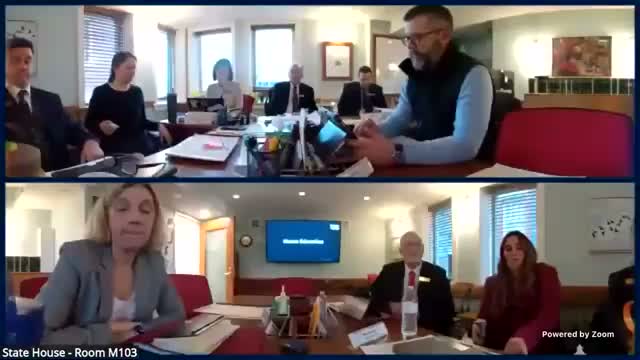
Members of the House Education committee held a brief, post-testimony discussion on Jan. 15 focused on implementing Act 73 and what information the committee needs before taking further steps. Committee members emphasized requests for concrete data, cost modeling and clearer priority-setting among the criteria listed in Act 73.
The session did not include any formal motions or votes. Instead, members debated how to balance a state-level approach to funding and district structure with local concerns about school closures and civic identity.
"It's on the back of taxpayers," Unidentified Speaker 2, a House Education committee member, said when the group discussed whether implementation costs would be borne locally or statewide. Several members pressed for clarity on which costs would be covered by state-level implementation and which would fall to towns and taxpayers.
Unidentified Speaker 4 urged the committee to "dig deeper into that list of criteria that's in Act 73," saying priorities were not assigned when the criteria were first created and some items may conflict. Members agreed the committee should identify core principles to guide redistricting and weighting of criteria before final decisions are made.
Members also raised concerns that consolidating governance into larger districts could leave small towns feeling underrepresented. "When you're representing 8,000 students, one in a tiny little town doesn't feel very much," Unidentified Speaker 2 said, summarizing the fear voiced by multiple participants about larger board sizes and the distance between representatives and local communities.
Others urged the committee to gather examples of communities that have consolidated schools yet preserved a sense of community. Unidentified Speaker 6 described Grand Isle County, where small island schools and closures did not eliminate local identity: "...they still have a sense of community in the little schools," he said, offering it as a case study for how communities adapt.
Unidentified Speaker 1 reminded the committee that a prior Commission on the Future of Public Education recommended not strictly adhering to the 4,000–8,000 student limits, and suggested the group consider that recommendation when weighing district-size proposals.
Members also flagged practical tools: one member noted a mapping tool could overlay proposed hybrid maps and count how many existing districts would merge under a given plan. Multiple members said they want staff to return with targeted modeling and cost estimates before the committee advances any specific redistricting recommendation.
Next steps, as discussed in the session, include asking staff for targeted data and models, a prioritized review of the Act 73 criteria, and outreach or invited testimony from communities that have undergone consolidation so members can better understand how local identity was preserved. The committee adjourned without taking formal action.
The session did not include any formal motions or votes. Instead, members debated how to balance a state-level approach to funding and district structure with local concerns about school closures and civic identity.
"It's on the back of taxpayers," Unidentified Speaker 2, a House Education committee member, said when the group discussed whether implementation costs would be borne locally or statewide. Several members pressed for clarity on which costs would be covered by state-level implementation and which would fall to towns and taxpayers.
Unidentified Speaker 4 urged the committee to "dig deeper into that list of criteria that's in Act 73," saying priorities were not assigned when the criteria were first created and some items may conflict. Members agreed the committee should identify core principles to guide redistricting and weighting of criteria before final decisions are made.
Members also raised concerns that consolidating governance into larger districts could leave small towns feeling underrepresented. "When you're representing 8,000 students, one in a tiny little town doesn't feel very much," Unidentified Speaker 2 said, summarizing the fear voiced by multiple participants about larger board sizes and the distance between representatives and local communities.
Others urged the committee to gather examples of communities that have consolidated schools yet preserved a sense of community. Unidentified Speaker 6 described Grand Isle County, where small island schools and closures did not eliminate local identity: "...they still have a sense of community in the little schools," he said, offering it as a case study for how communities adapt.
Unidentified Speaker 1 reminded the committee that a prior Commission on the Future of Public Education recommended not strictly adhering to the 4,000–8,000 student limits, and suggested the group consider that recommendation when weighing district-size proposals.
Members also flagged practical tools: one member noted a mapping tool could overlay proposed hybrid maps and count how many existing districts would merge under a given plan. Multiple members said they want staff to return with targeted modeling and cost estimates before the committee advances any specific redistricting recommendation.
Next steps, as discussed in the session, include asking staff for targeted data and models, a prioritized review of the Act 73 criteria, and outreach or invited testimony from communities that have undergone consolidation so members can better understand how local identity was preserved. The committee adjourned without taking formal action.
Don't Miss a Word: See the Full Meeting!
Go beyond summaries. Unlock every video, transcript, and key insight with a Founder Membership.
✓
Get instant access to full meeting videos
✓
Search and clip any phrase from complete transcripts
✓
Receive AI-powered summaries & custom alerts
✓
Enjoy lifetime, unrestricted access to government data
30-day money-back guarantee
