House General & Housing committee backs letter urging $5 million voucher contingency fund in BAA
January 16, 2026 | General & Housing, HOUSE OF REPRESENTATIVES, Committees, Legislative , Vermont
This article was created by AI summarizing key points discussed. AI makes mistakes, so for full details and context, please refer to the video of the full meeting. Please report any errors so we can fix them. Report an error »
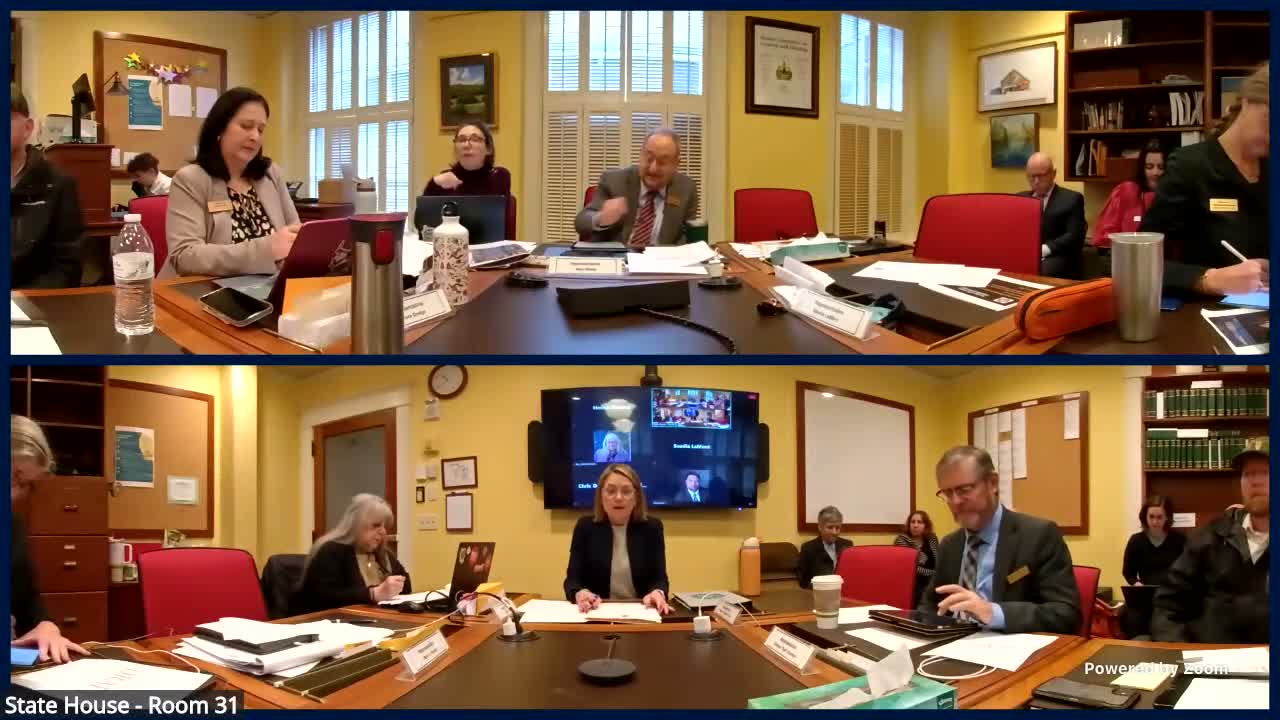
The House Committee on General and Housing on Jan. 15 heard testimony supporting a $5 million one‑time voucher contingency fund in the Budget Adjustment Act to prevent involuntary terminations of households served by the Housing Choice Voucher program.
Kathleen Burke, executive director of the Vermont State Housing Authority, told the committee that federal voucher funding is “chronically underfunded and unpredictable” and that without state assistance in 2026 public housing authorities (PHAs) will likely be forced to terminate assistance to comply with federal spending caps. Burke asked the committee to support a $5,000,000 contingency fund administered by the Agency of Administration to be accessed by PHAs as needed; any unused funds would revert to the general fund.
Burke and other witnesses described how HUD’s renewal formula (rebenchmarking) makes next year’s funding dependent on actual spending this year. If PHAs cannot lease vouchers because HUD has placed them in shortfall status, the number of active vouchers falls and future federal allocations shrink. Burke summarized projected federal losses under competing congressional proposals and the local impacts: “Federal housing voucher funding is chronically underfunded and unpredictable, placing Vermont PHAs at immediate risk of losing vouchers and displacing currently housed families.”
Jo Grama, director of the Montpelier Housing Authority, said her agency has about 125 vouchers and a 315‑unit portfolio; after HUD’s shortfall determinations the authority lost 11 vouchers between June and December and now holds fewer vouchers in use than authorized. Grama said the authority’s $180,000 reserve would not be sufficient for prolonged shortfalls and that the waiting list has effectively closed.
Kevin Loso, executive director and CEO of Rutland Housing Authority and Housing Initiatives Inc., testified that Rutland has dozens of vouchers shelved (he cited 57 currently shelved) and a three‑year wait list. Loso warned that shelved vouchers and the inability to reissue them jeopardize project financing for developments that depend on project‑based rental assistance and undercut transitions out of homelessness.
Chris Donnelly of the Champlain Housing Trust said more than half of CHT’s residents rely on federal subsidies—about 1,350 households in his portfolio—and that without commitments to vouchers shelters and motels will continue to be used for longer periods. “Without this kind of stabilization of the public housing authorities envisioned with this contingency fund, we’ll see a few different impacts in our shop,” Donnelly said, adding that development pipelines and homelessness‑exit strategies are at risk.
Committee members asked detailed questions about how HUD counts vouchers, how payment standards are set, and what happens when participants face rent increases. Elizabeth Bacon, managing director of the housing programs administration division, explained that voucher payment standards are set by county and bedroom size and that many families pay 30% of income for rent; she also said waiting lists are closed and PHAs are not issuing new vouchers while shortfall status persists.
After testimony, the committee considered a draft letter to the Appropriations Committee summarizing the witnesses’ points and asking appropriators to create a vehicle in the Budget Adjustment Act to provide the contingency funds or otherwise allocate funds as appropriate. The chair moved to send the letter; the motion was seconded and a show‑of‑hands straw poll indicated committee support with several members requesting follow‑up reporting and caveats about potential fund structure.
No formal, recorded roll‑call vote was taken on the floor; the committee Chair said the letter would be transmitted to Appropriations later that day and that staff would coordinate follow‑up detail with witnesses.
What’s next: the committee will send the letter to the Appropriations Committee and requested that witnesses and staff provide additional data and reporting back on implementation details and expected impacts.
Kathleen Burke, executive director of the Vermont State Housing Authority, told the committee that federal voucher funding is “chronically underfunded and unpredictable” and that without state assistance in 2026 public housing authorities (PHAs) will likely be forced to terminate assistance to comply with federal spending caps. Burke asked the committee to support a $5,000,000 contingency fund administered by the Agency of Administration to be accessed by PHAs as needed; any unused funds would revert to the general fund.
Burke and other witnesses described how HUD’s renewal formula (rebenchmarking) makes next year’s funding dependent on actual spending this year. If PHAs cannot lease vouchers because HUD has placed them in shortfall status, the number of active vouchers falls and future federal allocations shrink. Burke summarized projected federal losses under competing congressional proposals and the local impacts: “Federal housing voucher funding is chronically underfunded and unpredictable, placing Vermont PHAs at immediate risk of losing vouchers and displacing currently housed families.”
Jo Grama, director of the Montpelier Housing Authority, said her agency has about 125 vouchers and a 315‑unit portfolio; after HUD’s shortfall determinations the authority lost 11 vouchers between June and December and now holds fewer vouchers in use than authorized. Grama said the authority’s $180,000 reserve would not be sufficient for prolonged shortfalls and that the waiting list has effectively closed.
Kevin Loso, executive director and CEO of Rutland Housing Authority and Housing Initiatives Inc., testified that Rutland has dozens of vouchers shelved (he cited 57 currently shelved) and a three‑year wait list. Loso warned that shelved vouchers and the inability to reissue them jeopardize project financing for developments that depend on project‑based rental assistance and undercut transitions out of homelessness.
Chris Donnelly of the Champlain Housing Trust said more than half of CHT’s residents rely on federal subsidies—about 1,350 households in his portfolio—and that without commitments to vouchers shelters and motels will continue to be used for longer periods. “Without this kind of stabilization of the public housing authorities envisioned with this contingency fund, we’ll see a few different impacts in our shop,” Donnelly said, adding that development pipelines and homelessness‑exit strategies are at risk.
Committee members asked detailed questions about how HUD counts vouchers, how payment standards are set, and what happens when participants face rent increases. Elizabeth Bacon, managing director of the housing programs administration division, explained that voucher payment standards are set by county and bedroom size and that many families pay 30% of income for rent; she also said waiting lists are closed and PHAs are not issuing new vouchers while shortfall status persists.
After testimony, the committee considered a draft letter to the Appropriations Committee summarizing the witnesses’ points and asking appropriators to create a vehicle in the Budget Adjustment Act to provide the contingency funds or otherwise allocate funds as appropriate. The chair moved to send the letter; the motion was seconded and a show‑of‑hands straw poll indicated committee support with several members requesting follow‑up reporting and caveats about potential fund structure.
No formal, recorded roll‑call vote was taken on the floor; the committee Chair said the letter would be transmitted to Appropriations later that day and that staff would coordinate follow‑up detail with witnesses.
What’s next: the committee will send the letter to the Appropriations Committee and requested that witnesses and staff provide additional data and reporting back on implementation details and expected impacts.
Don't Miss a Word: See the Full Meeting!
Go beyond summaries. Unlock every video, transcript, and key insight with a Founder Membership.
✓
Get instant access to full meeting videos
✓
Search and clip any phrase from complete transcripts
✓
Receive AI-powered summaries & custom alerts
✓
Enjoy lifetime, unrestricted access to government data
30-day money-back guarantee
