Residents press Bangor commission on marsh trails, water quality and solar decommissioning as staff outlines standards
January 17, 2026 | Bangor City, Penobscot County, Maine
This article was created by AI summarizing key points discussed. AI makes mistakes, so for full details and context, please refer to the video of the full meeting. Please report any errors so we can fix them. Report an error »
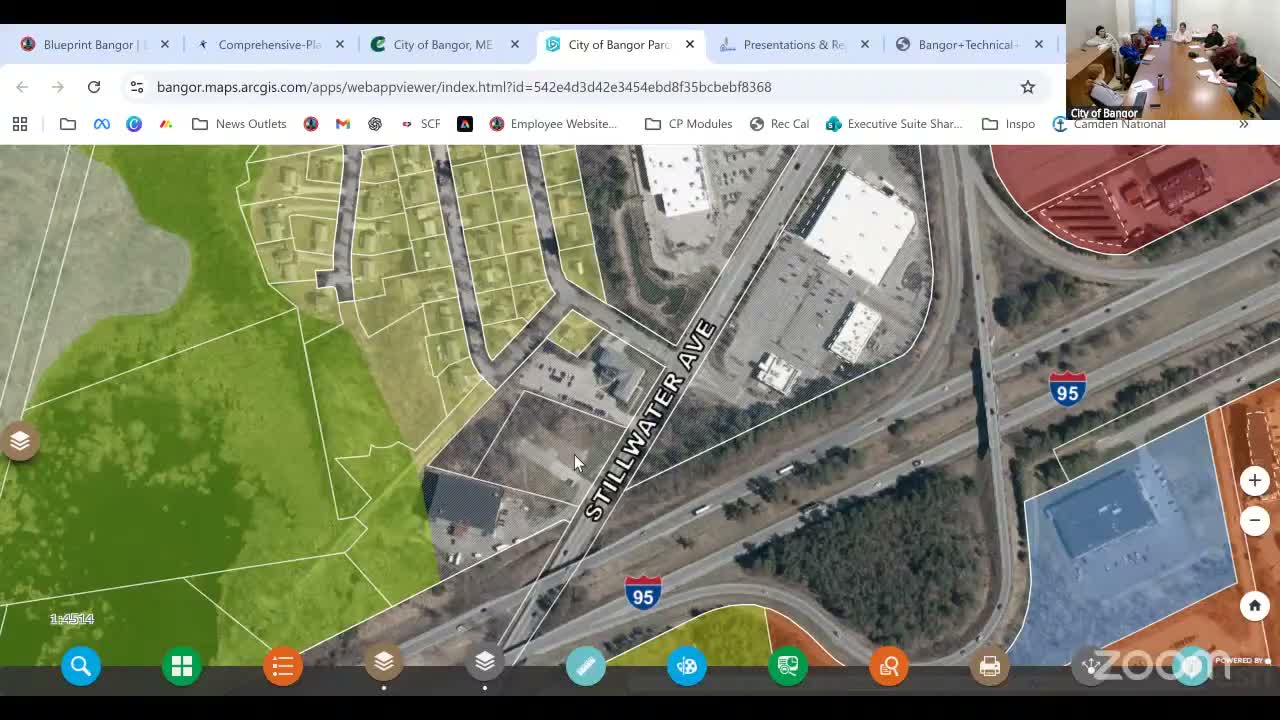
At a meeting of a Bangor City advisory commission, residents raised multiple concerns about public access to marshside greenspace, historic water-quality monitoring, and long-term risks from utility-scale solar installations.
Several residents described a once-maintained walking park between the Comfort Inn and nearby commercial lots that has become overgrown since city maintenance ended. "They took over maintaining it when the city stopped, and then it just it was too much for them to maintain it, and so they just stopped," one resident said. Commissioners and staff said the commission may make recommendations to planning and that any conversion of privately maintained space into formal public space would require city maintenance capacity and funding.
On water quality, residents recalled past volunteer sampling and a connection to state agencies: "They would go to the gentleman that was heading up the stream, who he was part of the DEP and Fish and Wildlife," a participant said, emphasizing that water quality remains a community concern and that historical sampling had occurred.
Residents also asked about solar arrays and decommissioning. Planning staff responded that utility-scale solar projects typically include decommissioning bonds or escrow to cover removal if the operator goes bankrupt. "Every utility solar array, they have to do with decommissioning bonds, so they have to basically put money in escrow in case they do have bankruptcy and then the city needs that money to get out," staff said.
Commissioners encouraged residents to bring specific proposals or recommendations to a future meeting; staff repeated that the overlay imposes stricter setbacks, limits impervious area, and requires cluster subdivision design for residential subdivisions in the overlay. No formal directives to undertake restoration or water testing were issued at the meeting; staff and commissioners noted funding and staff capacity constraints.
Several residents described a once-maintained walking park between the Comfort Inn and nearby commercial lots that has become overgrown since city maintenance ended. "They took over maintaining it when the city stopped, and then it just it was too much for them to maintain it, and so they just stopped," one resident said. Commissioners and staff said the commission may make recommendations to planning and that any conversion of privately maintained space into formal public space would require city maintenance capacity and funding.
On water quality, residents recalled past volunteer sampling and a connection to state agencies: "They would go to the gentleman that was heading up the stream, who he was part of the DEP and Fish and Wildlife," a participant said, emphasizing that water quality remains a community concern and that historical sampling had occurred.
Residents also asked about solar arrays and decommissioning. Planning staff responded that utility-scale solar projects typically include decommissioning bonds or escrow to cover removal if the operator goes bankrupt. "Every utility solar array, they have to do with decommissioning bonds, so they have to basically put money in escrow in case they do have bankruptcy and then the city needs that money to get out," staff said.
Commissioners encouraged residents to bring specific proposals or recommendations to a future meeting; staff repeated that the overlay imposes stricter setbacks, limits impervious area, and requires cluster subdivision design for residential subdivisions in the overlay. No formal directives to undertake restoration or water testing were issued at the meeting; staff and commissioners noted funding and staff capacity constraints.
Don't Miss a Word: See the Full Meeting!
Go beyond summaries. Unlock every video, transcript, and key insight with a Founder Membership.
✓
Get instant access to full meeting videos
✓
Search and clip any phrase from complete transcripts
✓
Receive AI-powered summaries & custom alerts
✓
Enjoy lifetime, unrestricted access to government data
30-day money-back guarantee
