Georgia House committee hears EPD briefing, delays vote on plan to shrink regional water councils
January 16, 2026 | Natural Resources & Environment, HOUSE OF REPRESENTATIVES, Committees, Legislative, Georgia
This article was created by AI summarizing key points discussed. AI makes mistakes, so for full details and context, please refer to the video of the full meeting. Please report any errors so we can fix them. Report an error »
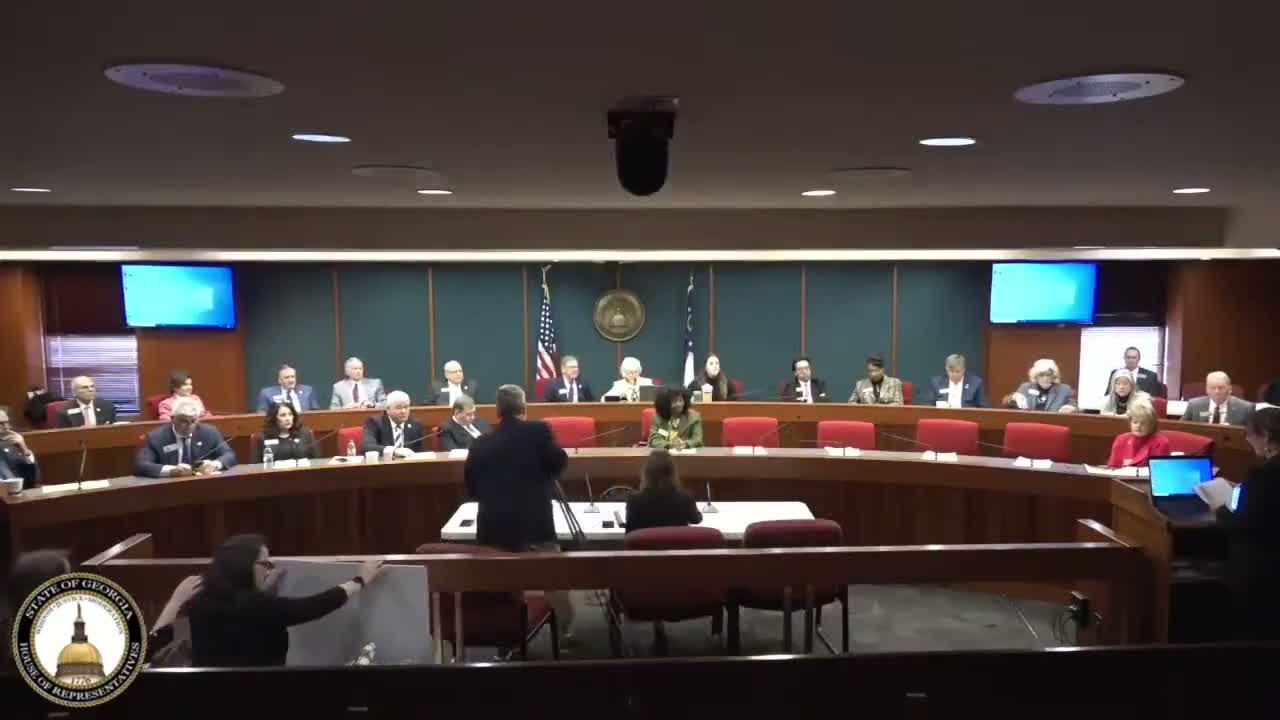
At a meeting of the House Natural Resources & Environment committee, officials from the Georgia Environmental Protection Division presented proposed changes to the State Water Council's appointment structure and committee members heard public comment opposing the changes. The committee did not take a vote and members were asked to review the materials before any legislative action.
Jeff Cowan, an Environmental Protection Division official, introduced agency materials including maps and fact sheets and said the presentation was intended as a tutorial for committee members. Anya Traczynski of EPD summarized the history of Georgia's water planning framework, noting the Metropolitan North Georgia Water Planning District Act (2001), the Comprehensive Statewide Water Management Planning Act (2004) and the State Water Plan that led to creation of regional water planning councils in 2008.
Traczynski told the committee the State Water Council and EPD recommended reducing the number of appointments to some regional councils because the existing appointments process had become burdensome and councils were struggling to maintain regular, fully engaged membership. "The state water council went through a robust public process to evaluate the recommendations," she said, describing the recommendation as designed to make councils "more focused" and nimble.
Traczynski and other EPD staff described the scope of the proposed change as limited to appointments language in Section 14 of the State Water Plan; they emphasized the Metro North Georgia Water Planning District and its separate statutory structure and permitting authorities would not be affected. EPD said it will provide a redline and the full amendment text for members who requested it.
Committee members and public commenters raised concerns about representation. Alice Kais, senior strategist with the coastal advocacy organization 100 Miles, argued the changes risked "violating the intent of this broad representation" and urged the committee to keep a larger cap on council size or to require a designated seat for conservation interests. "The planning regions are vast," she said, and asked for a transparent nomination and recommendation process for council appointments.
Dr. Chris Manganiello, water policy director for Chattahoochee Riverkeepers speaking on behalf of the Georgia Water Coalition, said the coalition opposes House Resolution 1008 as drafted and urged alternatives such as adding appointing authorities, providing implementation budgets for councils, and guaranteeing seats for tourism, recreation and conservation interests.
EPD officials offered several clarifications in response to questions: the recommended change would reduce total appointments for some councils (Anya Traczynski described reductions in appointed seats and the use of ex officio legislative members), reduce duplicative vetting burdens, and pair the statutory amendment with improved transparency and outreach to solicit willing appointees. EPD also said many councils already use technical advisory groups to bring subject-matter experts to meetings without expanding full council membership.
No formal motion or vote on the resolution occurred at the meeting. The chair asked members to review the redline and supporting materials on the State Water Council website and to consult with EPD staff; the chair said the measure would follow the usual legislative process and may be taken up at a later session. "We will do the legislative process," the chair said, and then adjourned the meeting.
The committee record shows a continuing debate between efficiency (reducing appointments to ensure active participation) and broad representation (keeping larger rosters and adding guaranteed seats for particular interests). Committee members requested the redline amendment text and additional materials from EPD before deciding whether to move the resolution forward.
Jeff Cowan, an Environmental Protection Division official, introduced agency materials including maps and fact sheets and said the presentation was intended as a tutorial for committee members. Anya Traczynski of EPD summarized the history of Georgia's water planning framework, noting the Metropolitan North Georgia Water Planning District Act (2001), the Comprehensive Statewide Water Management Planning Act (2004) and the State Water Plan that led to creation of regional water planning councils in 2008.
Traczynski told the committee the State Water Council and EPD recommended reducing the number of appointments to some regional councils because the existing appointments process had become burdensome and councils were struggling to maintain regular, fully engaged membership. "The state water council went through a robust public process to evaluate the recommendations," she said, describing the recommendation as designed to make councils "more focused" and nimble.
Traczynski and other EPD staff described the scope of the proposed change as limited to appointments language in Section 14 of the State Water Plan; they emphasized the Metro North Georgia Water Planning District and its separate statutory structure and permitting authorities would not be affected. EPD said it will provide a redline and the full amendment text for members who requested it.
Committee members and public commenters raised concerns about representation. Alice Kais, senior strategist with the coastal advocacy organization 100 Miles, argued the changes risked "violating the intent of this broad representation" and urged the committee to keep a larger cap on council size or to require a designated seat for conservation interests. "The planning regions are vast," she said, and asked for a transparent nomination and recommendation process for council appointments.
Dr. Chris Manganiello, water policy director for Chattahoochee Riverkeepers speaking on behalf of the Georgia Water Coalition, said the coalition opposes House Resolution 1008 as drafted and urged alternatives such as adding appointing authorities, providing implementation budgets for councils, and guaranteeing seats for tourism, recreation and conservation interests.
EPD officials offered several clarifications in response to questions: the recommended change would reduce total appointments for some councils (Anya Traczynski described reductions in appointed seats and the use of ex officio legislative members), reduce duplicative vetting burdens, and pair the statutory amendment with improved transparency and outreach to solicit willing appointees. EPD also said many councils already use technical advisory groups to bring subject-matter experts to meetings without expanding full council membership.
No formal motion or vote on the resolution occurred at the meeting. The chair asked members to review the redline and supporting materials on the State Water Council website and to consult with EPD staff; the chair said the measure would follow the usual legislative process and may be taken up at a later session. "We will do the legislative process," the chair said, and then adjourned the meeting.
The committee record shows a continuing debate between efficiency (reducing appointments to ensure active participation) and broad representation (keeping larger rosters and adding guaranteed seats for particular interests). Committee members requested the redline amendment text and additional materials from EPD before deciding whether to move the resolution forward.
View the Full Meeting & All Its Details
This article offers just a summary. Unlock complete video, transcripts, and insights as a Founder Member.
✓
Watch full, unedited meeting videos
✓
Search every word spoken in unlimited transcripts
✓
AI summaries & real-time alerts (all government levels)
✓
Permanent access to expanding government content
30-day money-back guarantee
