Senate Finance reviews bill to pause large AI data-center builds, orders study of grid and water impacts
January 16, 2026 | Finance, SENATE, Committees, Legislative , Vermont
This article was created by AI summarizing key points discussed. AI makes mistakes, so for full details and context, please refer to the video of the full meeting. Please report any errors so we can fix them. Report an error »
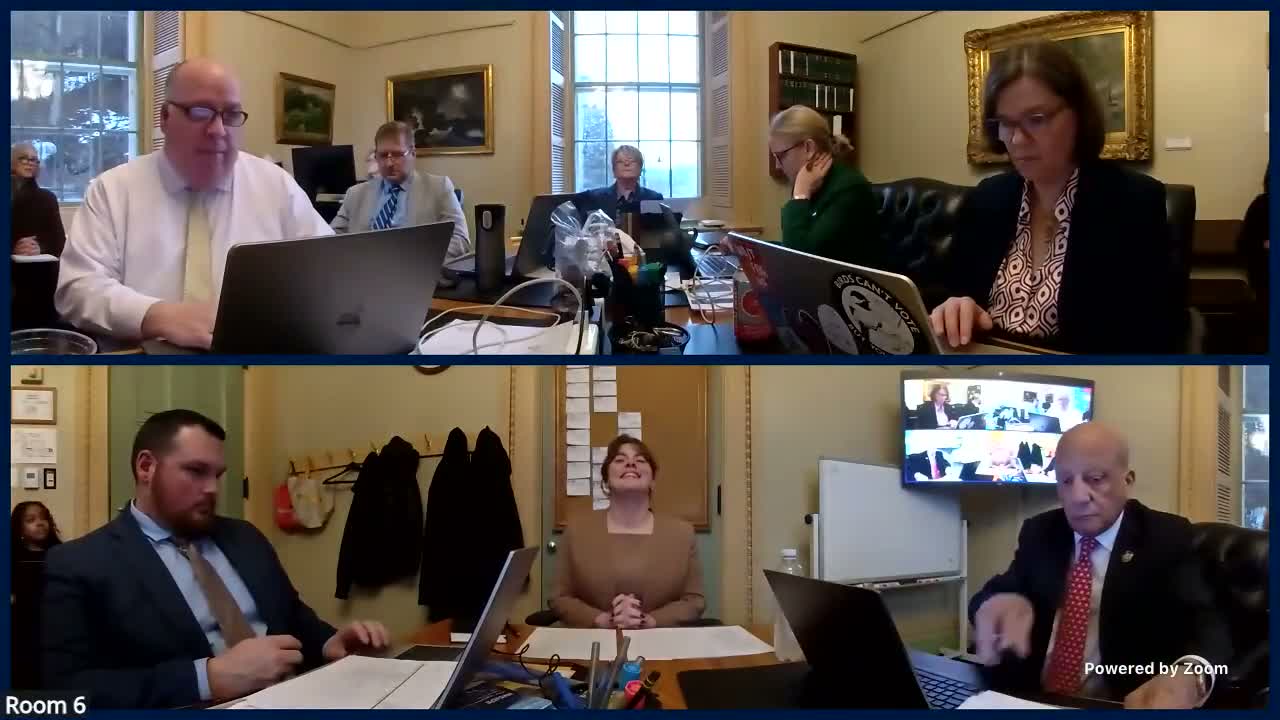
Montpelier — The Senate Finance committee on Friday reviewed S.205, a bill that would bar operation, site preparation or construction of large AI-focused data centers in Vermont until July 1, 2030, and direct the Public Utility Commission to study the facilities’ likely energy, water and environmental impacts.
Sponsor Senator White told the committee she introduced the bill as a “common sense pause” while the state develops rules to avoid a patchwork of local responses. "A single large AI data center could use up to 5,000,000 gallons of fresh water per day," White said, and such centers can demand electricity on a scale that, she warned, could strain municipal systems and raise costs for other ratepayers.
The bill defines an AI data center, for the purposes of the moratorium, as a facility that requires more than 100 megawatts of new load dedicated to AI inference, training, simulation or synthetic data generation, a threshold far above the small, traditional data centers currently operating in Vermont, the drafter told the committee. The sponsor and drafter noted Vermont’s existing facilities are typically on the order of 1 megawatt and are not comparable to the concentrated resource demands the bill targets.
Under language summarized by the drafter, the moratorium would remain in effect until July 1, 2030. The bill charges the Public Utility Commission, with input from the Department of Public Service and other interested parties, to open an investigation and issue findings and recommendations. The PUC’s study is to consider increased energy load and grid reliability, water consumption for cooling, environmental effects on water quality and local ecosystems, noise, land use impacts (including effects on farming, conservation and housing), strategies for energy efficiency and renewables, environmental justice concerns related to siting, and a cost-allocation model to shield other ratepayers from upgrade costs associated with a data center’s grid impacts.
The drafter flagged additional issues the committee will need to address, including how to treat stranded costs and decommissioning if a data center fails or leaves—approaches other states have used include long-term contract terms, collateral, or termination fees tied to utility investments. The drafter also said the PUC report should analyze possible models to assign costs to data centers so that other electricity customers are not left financially responsible for major transmission or distribution upgrades.
Committee members raised questions about federal preemption and precedent, noting recent federal executive orders on artificial intelligence and prior federal actions—such as the Federal Communications Commission’s small-cell order—that affected state and local permitting authority. The drafter advised the committee to monitor federal developments and to plan for potential preemption risks while the PUC study proceeds.
The committee did not take a vote on S.205 on Friday. Members requested that utilities and relevant state agencies (including ANR and the Department of Public Service) appear to testify about grid planning, long-range transmission upgrades and water-resource implications as the bill proceeds through committee. The drafter said the bill’s required PUC report is due on or before Jan. 15 (the year was not specified in the committee presentation).
Next steps: the committee will schedule agency and utility testimony and continue deliberations; no formal action was recorded at this meeting.
Sponsor Senator White told the committee she introduced the bill as a “common sense pause” while the state develops rules to avoid a patchwork of local responses. "A single large AI data center could use up to 5,000,000 gallons of fresh water per day," White said, and such centers can demand electricity on a scale that, she warned, could strain municipal systems and raise costs for other ratepayers.
The bill defines an AI data center, for the purposes of the moratorium, as a facility that requires more than 100 megawatts of new load dedicated to AI inference, training, simulation or synthetic data generation, a threshold far above the small, traditional data centers currently operating in Vermont, the drafter told the committee. The sponsor and drafter noted Vermont’s existing facilities are typically on the order of 1 megawatt and are not comparable to the concentrated resource demands the bill targets.
Under language summarized by the drafter, the moratorium would remain in effect until July 1, 2030. The bill charges the Public Utility Commission, with input from the Department of Public Service and other interested parties, to open an investigation and issue findings and recommendations. The PUC’s study is to consider increased energy load and grid reliability, water consumption for cooling, environmental effects on water quality and local ecosystems, noise, land use impacts (including effects on farming, conservation and housing), strategies for energy efficiency and renewables, environmental justice concerns related to siting, and a cost-allocation model to shield other ratepayers from upgrade costs associated with a data center’s grid impacts.
The drafter flagged additional issues the committee will need to address, including how to treat stranded costs and decommissioning if a data center fails or leaves—approaches other states have used include long-term contract terms, collateral, or termination fees tied to utility investments. The drafter also said the PUC report should analyze possible models to assign costs to data centers so that other electricity customers are not left financially responsible for major transmission or distribution upgrades.
Committee members raised questions about federal preemption and precedent, noting recent federal executive orders on artificial intelligence and prior federal actions—such as the Federal Communications Commission’s small-cell order—that affected state and local permitting authority. The drafter advised the committee to monitor federal developments and to plan for potential preemption risks while the PUC study proceeds.
The committee did not take a vote on S.205 on Friday. Members requested that utilities and relevant state agencies (including ANR and the Department of Public Service) appear to testify about grid planning, long-range transmission upgrades and water-resource implications as the bill proceeds through committee. The drafter said the bill’s required PUC report is due on or before Jan. 15 (the year was not specified in the committee presentation).
Next steps: the committee will schedule agency and utility testimony and continue deliberations; no formal action was recorded at this meeting.
Don't Miss a Word: See the Full Meeting!
Go beyond summaries. Unlock every video, transcript, and key insight with a Founder Membership.
✓
Get instant access to full meeting videos
✓
Search and clip any phrase from complete transcripts
✓
Receive AI-powered summaries & custom alerts
✓
Enjoy lifetime, unrestricted access to government data
30-day money-back guarantee
