Senate committee tweaks S.23 on synthetic election media, adds accessibility requirement and narrows definitions
January 17, 2026 | Government Operations, SENATE, Committees, Legislative , Vermont
This article was created by AI summarizing key points discussed. AI makes mistakes, so for full details and context, please refer to the video of the full meeting. Please report any errors so we can fix them. Report an error »
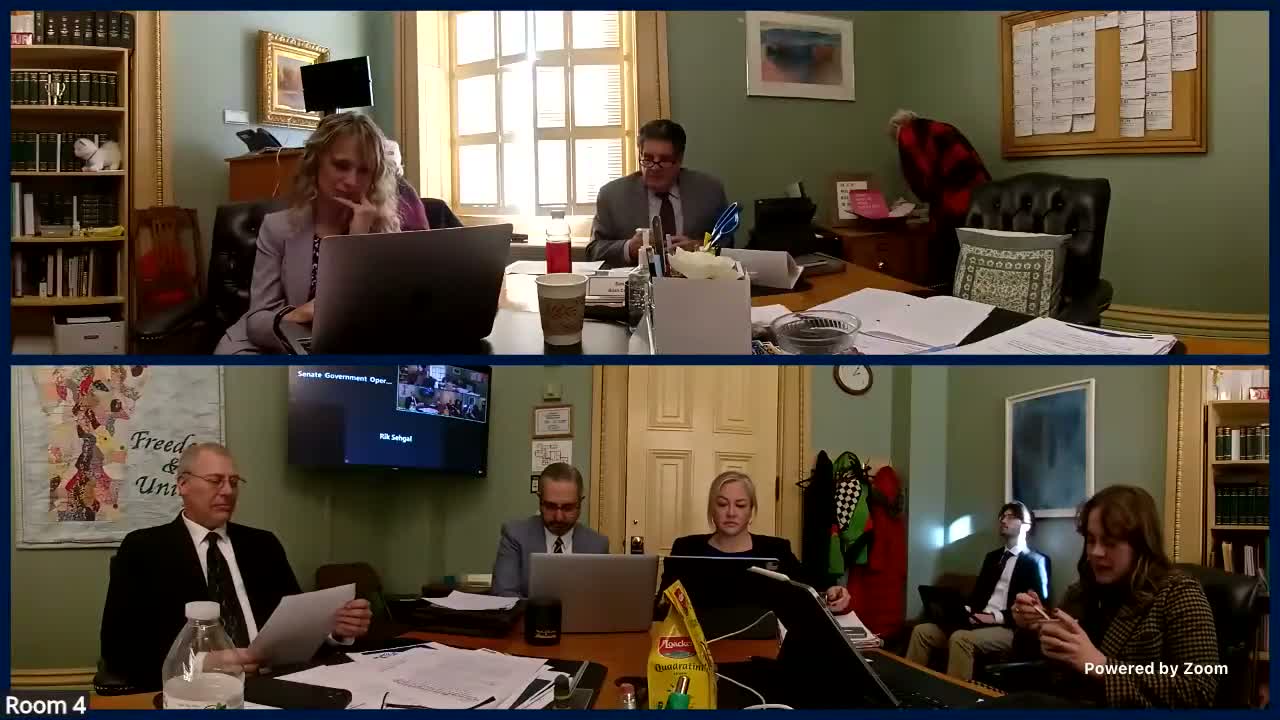
The Senate Committee on Government Operations on Friday reviewed proposed changes to S.23, the bill addressing the use of synthetic media in elections, and directed legislative counsel to return an amended draft for a committee vote next Tuesday.
Committee members focused on three issues: the bill's definition of deceptive or fraudulent synthetic media, a materially false-information standard tied to election outcomes, and accessibility of required disclosures. Representative Rachael Waters Evans, the House sponsor who joined the meeting, asked senators to make the statute as specific as possible after citing a presidential executive order signed Dec. 11 that creates an AI litigation task force to review state AI laws.
Legislative counsel Rick Sagle presented draft 1.1, which would replace the bill's definition section and broaden the House language that had limited the statute to political candidates. Sagle said the proposed definition would apply to synthetic media that "appears to a reasonable person to be a realistic representation of an individual" and that does one of several harms, including injuring a person's reputation or providing materially false information aimed at influencing an election result. He cited the 2024 fake-robocall episode as an example of materially false information that could mislead voters.
Members questioned whether the standard would capture artificially positive statements and how courts would evaluate materiality. Sagle told the committee that demonstrably false factual statements (for example, false time, date or place information about voting) are more likely to be actionable than statements that express opinion.
On disclosures, the committee added language intended to ensure accessibility for people with disabilities. Sagle said the amendment would require that disclosures "shall be made available for individuals with disabilities," and committee members recommended wording that uses "universal design" so that the disclosure does not force people with disabilities to take an extra step to access the information.
The committee also discussed legal risk. Sagle reviewed a recent California district court decision that struck down a similar statute and emphasized that laws restricting election-related speech must be narrowly tailored and use the least restrictive means. He said narrower approaches could include limiting covered falsehoods to demonstrably false factual statements or constraining the class of plaintiffs to political candidates who can show concrete harm.
Members debated whether Vermont should take a bolder approach or pursue a more legally defensible, narrower statute. The committee agreed to have counsel incorporate the universal-design disclosure language, return with a redrafted amendment Tuesday afternoon, and take a committee vote then. No formal committee vote on S.23 was recorded at Friday's meeting.
What happens next: legislative counsel will prepare the revised amendment reflecting the committee's instructions; the committee will reconvene Tuesday to consider the amendment and vote.
Committee members focused on three issues: the bill's definition of deceptive or fraudulent synthetic media, a materially false-information standard tied to election outcomes, and accessibility of required disclosures. Representative Rachael Waters Evans, the House sponsor who joined the meeting, asked senators to make the statute as specific as possible after citing a presidential executive order signed Dec. 11 that creates an AI litigation task force to review state AI laws.
Legislative counsel Rick Sagle presented draft 1.1, which would replace the bill's definition section and broaden the House language that had limited the statute to political candidates. Sagle said the proposed definition would apply to synthetic media that "appears to a reasonable person to be a realistic representation of an individual" and that does one of several harms, including injuring a person's reputation or providing materially false information aimed at influencing an election result. He cited the 2024 fake-robocall episode as an example of materially false information that could mislead voters.
Members questioned whether the standard would capture artificially positive statements and how courts would evaluate materiality. Sagle told the committee that demonstrably false factual statements (for example, false time, date or place information about voting) are more likely to be actionable than statements that express opinion.
On disclosures, the committee added language intended to ensure accessibility for people with disabilities. Sagle said the amendment would require that disclosures "shall be made available for individuals with disabilities," and committee members recommended wording that uses "universal design" so that the disclosure does not force people with disabilities to take an extra step to access the information.
The committee also discussed legal risk. Sagle reviewed a recent California district court decision that struck down a similar statute and emphasized that laws restricting election-related speech must be narrowly tailored and use the least restrictive means. He said narrower approaches could include limiting covered falsehoods to demonstrably false factual statements or constraining the class of plaintiffs to political candidates who can show concrete harm.
Members debated whether Vermont should take a bolder approach or pursue a more legally defensible, narrower statute. The committee agreed to have counsel incorporate the universal-design disclosure language, return with a redrafted amendment Tuesday afternoon, and take a committee vote then. No formal committee vote on S.23 was recorded at Friday's meeting.
What happens next: legislative counsel will prepare the revised amendment reflecting the committee's instructions; the committee will reconvene Tuesday to consider the amendment and vote.
View the Full Meeting & All Its Details
This article offers just a summary. Unlock complete video, transcripts, and insights as a Founder Member.
✓
Watch full, unedited meeting videos
✓
Search every word spoken in unlimited transcripts
✓
AI summaries & real-time alerts (all government levels)
✓
Permanent access to expanding government content
30-day money-back guarantee
