Lawmakers warned Alabama faces a tighter fiscal outlook as interest revenue wanes
January 15, 2026 | Joint Interim Committees, Alabama Legislative Sessions, Alabama
This article was created by AI summarizing key points discussed. AI makes mistakes, so for full details and context, please refer to the video of the full meeting. Please report any errors so we can fix them. Report an error »
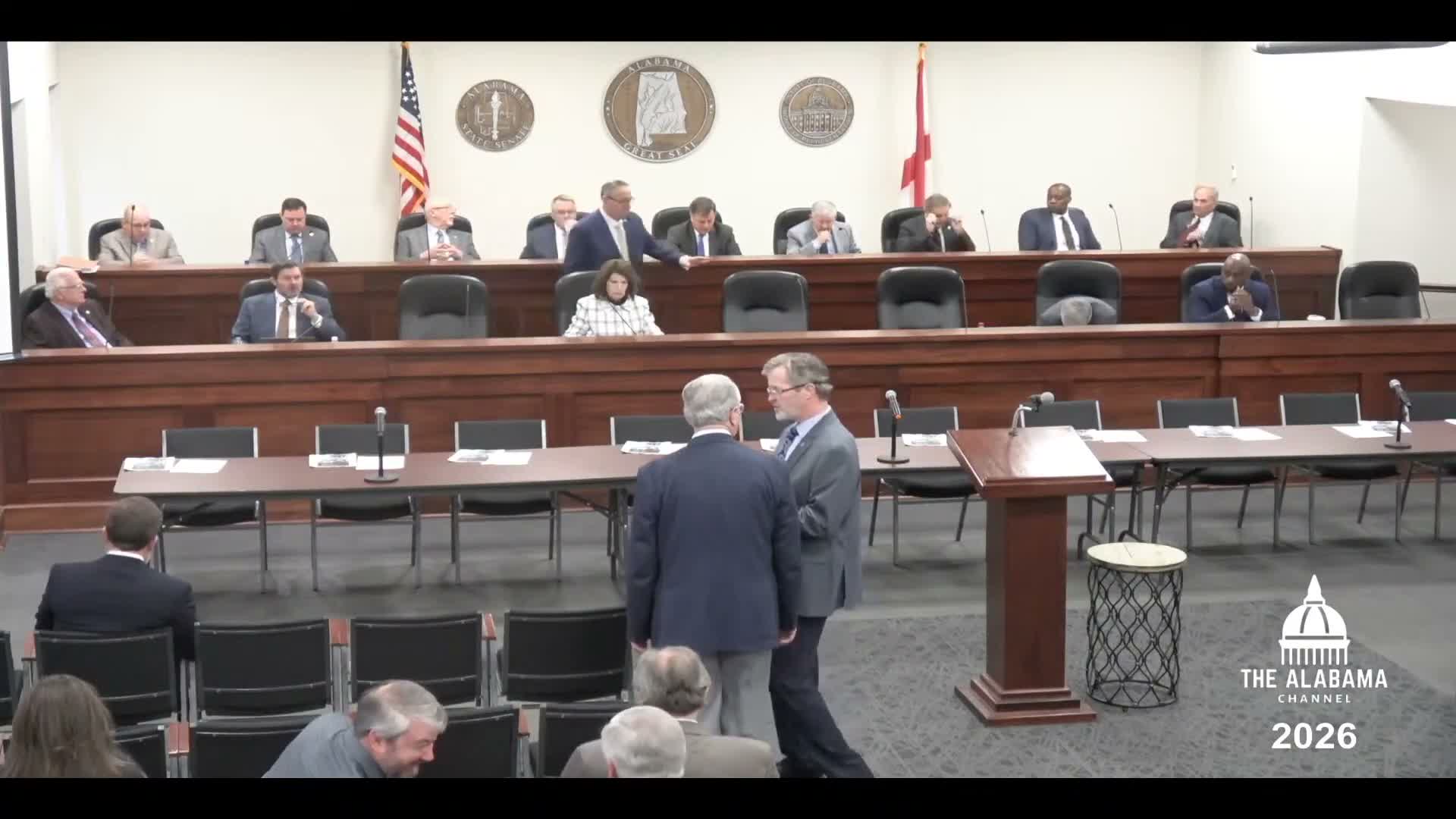
Legislators were warned on the opening day of the Joint Interim Committees budget briefings that Alabama is "about to have a different fiscal environment," a phrase used by fiscal presenter Kirk Fulford as he opened a wide-ranging look at state revenues and risks.
Fulford, of the Legislative Fiscal Office, told members that an unusually large and temporary source of revenue — interest earned on state deposits — has materially supported recent budgets but will not persist. "Interest on state deposits is going to drive our discussion for '26 and '27," he said, noting the line jumped from roughly $40 million in 2022 to several hundred million in subsequent years and now accounts for "over 14% of the total revenues" flowing into the general fund. He cautioned that declines in that stream would expose the budget and that the state holds relatively small unrestricted reserves (about $150 million reported in the presentation).
Bill Poole, director of finance for the administration, echoed the warning and framed the 2027 general fund budget as largely level-funded: "What you will see in the general fund budget is a lot of red ink," Poole said, while noting the governor's proposal funds personnel cost increases (health insurance and a 2% cost-of-living adjustment) but trims or eliminates many earmarks.
Why this matters: the general fund pays Medicaid, corrections and many other core services. Fulford stressed Alabama receives a substantial share of revenue from federal sources (he cited nearly 40% of total state revenues in 2023 as federal), meaning federal reductions or program changes could compound state pressures. He also noted that spending down ARPA-era balances will reduce invested cash and therefore future interest income.
Fiscal details presented to the committee included: general fund cash balances that ended higher than expected at the close of the prior year; an Education Trust Fund (ETF) supplemental balance and a Rolling Reserve Act waterfall that allocates funds to stabilization and other accounts; and a near-term revenue-growth forecast of roughly 2.5% for both the general fund and ETF in 2026–27. Poole summarized that those measures may get the state through FY2027 but warned that FY2028 ‘‘is going to be a really tough year.’'
Members asked technical questions (labor force participation counts, the interplay of federal funds and state obligations) and were told staff will provide more granular data. The committee recessed after the two administration presentations and noted supplemental appropriation bills for ETF and technical general-fund items may follow in the coming days.
Next steps: budget bills and ETF supplement language to be filed with the legislature; continued committee hearings (Poole noted some supplemental filings could be introduced the day after the briefing).
Fulford, of the Legislative Fiscal Office, told members that an unusually large and temporary source of revenue — interest earned on state deposits — has materially supported recent budgets but will not persist. "Interest on state deposits is going to drive our discussion for '26 and '27," he said, noting the line jumped from roughly $40 million in 2022 to several hundred million in subsequent years and now accounts for "over 14% of the total revenues" flowing into the general fund. He cautioned that declines in that stream would expose the budget and that the state holds relatively small unrestricted reserves (about $150 million reported in the presentation).
Bill Poole, director of finance for the administration, echoed the warning and framed the 2027 general fund budget as largely level-funded: "What you will see in the general fund budget is a lot of red ink," Poole said, while noting the governor's proposal funds personnel cost increases (health insurance and a 2% cost-of-living adjustment) but trims or eliminates many earmarks.
Why this matters: the general fund pays Medicaid, corrections and many other core services. Fulford stressed Alabama receives a substantial share of revenue from federal sources (he cited nearly 40% of total state revenues in 2023 as federal), meaning federal reductions or program changes could compound state pressures. He also noted that spending down ARPA-era balances will reduce invested cash and therefore future interest income.
Fiscal details presented to the committee included: general fund cash balances that ended higher than expected at the close of the prior year; an Education Trust Fund (ETF) supplemental balance and a Rolling Reserve Act waterfall that allocates funds to stabilization and other accounts; and a near-term revenue-growth forecast of roughly 2.5% for both the general fund and ETF in 2026–27. Poole summarized that those measures may get the state through FY2027 but warned that FY2028 ‘‘is going to be a really tough year.’'
Members asked technical questions (labor force participation counts, the interplay of federal funds and state obligations) and were told staff will provide more granular data. The committee recessed after the two administration presentations and noted supplemental appropriation bills for ETF and technical general-fund items may follow in the coming days.
Next steps: budget bills and ETF supplement language to be filed with the legislature; continued committee hearings (Poole noted some supplemental filings could be introduced the day after the briefing).
View the Full Meeting & All Its Details
This article offers just a summary. Unlock complete video, transcripts, and insights as a Founder Member.
✓
Watch full, unedited meeting videos
✓
Search every word spoken in unlimited transcripts
✓
AI summaries & real-time alerts (all government levels)
✓
Permanent access to expanding government content
30-day money-back guarantee
