Thurston County commissioners direct staff to draft phased AI surveillance policy
January 14, 2026 | Thurston County, Washington
This article was created by AI summarizing key points discussed. AI makes mistakes, so for full details and context, please refer to the video of the full meeting. Please report any errors so we can fix them. Report an error »
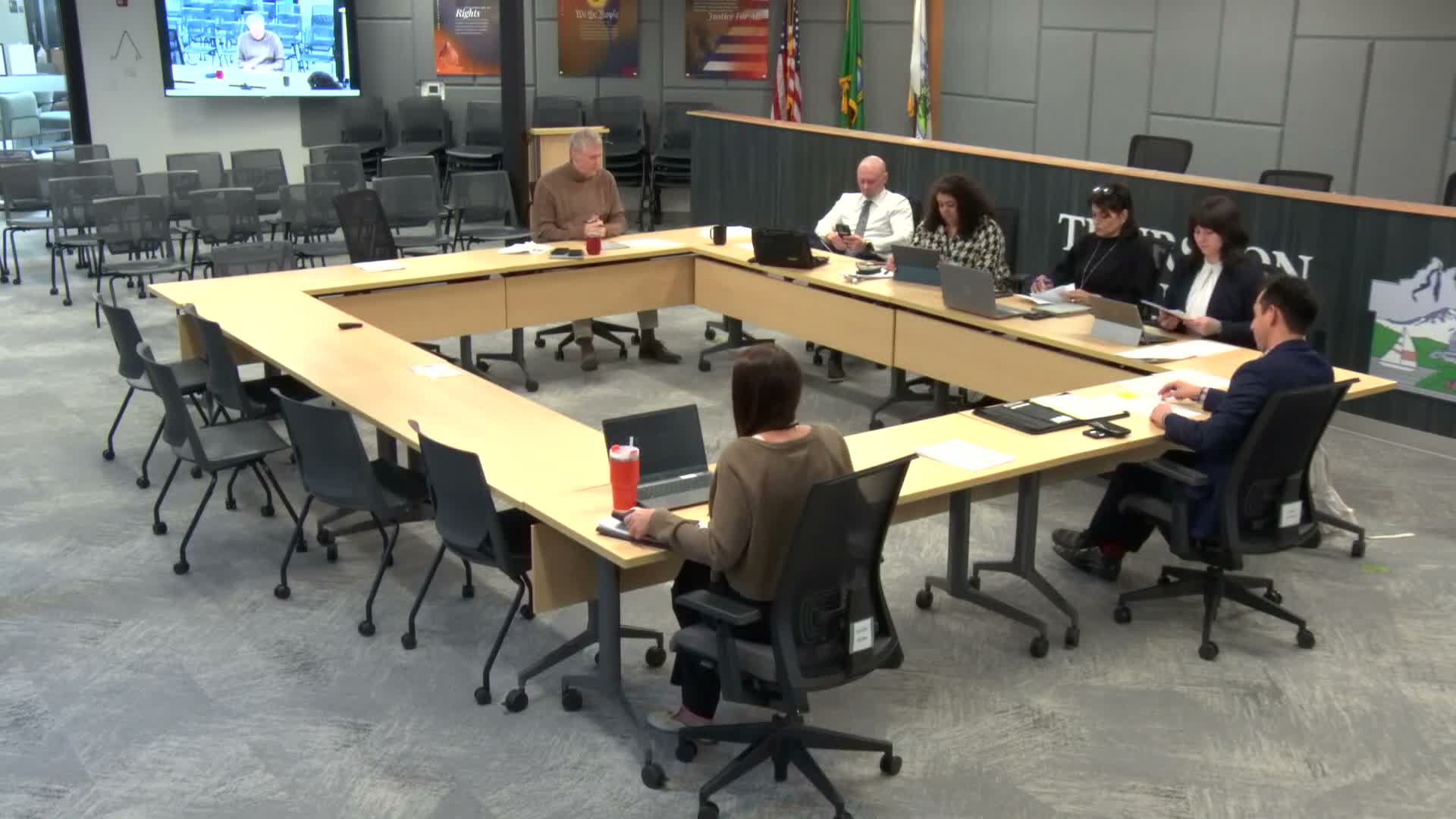
The Thurston County Board of County Commissioners voted Jan. 13 to direct staff to develop a phased ordinance that would require board approval before county use of AI-enabled surveillance tools and impose transparency and reporting requirements.
Commissioner Mejia, who introduced the proposal, told colleagues the proposal is “not a proposal to expand surveillance.” She said phase one is intended to “establish guardrails so that AI enabled tools cannot quietly or incrementally expand without this board's knowledge and approval,” and would explicitly limit technologies that “raise the greatest public concern, including real time biometric identification and predictive policing.”
The ordinance before the board at the work session was a policy framework rather than final policy. Mejia said phase two — not before the board — would address data governance, retention limits and vendor restrictions, including preventing vendors from owning or monetizing county data.
Commissioner Klaus said he had been drafting a similar proposal and recommended collaboration, noting community groups including ACLU affiliates and a state senator are pursuing legislation at the state level. Klaus raised questions about how a surveillance impact report and enforcement mechanisms would work in practice and urged including technical experts, public defenders and the prosecuting attorney in staff deliberations.
Chair Ty Menstruck and other commissioners signaled support for moving the proposal into staff review. The board’s motion directed the county manager to work with information technology, the prosecuting attorney's office and other stakeholders to bring back a staff analysis and proposed ordinance for future consideration. The chair called the vote; commissioners responded “aye,” and the motion carried.
What happens next: Staff will review sample surveillance-impact forms, consult IT and legal experts and return to the board with a draft ordinance and implementation details, including how a surveillance impact report would be completed and reviewed before approval of any AI-enabled system.
Authorities and process: The motion directs staff-level work and does not authorize any specific acquisition or deployment. Commissioners emphasized the ordinance is intended to respect the operational discretion of independently elected officials while increasing transparency for the public and the board.
The board did not set a timetable for final action; commissioners discussed coordinating county work with pending state-level legislation.
Commissioner Mejia, who introduced the proposal, told colleagues the proposal is “not a proposal to expand surveillance.” She said phase one is intended to “establish guardrails so that AI enabled tools cannot quietly or incrementally expand without this board's knowledge and approval,” and would explicitly limit technologies that “raise the greatest public concern, including real time biometric identification and predictive policing.”
The ordinance before the board at the work session was a policy framework rather than final policy. Mejia said phase two — not before the board — would address data governance, retention limits and vendor restrictions, including preventing vendors from owning or monetizing county data.
Commissioner Klaus said he had been drafting a similar proposal and recommended collaboration, noting community groups including ACLU affiliates and a state senator are pursuing legislation at the state level. Klaus raised questions about how a surveillance impact report and enforcement mechanisms would work in practice and urged including technical experts, public defenders and the prosecuting attorney in staff deliberations.
Chair Ty Menstruck and other commissioners signaled support for moving the proposal into staff review. The board’s motion directed the county manager to work with information technology, the prosecuting attorney's office and other stakeholders to bring back a staff analysis and proposed ordinance for future consideration. The chair called the vote; commissioners responded “aye,” and the motion carried.
What happens next: Staff will review sample surveillance-impact forms, consult IT and legal experts and return to the board with a draft ordinance and implementation details, including how a surveillance impact report would be completed and reviewed before approval of any AI-enabled system.
Authorities and process: The motion directs staff-level work and does not authorize any specific acquisition or deployment. Commissioners emphasized the ordinance is intended to respect the operational discretion of independently elected officials while increasing transparency for the public and the board.
The board did not set a timetable for final action; commissioners discussed coordinating county work with pending state-level legislation.
View the Full Meeting & All Its Details
This article offers just a summary. Unlock complete video, transcripts, and insights as a Founder Member.
✓
Watch full, unedited meeting videos
✓
Search every word spoken in unlimited transcripts
✓
AI summaries & real-time alerts (all government levels)
✓
Permanent access to expanding government content
30-day money-back guarantee
