Pulaski County Schools details library book‑selection process and appeals; restricted secondary materials require parental consent
January 14, 2026 | PULASKI CO PBLC SCHS, School Districts, Virginia
This article was created by AI summarizing key points discussed. AI makes mistakes, so for full details and context, please refer to the video of the full meeting. Please report any errors so we can fix them. Report an error »
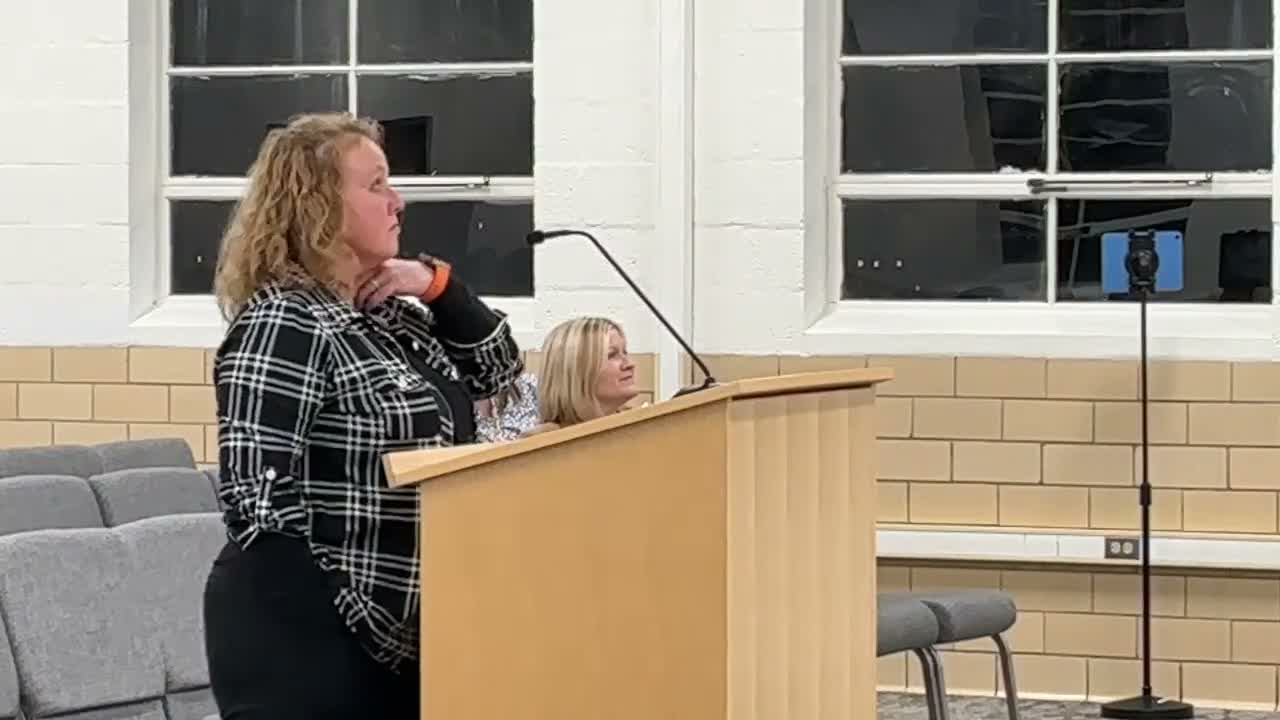
Pulaski County Public Schools administrators spent a large portion of the Jan. 13 board meeting explaining how library materials are selected, how the district defines restricted content for secondary students, and how community members can seek reconsideration of materials.
The presentation described a three‑step selection process implemented in 2023 that relies on professional criteria and nationally recognized review sources. "Our librarians use nationally recognized review sources, a clear process and procedures, and structured reconsideration processes to ensure the materials are selected responsibly and thoughtfully," the presenter said. The district uses third‑party tools including Follett (TidalWave) and Bound to Stay Bound to screen titles and capture reading levels, tags, awards and professional reviews.
Administrators told the board that instructional materials (those assigned for class use) and library materials are defined separately. For students in secondary grades, the district maintains a restricted section of library materials containing more mature content. Access to that restricted section requires a signed parental permission form on file and, before checkout, staff must verbally confirm consent by phone. "To access the restricted restricted section, students must have a signed parental permission form on file," the presenter said.
The district also described a formal reconsideration and appeals pathway for challenged materials. A request may be submitted by a teacher, student, parent or guardian using a form on the board docs. A principal convenes a special review committee that completes an internal review and issues a recommendation to the assistant superintendent; a complainant has five full days to appeal the committee’s recommendation in writing to the assistant superintendent and, if still unsatisfied, an additional five school days to appeal in writing to the school board. "If the material is found to contain explicit content, it will be removed from the circulation [in] elementary and middle schools or restricted in high schools," the presenter said. The transcript records that the board may choose whether to hear an appeal; if it hears the appeal, the board's decision is final and effective immediately.
Board members pressed the presenter on gaps the policy does not cover, including classroom libraries and items that enter schools via book fairs or student‑brought donations. The presenter and trustees said classroom libraries generally fall under the instructional‑materials process and are managed by teachers; there is no districtwide inventory for every classroom shelf. Parents are encouraged to raise concerns to principals and use the established complaint/reconsideration form if they object to materials.
The presentation prompted comments from trustees who said the district has a strong, documented process but acknowledged occasional outliers such as personal books or donated materials that could require follow‑up. One trustee observed, in response to discussion that sometimes leads to accusations of "book banning," that the district does not have to make every title available in school libraries even if individuals can obtain books privately.
The board concluded the library portion of the meeting with general support for the selection and appeals procedures and guidance to refer specific parental concerns to building principals so they can be handled through the formal process.
The presentation described a three‑step selection process implemented in 2023 that relies on professional criteria and nationally recognized review sources. "Our librarians use nationally recognized review sources, a clear process and procedures, and structured reconsideration processes to ensure the materials are selected responsibly and thoughtfully," the presenter said. The district uses third‑party tools including Follett (TidalWave) and Bound to Stay Bound to screen titles and capture reading levels, tags, awards and professional reviews.
Administrators told the board that instructional materials (those assigned for class use) and library materials are defined separately. For students in secondary grades, the district maintains a restricted section of library materials containing more mature content. Access to that restricted section requires a signed parental permission form on file and, before checkout, staff must verbally confirm consent by phone. "To access the restricted restricted section, students must have a signed parental permission form on file," the presenter said.
The district also described a formal reconsideration and appeals pathway for challenged materials. A request may be submitted by a teacher, student, parent or guardian using a form on the board docs. A principal convenes a special review committee that completes an internal review and issues a recommendation to the assistant superintendent; a complainant has five full days to appeal the committee’s recommendation in writing to the assistant superintendent and, if still unsatisfied, an additional five school days to appeal in writing to the school board. "If the material is found to contain explicit content, it will be removed from the circulation [in] elementary and middle schools or restricted in high schools," the presenter said. The transcript records that the board may choose whether to hear an appeal; if it hears the appeal, the board's decision is final and effective immediately.
Board members pressed the presenter on gaps the policy does not cover, including classroom libraries and items that enter schools via book fairs or student‑brought donations. The presenter and trustees said classroom libraries generally fall under the instructional‑materials process and are managed by teachers; there is no districtwide inventory for every classroom shelf. Parents are encouraged to raise concerns to principals and use the established complaint/reconsideration form if they object to materials.
The presentation prompted comments from trustees who said the district has a strong, documented process but acknowledged occasional outliers such as personal books or donated materials that could require follow‑up. One trustee observed, in response to discussion that sometimes leads to accusations of "book banning," that the district does not have to make every title available in school libraries even if individuals can obtain books privately.
The board concluded the library portion of the meeting with general support for the selection and appeals procedures and guidance to refer specific parental concerns to building principals so they can be handled through the formal process.
Don't Miss a Word: See the Full Meeting!
Go beyond summaries. Unlock every video, transcript, and key insight with a Founder Membership.
✓
Get instant access to full meeting videos
✓
Search and clip any phrase from complete transcripts
✓
Receive AI-powered summaries & custom alerts
✓
Enjoy lifetime, unrestricted access to government data
30-day money-back guarantee
