Lewiston zoning changes debated: parking-lot definition clarified, first reading fails on tie
January 13, 2026 | Lewiston City, Nez Perce County, Idaho
This article was created by AI summarizing key points discussed. AI makes mistakes, so for full details and context, please refer to the video of the full meeting. Please report any errors so we can fix them. Report an error »
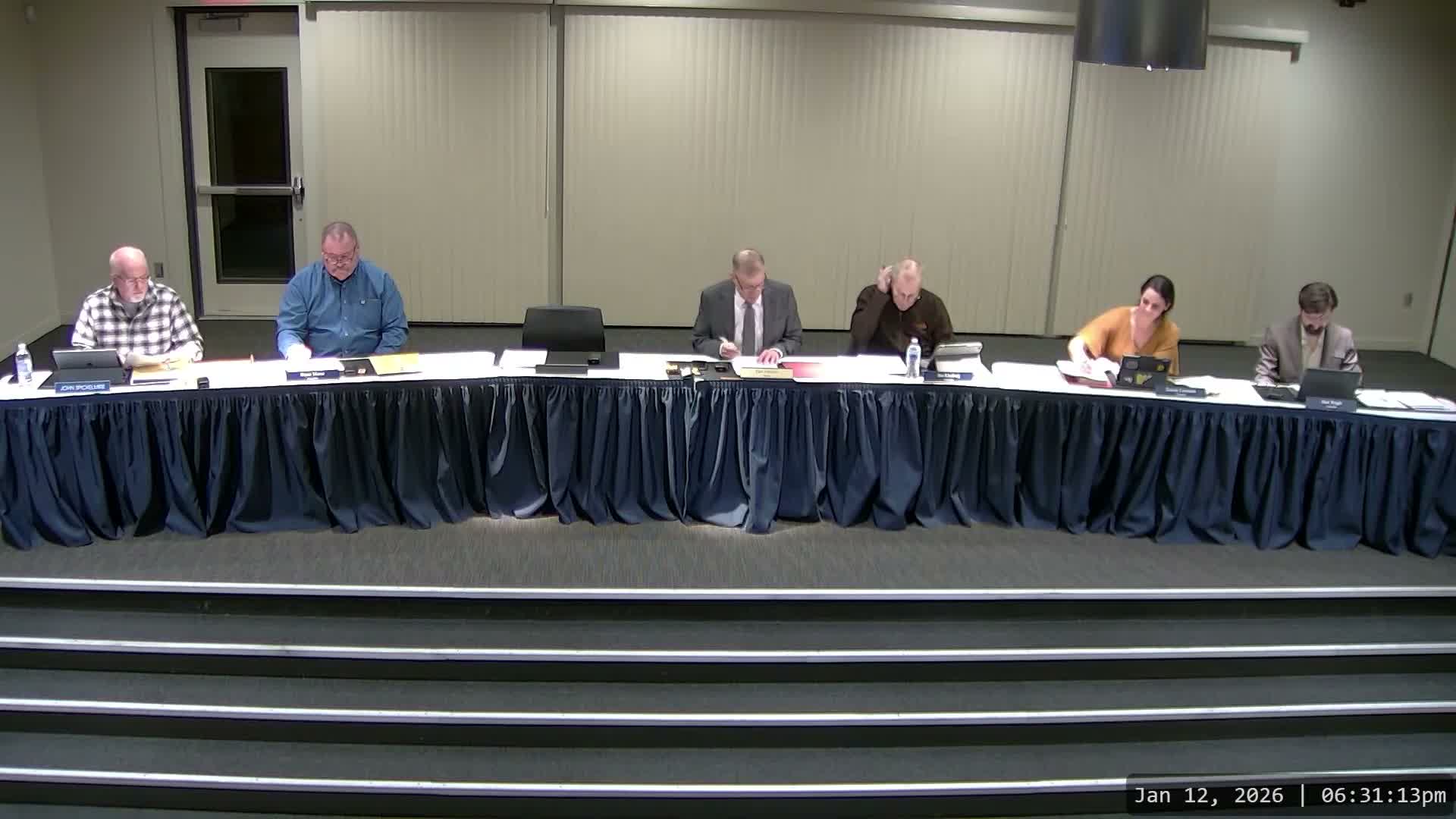
Assistant city planner Katie Hollingshead presented a zoning code amendment the council identified as ZADash05Dash25, saying the proposal is intended to simplify definitions for parking lots, remove redundant sections, and align the code with public-works stormwater thresholds.
Hollingshead said the proposal reduces uncertainty for developers by tightening the definition of what constitutes a parking lot and that the 2,400-square-foot threshold was chosen as a closer match to public-works requirements tied to a 2,000-square-foot stormwater trigger. "We've removed several sections that were redundant or just not needed," she said, according to the record.
During the public hearing and staff Q&A, councilors pressed implementation questions: Councilor Wright asked whether the exemption threshold (currently framed as five contiguous spaces) should be increased to ease burdens on small businesses. Wright moved to amend references to increase the small-parking exemption from 5 to 8 spaces and to change the square-foot threshold from 2,400 to 3,840 square feet; after preliminary procedural confusion the amendment was debated and a voice/count indicated it carried 4–2. Concerns were raised about how dust control requirements for unpaved parking lots are enforced; Hollingshead said enforcement is complaint-driven by public works and the city lacks manpower to proactively inventory unpaved lots.
After amending language, councilors voted on the main motion to approve the first reading of ordinance 49-59 as amended. The vote resulted in a 3–3 split and the motion failed; the first reading did not pass at this meeting. No final adoption occurred and staff said the item would return after further consideration.
Key details mentioned in the public record: the zoning amendment package cites proposed changes to Lewiston City Code chapter 37 and specific sections (37-3; 37-1-46; 37-1-47; 37-1-51; 37-1-53). The packet included a memo from the city planner and Planning & Zoning Commission minutes. Council and staff agreed to discuss enforcement mechanisms and bring clarifying information back to the council.
Hollingshead said the proposal reduces uncertainty for developers by tightening the definition of what constitutes a parking lot and that the 2,400-square-foot threshold was chosen as a closer match to public-works requirements tied to a 2,000-square-foot stormwater trigger. "We've removed several sections that were redundant or just not needed," she said, according to the record.
During the public hearing and staff Q&A, councilors pressed implementation questions: Councilor Wright asked whether the exemption threshold (currently framed as five contiguous spaces) should be increased to ease burdens on small businesses. Wright moved to amend references to increase the small-parking exemption from 5 to 8 spaces and to change the square-foot threshold from 2,400 to 3,840 square feet; after preliminary procedural confusion the amendment was debated and a voice/count indicated it carried 4–2. Concerns were raised about how dust control requirements for unpaved parking lots are enforced; Hollingshead said enforcement is complaint-driven by public works and the city lacks manpower to proactively inventory unpaved lots.
After amending language, councilors voted on the main motion to approve the first reading of ordinance 49-59 as amended. The vote resulted in a 3–3 split and the motion failed; the first reading did not pass at this meeting. No final adoption occurred and staff said the item would return after further consideration.
Key details mentioned in the public record: the zoning amendment package cites proposed changes to Lewiston City Code chapter 37 and specific sections (37-3; 37-1-46; 37-1-47; 37-1-51; 37-1-53). The packet included a memo from the city planner and Planning & Zoning Commission minutes. Council and staff agreed to discuss enforcement mechanisms and bring clarifying information back to the council.
View the Full Meeting & All Its Details
This article offers just a summary. Unlock complete video, transcripts, and insights as a Founder Member.
✓
Watch full, unedited meeting videos
✓
Search every word spoken in unlimited transcripts
✓
AI summaries & real-time alerts (all government levels)
✓
Permanent access to expanding government content
30-day money-back guarantee
