Douglas County joins four other large Nebraska counties in resolution urging property tax relief
January 13, 2026 | Douglas County, Nebraska
This article was created by AI summarizing key points discussed. AI makes mistakes, so for full details and context, please refer to the video of the full meeting. Please report any errors so we can fix them. Report an error »
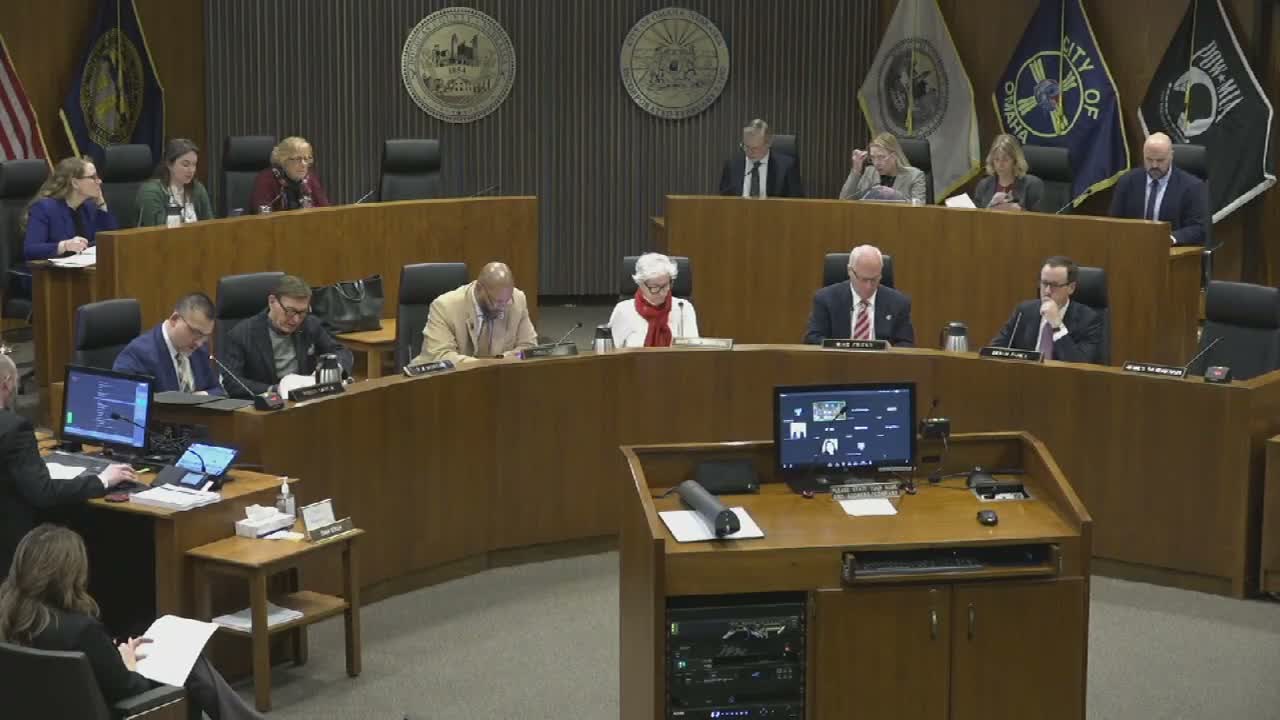
The Douglas County Board of Commissioners on Jan. 13 unanimously adopted a joint resolution with four other large Nebraska counties endorsing comprehensive property tax relief and protections for inheritance-tax revenue.
The resolution, approved 7–0, was presented as a common set of legislative priorities from Buffalo, Douglas, Hall, Lancaster and Sarpy counties. It urges lawmakers to pursue systemic reforms to property valuation and tax levies, preserve inheritance-tax revenue currently used to offset property taxes, and avoid shifting state costs onto counties without sustainable funding.
The board chair read the resolution aloud and noted a minor typographical correction to the year before discussion. Commissioner Kavanaugh said he supported the resolution as a first step while cautioning that "the devil is in the details," and argued counties must both reduce waste and pursue new revenue sources so relief is sustainable. During discussion he suggested, as an example of a revenue stream, state legalization of marijuana to generate new dollars for taxpayers.
Public commenters offered competing views. Larry Storer, who identified his address to the board, said he opposed the resolution in principle and argued that spending reductions (he cited association dues and nonprofit partnerships) were the better route to property-tax relief: "Stop the spending, and then you can provide property tax relief." Luis Jimenez asked the board to clarify what the resolution meant by "advocacy teams;" the chair said the phrase was meant to encompass differing county capacities—some counties use lobbyists while smaller counties rely on staff and board members.
The resolution also criticizes what it describes as veiled state property-tax levies—costs shifted to counties for state personnel, office space and other functions—and authorizes county advocacy teams to pursue legislation consistent with the priorities during the 2026 legislative session.
The board moved and seconded the resolution and approved it by unanimous vote. The resolution does not itself change county tax policy; it is a formal statement of the board’s legislative priorities for state lawmakers this session.
The resolution, approved 7–0, was presented as a common set of legislative priorities from Buffalo, Douglas, Hall, Lancaster and Sarpy counties. It urges lawmakers to pursue systemic reforms to property valuation and tax levies, preserve inheritance-tax revenue currently used to offset property taxes, and avoid shifting state costs onto counties without sustainable funding.
The board chair read the resolution aloud and noted a minor typographical correction to the year before discussion. Commissioner Kavanaugh said he supported the resolution as a first step while cautioning that "the devil is in the details," and argued counties must both reduce waste and pursue new revenue sources so relief is sustainable. During discussion he suggested, as an example of a revenue stream, state legalization of marijuana to generate new dollars for taxpayers.
Public commenters offered competing views. Larry Storer, who identified his address to the board, said he opposed the resolution in principle and argued that spending reductions (he cited association dues and nonprofit partnerships) were the better route to property-tax relief: "Stop the spending, and then you can provide property tax relief." Luis Jimenez asked the board to clarify what the resolution meant by "advocacy teams;" the chair said the phrase was meant to encompass differing county capacities—some counties use lobbyists while smaller counties rely on staff and board members.
The resolution also criticizes what it describes as veiled state property-tax levies—costs shifted to counties for state personnel, office space and other functions—and authorizes county advocacy teams to pursue legislation consistent with the priorities during the 2026 legislative session.
The board moved and seconded the resolution and approved it by unanimous vote. The resolution does not itself change county tax policy; it is a formal statement of the board’s legislative priorities for state lawmakers this session.
View the Full Meeting & All Its Details
This article offers just a summary. Unlock complete video, transcripts, and insights as a Founder Member.
✓
Watch full, unedited meeting videos
✓
Search every word spoken in unlimited transcripts
✓
AI summaries & real-time alerts (all government levels)
✓
Permanent access to expanding government content
30-day money-back guarantee
