Arvada outlines stormwater program, partnerships and capital priorities
January 14, 2026 | Arvada, Jefferson County, Colorado
This article was created by AI summarizing key points discussed. AI makes mistakes, so for full details and context, please refer to the video of the full meeting. Please report any errors so we can fix them. Report an error »
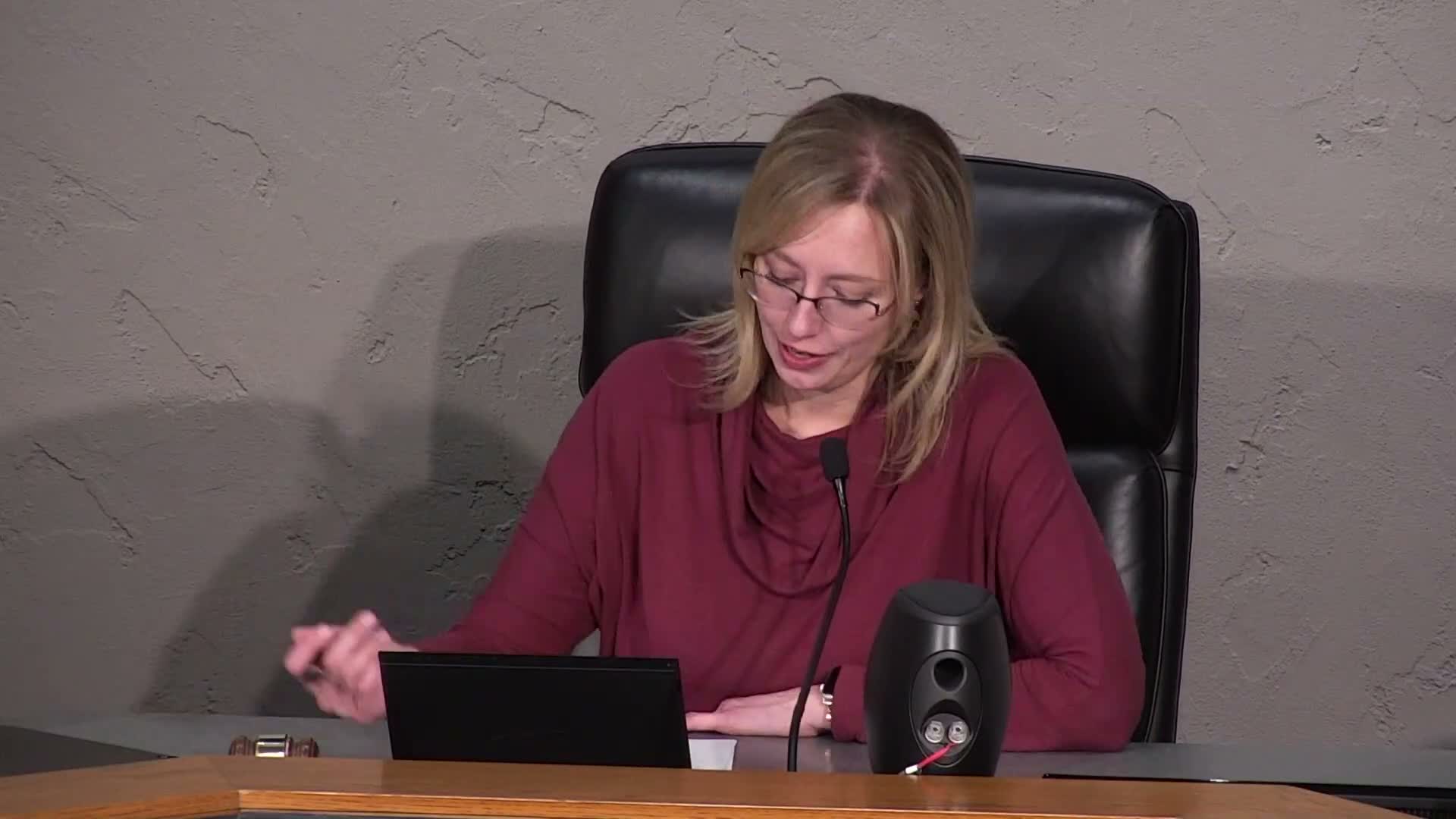
Arvada’s stormwater and floodplain teams presented an overview of operations, monitoring and capital priorities at the Jan. 13 council workshop, describing the scope of the system, recent budgets, compliance programs and planned projects.
Claudia Vaughn, city engineer for stormwater, told council the stormwater enterprise fund supports maintenance and capital work for the city’s pipes, inlets and open-channel systems. Staff said last year’s maintenance budget was about $4.2 million and capital spending through partnerships was about $1.25 million. Vaughn said the city’s pipe network exceeds 220 miles and staff manage more than a dozen major drainage ways.
Melanie Walter, floodplain administrator, described the engineering team’s role delivering both local drainage projects triggered by resident requests and major drainage-way projects that are often done in partnership with the Mile High Flood District. Walter noted recent awards for the Lake Arbor restoration and for the Ralston Creek Crooked Canal crossing and said an Arvada Center regional detention facility is a planned capital project.
Jake Moyer, stormwater administrator, summarized the city’s MS4 compliance program under the Clean Water Act framework and outlined six program areas: education and outreach; construction oversight; post-construction oversight; good housekeeping; illicit-discharge detection and elimination; and monitoring. He reported roughly 860 construction-related inspections last year with seven escalated enforcement actions, and said the city conducts routine sampling and dry-weather monitoring; staff use human-indicator DNA testing when needed to help trace contamination sources.
Council member Davis asked whether captured stormwater is treated like wastewater; staff clarified that treatment typically occurs at the development level through detention or infiltration facilities and that the city does not send stormwater to a centralized treatment plant. Vaughn and Walter said the city will prioritize capital projects and funding strategies in spring budget workshops and will discuss potential partnerships with the Mile High Flood District on high-ranking projects.
Staff identified resident actions that reduce pollution (don’t dump into storm drains, direct roof drains to landscaping, use commercial car washes, plant natives, fix vehicle leaks and pick up pet waste) and provided contact options (stormwater@arvada.org and the Ask Arvada portal).
Council did not take formal action; staff will return with capital-prioritization and funding details in the spring budget process.
Claudia Vaughn, city engineer for stormwater, told council the stormwater enterprise fund supports maintenance and capital work for the city’s pipes, inlets and open-channel systems. Staff said last year’s maintenance budget was about $4.2 million and capital spending through partnerships was about $1.25 million. Vaughn said the city’s pipe network exceeds 220 miles and staff manage more than a dozen major drainage ways.
Melanie Walter, floodplain administrator, described the engineering team’s role delivering both local drainage projects triggered by resident requests and major drainage-way projects that are often done in partnership with the Mile High Flood District. Walter noted recent awards for the Lake Arbor restoration and for the Ralston Creek Crooked Canal crossing and said an Arvada Center regional detention facility is a planned capital project.
Jake Moyer, stormwater administrator, summarized the city’s MS4 compliance program under the Clean Water Act framework and outlined six program areas: education and outreach; construction oversight; post-construction oversight; good housekeeping; illicit-discharge detection and elimination; and monitoring. He reported roughly 860 construction-related inspections last year with seven escalated enforcement actions, and said the city conducts routine sampling and dry-weather monitoring; staff use human-indicator DNA testing when needed to help trace contamination sources.
Council member Davis asked whether captured stormwater is treated like wastewater; staff clarified that treatment typically occurs at the development level through detention or infiltration facilities and that the city does not send stormwater to a centralized treatment plant. Vaughn and Walter said the city will prioritize capital projects and funding strategies in spring budget workshops and will discuss potential partnerships with the Mile High Flood District on high-ranking projects.
Staff identified resident actions that reduce pollution (don’t dump into storm drains, direct roof drains to landscaping, use commercial car washes, plant natives, fix vehicle leaks and pick up pet waste) and provided contact options (stormwater@arvada.org and the Ask Arvada portal).
Council did not take formal action; staff will return with capital-prioritization and funding details in the spring budget process.
Don't Miss a Word: See the Full Meeting!
Go beyond summaries. Unlock every video, transcript, and key insight with a Founder Membership.
✓
Get instant access to full meeting videos
✓
Search and clip any phrase from complete transcripts
✓
Receive AI-powered summaries & custom alerts
✓
Enjoy lifetime, unrestricted access to government data
30-day money-back guarantee
