Springfield committee advances draft ordinance to regulate food trucks on private property
January 13, 2026 | Springfield City, Hampden County, Massachusetts
This article was created by AI summarizing key points discussed. AI makes mistakes, so for full details and context, please refer to the video of the full meeting. Please report any errors so we can fix them. Report an error »
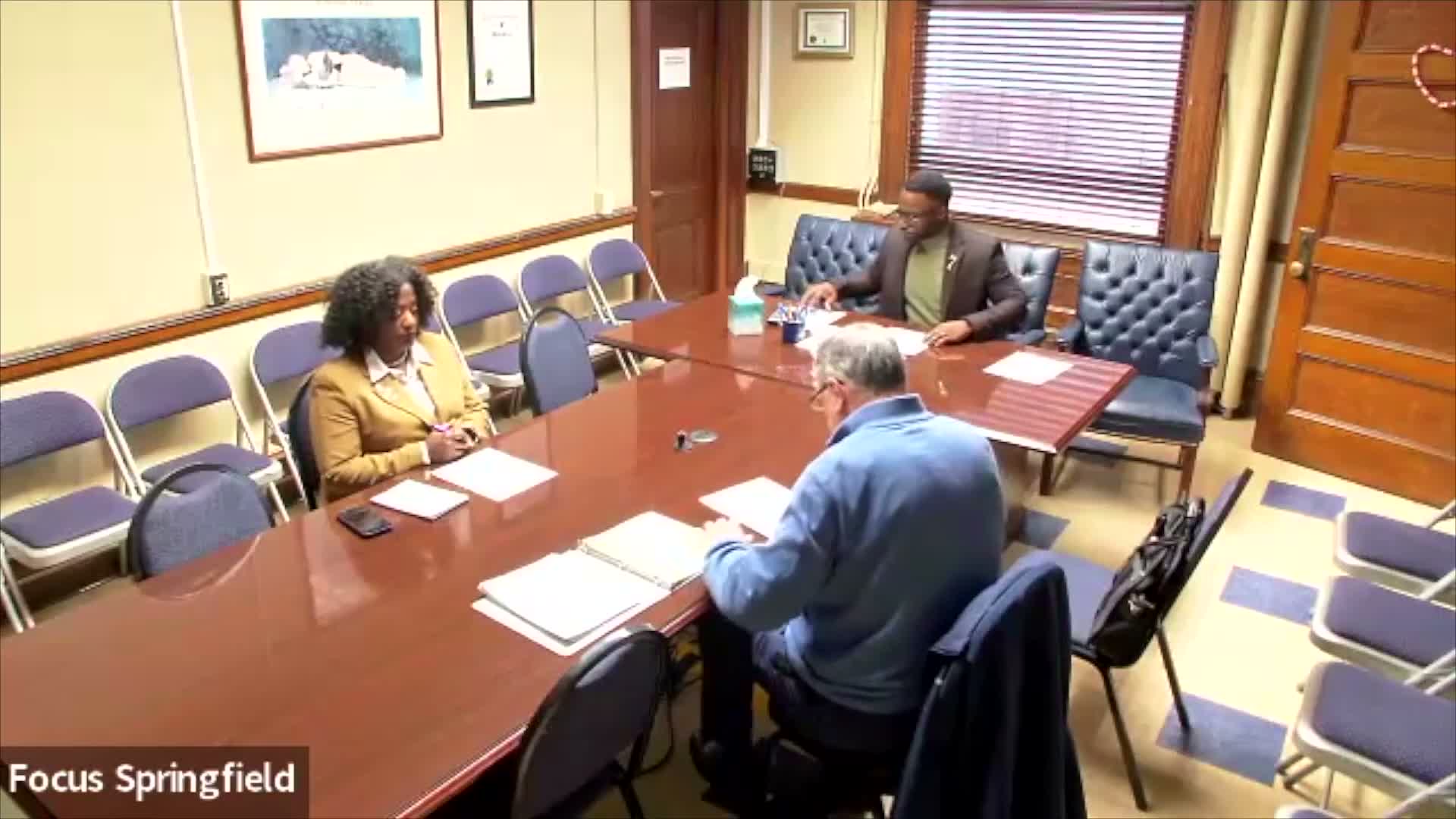
The Springfield City Maintenance and Development Committee on Jan. 12 discussed a draft ordinance to regulate mobile food trucks on private property, with staff proposing permits, hours limits, setbacks and an appeals process ahead of a referral to city council.
Chris Signoli, who presented the proposal, said the city currently "do[es] not have an ordinance that addresses mobile food trucks" and detailed a multi-agency effort last year involving DPW, police, fire, code, planning and HHS to respond to recurring complaints about trucks operating late, generating trash and obstructing parking.
Signoli said the draft would require a permit for trucks whether on the public way or private property, with DPW issuing the final permit after approvals by police, fire and HHS. He described a 7 a.m. to 1 a.m. operating window for public-property locations and a proposed private-property cut-off at 11 p.m., and reiterated a 500-foot buffer from residentially zoned or used property already used for public-way permits would apply to private sites as well. "It is, whether on public or private property, a permit would be required to operate a mobile food truck," Signoli said.
The draft would issue private-property permits for six months, renewable thereafter, and initially caps private-property sites at two trucks per parcel (with possible adjustments based on lot size). Applicants would provide a sketch plan showing truck placement and a zoning analysis confirming the operation would not affect required parking or the parcel's zoning. Signoli cited an Island Pond Road example in which trucks occupied handicap spaces and restricted access to a business entrance.
On enforcement, Signoli said fines for offenses on private property would be issued to property owners, not tenants, and listed a $100 fine per incident in the draft. He also described the proposed appeals procedure: "Such vendor property owner may appeal the denial to the law department in writing within 15 days of receiving such a notice," and the city solicitor or designee would conduct an administrative review and issue a final decision within 30 days.
Committee members asked about vendor outreach, one- or two-day event permits and alcohol sales. Signoli said single-day permits for festivals — examples cited included the Stone Soul/Indian Orchard Food Truck Festival — and event-related alcohol licenses are handled separately through HHS and the licensing commission. He noted staff had notified vendors in the HHS database but acknowledged the city had not reached every operator and would circulate the draft to vendors and councilors prior to February meetings.
Councilors expressed support for the framework but urged more targeted vendor engagement and suggested the proposed March timeline to implement rules might be accelerated; several members recommended returning with vendor feedback before finalizing language. The committee agreed to refer the draft to city council for formal consideration and public input.
The committee took no formal vote on the ordinance. The meeting adjourned at 4:58 p.m.
Chris Signoli, who presented the proposal, said the city currently "do[es] not have an ordinance that addresses mobile food trucks" and detailed a multi-agency effort last year involving DPW, police, fire, code, planning and HHS to respond to recurring complaints about trucks operating late, generating trash and obstructing parking.
Signoli said the draft would require a permit for trucks whether on the public way or private property, with DPW issuing the final permit after approvals by police, fire and HHS. He described a 7 a.m. to 1 a.m. operating window for public-property locations and a proposed private-property cut-off at 11 p.m., and reiterated a 500-foot buffer from residentially zoned or used property already used for public-way permits would apply to private sites as well. "It is, whether on public or private property, a permit would be required to operate a mobile food truck," Signoli said.
The draft would issue private-property permits for six months, renewable thereafter, and initially caps private-property sites at two trucks per parcel (with possible adjustments based on lot size). Applicants would provide a sketch plan showing truck placement and a zoning analysis confirming the operation would not affect required parking or the parcel's zoning. Signoli cited an Island Pond Road example in which trucks occupied handicap spaces and restricted access to a business entrance.
On enforcement, Signoli said fines for offenses on private property would be issued to property owners, not tenants, and listed a $100 fine per incident in the draft. He also described the proposed appeals procedure: "Such vendor property owner may appeal the denial to the law department in writing within 15 days of receiving such a notice," and the city solicitor or designee would conduct an administrative review and issue a final decision within 30 days.
Committee members asked about vendor outreach, one- or two-day event permits and alcohol sales. Signoli said single-day permits for festivals — examples cited included the Stone Soul/Indian Orchard Food Truck Festival — and event-related alcohol licenses are handled separately through HHS and the licensing commission. He noted staff had notified vendors in the HHS database but acknowledged the city had not reached every operator and would circulate the draft to vendors and councilors prior to February meetings.
Councilors expressed support for the framework but urged more targeted vendor engagement and suggested the proposed March timeline to implement rules might be accelerated; several members recommended returning with vendor feedback before finalizing language. The committee agreed to refer the draft to city council for formal consideration and public input.
The committee took no formal vote on the ordinance. The meeting adjourned at 4:58 p.m.
View the Full Meeting & All Its Details
This article offers just a summary. Unlock complete video, transcripts, and insights as a Founder Member.
✓
Watch full, unedited meeting videos
✓
Search every word spoken in unlimited transcripts
✓
AI summaries & real-time alerts (all government levels)
✓
Permanent access to expanding government content
30-day money-back guarantee
