Trial begins in Krueger v. Michigan over 2020 Edenville Dam collapse; plaintiffs blame state decisions
January 12, 2026 | Supreme Court Judicial Rulings ( Opinions ), Judicial, Michigan
This article was created by AI summarizing key points discussed. AI makes mistakes, so for full details and context, please refer to the video of the full meeting. Please report any errors so we can fix them. Report an error »
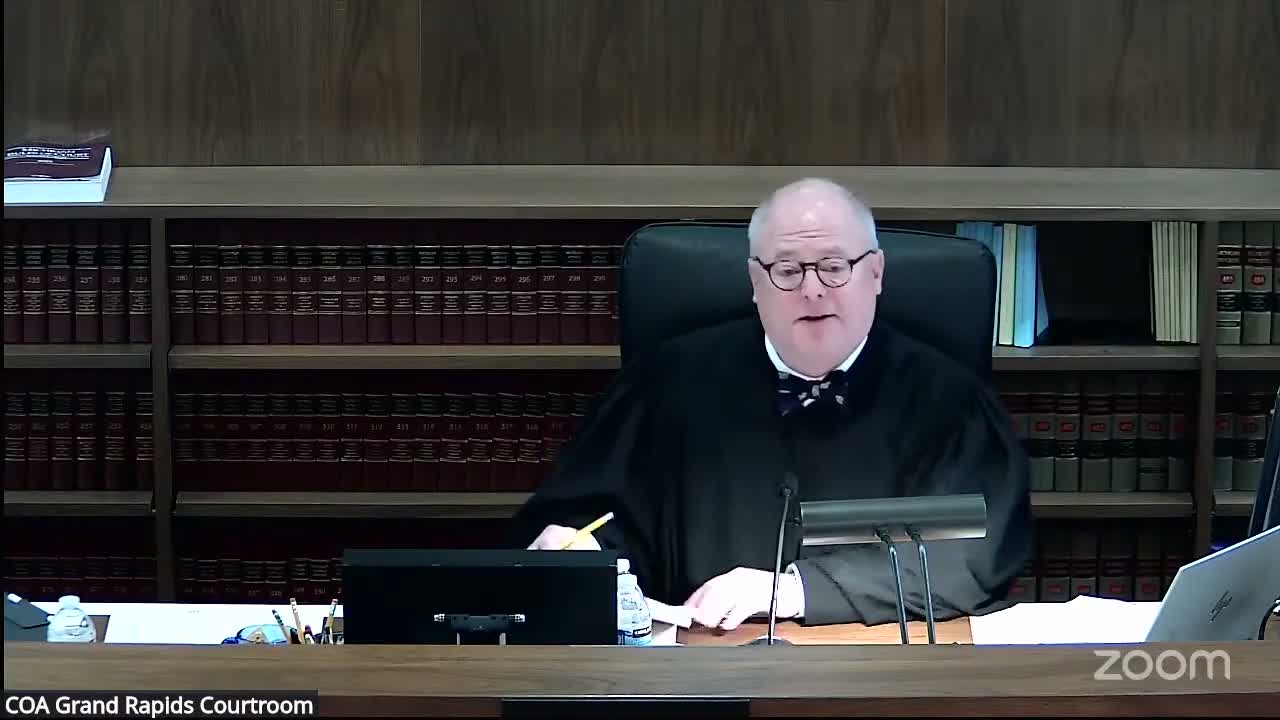
Judge James Robert Redford opened trial Jan. 12, 2026 in David Krueger et al. v. Michigan Department of Environment, Great Lakes et al., saying the court would first decide liability, with damages to be handled later. The plaintiffs and defendants identified counsel and outlined a schedule for live witnesses and exhibits.
Plaintiffs told the court they represent about 2,000 families and pressed the central legal theory: inverse condemnation. In opening, plaintiffs’ lead counsel said the lawsuit “has been filed to hold the state accountable,” arguing the state authorized raising Wixom Lake and thereby increased pressure on the Edenville Dam before a May 19, 2020 rain event that overwhelmed the structure.
Plaintiffs’ attorneys previewed evidence they say will show the dam could not meet the state’s spillway standard (the half‑probable‑maximum‑flood, or half‑PMF) as of January 2020 and that internal analyses, emails and expert witnesses will tie decisions by state dam‑safety staff to the authorization that raised the lake roughly 5½ feet above winter level.
The state disputed that narrative in its opening. Nathan Gamble for the defendants said the evidence will show “no state agency took plaintiffs’ private property for public use,” arguing Boyse Hydro, the private owner, operated the dam under contract with local property owners and that FERC and consultant reports had informed a multi‑year plan to increase spillway capacity.
Both sides flagged technical experts who will appear: plaintiffs said they will call geotechnical and hydrology witnesses to explain static liquefaction and causation; the defense previewed reliance on the independent forensic team (IFT) and other engineering work. The court recessed and then began proof testimony, with the judge reiterating that on‑the‑record summaries should be preserved for any appellate review.
What's next: The court will consider live witness testimony over the coming days, starting with state dam‑safety personnel and engineers. The liability phase will focus on whether state actions (or failures to act) were affirmative and substantial causes of the property losses plaintiffs claim. No damages evidence will be presented in this phase.
Sources: trial openings and witness identifications given Jan. 12, 2026 before Judge James Robert Redford.
Plaintiffs told the court they represent about 2,000 families and pressed the central legal theory: inverse condemnation. In opening, plaintiffs’ lead counsel said the lawsuit “has been filed to hold the state accountable,” arguing the state authorized raising Wixom Lake and thereby increased pressure on the Edenville Dam before a May 19, 2020 rain event that overwhelmed the structure.
Plaintiffs’ attorneys previewed evidence they say will show the dam could not meet the state’s spillway standard (the half‑probable‑maximum‑flood, or half‑PMF) as of January 2020 and that internal analyses, emails and expert witnesses will tie decisions by state dam‑safety staff to the authorization that raised the lake roughly 5½ feet above winter level.
The state disputed that narrative in its opening. Nathan Gamble for the defendants said the evidence will show “no state agency took plaintiffs’ private property for public use,” arguing Boyse Hydro, the private owner, operated the dam under contract with local property owners and that FERC and consultant reports had informed a multi‑year plan to increase spillway capacity.
Both sides flagged technical experts who will appear: plaintiffs said they will call geotechnical and hydrology witnesses to explain static liquefaction and causation; the defense previewed reliance on the independent forensic team (IFT) and other engineering work. The court recessed and then began proof testimony, with the judge reiterating that on‑the‑record summaries should be preserved for any appellate review.
What's next: The court will consider live witness testimony over the coming days, starting with state dam‑safety personnel and engineers. The liability phase will focus on whether state actions (or failures to act) were affirmative and substantial causes of the property losses plaintiffs claim. No damages evidence will be presented in this phase.
Sources: trial openings and witness identifications given Jan. 12, 2026 before Judge James Robert Redford.
Don't Miss a Word: See the Full Meeting!
Go beyond summaries. Unlock every video, transcript, and key insight with a Founder Membership.
✓
Get instant access to full meeting videos
✓
Search and clip any phrase from complete transcripts
✓
Receive AI-powered summaries & custom alerts
✓
Enjoy lifetime, unrestricted access to government data
30-day money-back guarantee
