Ohio County begins drafting tiny homes ordinance after local examples and building-inspector guidance
January 14, 2026 | Ohio County, Kentucky
This article was created by AI summarizing key points discussed. AI makes mistakes, so for full details and context, please refer to the video of the full meeting. Please report any errors so we can fix them. Report an error »
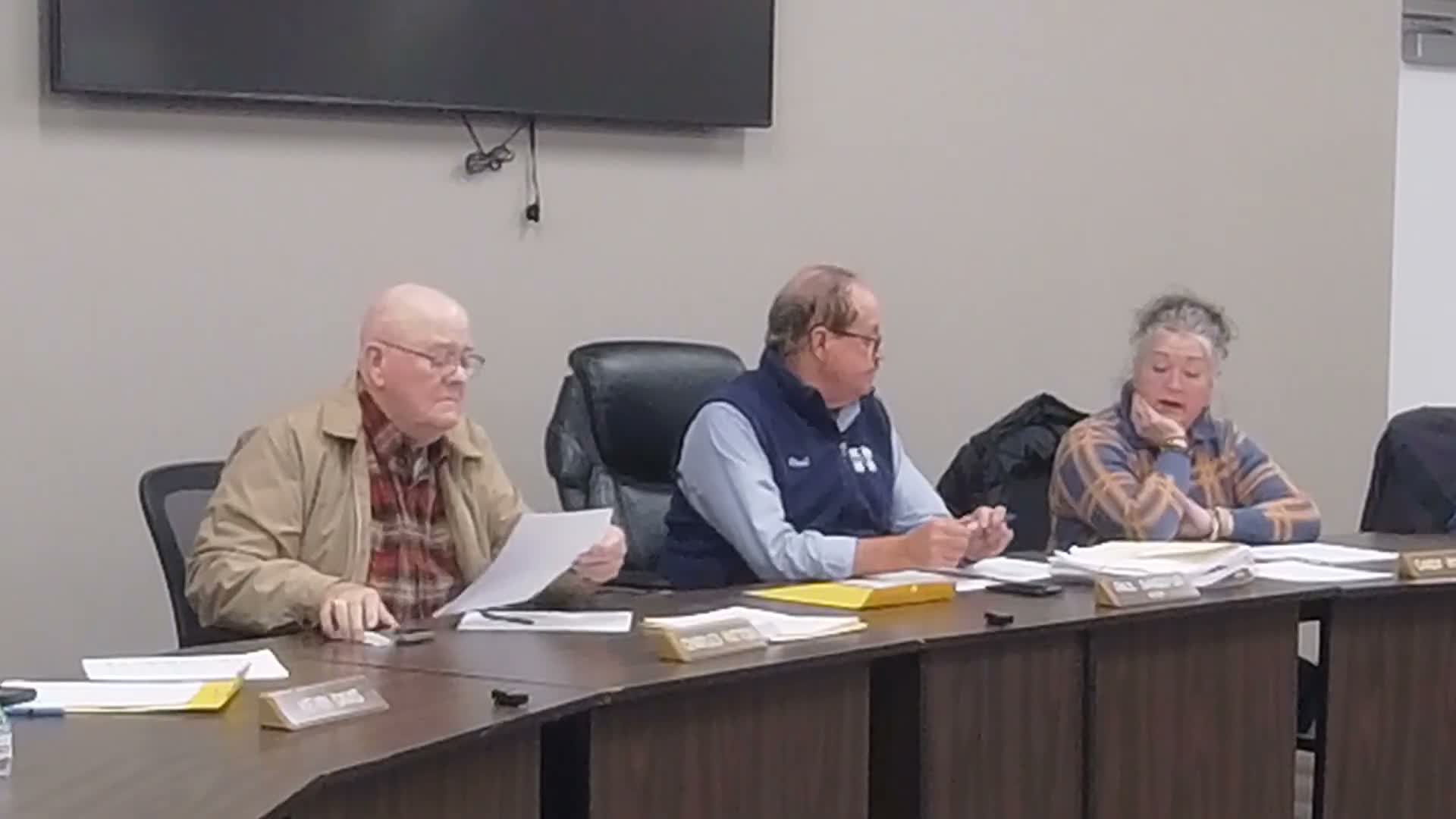
At a Beaver Dam meeting of Ohio County officials, a motion to draft an ordinance addressing tiny homes was made after residents and board members described examples from Owensboro and local placements.
"I'd like to make a motion that we create an ordinance for tiny homes," said Unidentified Speaker 5, prompting extended discussion about how tiny homes are classified under local codes and what rules an ordinance should contain. The clerk (Unidentified Speaker 1) said staff could draft an ordinance for the next meeting.
Speakers cited input from a building inspector identified in the transcript as Kelly Meadows (as referenced) and others from Owensboro. One participant summarized the inspector's advice: "I would have to dig down and put a 2 foot deep concrete footer or foundation or pillar... He said that's really the only requirement as far as planning and zoning over there." Those comments were presented to argue that, under some jurisdictions' approaches, modular or transported units require a minimal permanent foundation and standard wiring and plumbing inspections.
Board members raised zoning issues repeatedly: speakers noted tiny homes were often colocated in a designated tiny-home subdivision or placed in R-3 zoning, and several said they did not believe tiny homes should be allowed in R-1 zoning. Unidentified Speaker 2 and others said many cities they checked have a designated area for tiny homes; the board discussed whether to permit tiny homes in R-2 or R-3 zones and whether an ordinance should explicitly bar them in R-1.
The meeting also included community concern about units already placed in town with utility hookups. One participant said a unit is already in Beaver Dam "and they're living in" it and that hookups (water, sewer, electrical) were present, raising questions about whether permits had been issued. The transcript shows uncertainty about whether any water meters or sewer taps were permitted for those placements.
The board agreed an ordinance would need to address placement, foundation requirements, utility hookups, subdivision/HOA restrictions and whether accessory dwelling provisions apply. Staff were asked to coordinate with planning and zoning and outside partners (a group referenced as 'Grad' that has assisted before) to draft ordinance language for the next meeting.
Because the conversation focused on next steps rather than final rulemaking, the board did not adopt any ordinance at the meeting; members directed staff to produce a draft and return it for formal consideration.
"I'd like to make a motion that we create an ordinance for tiny homes," said Unidentified Speaker 5, prompting extended discussion about how tiny homes are classified under local codes and what rules an ordinance should contain. The clerk (Unidentified Speaker 1) said staff could draft an ordinance for the next meeting.
Speakers cited input from a building inspector identified in the transcript as Kelly Meadows (as referenced) and others from Owensboro. One participant summarized the inspector's advice: "I would have to dig down and put a 2 foot deep concrete footer or foundation or pillar... He said that's really the only requirement as far as planning and zoning over there." Those comments were presented to argue that, under some jurisdictions' approaches, modular or transported units require a minimal permanent foundation and standard wiring and plumbing inspections.
Board members raised zoning issues repeatedly: speakers noted tiny homes were often colocated in a designated tiny-home subdivision or placed in R-3 zoning, and several said they did not believe tiny homes should be allowed in R-1 zoning. Unidentified Speaker 2 and others said many cities they checked have a designated area for tiny homes; the board discussed whether to permit tiny homes in R-2 or R-3 zones and whether an ordinance should explicitly bar them in R-1.
The meeting also included community concern about units already placed in town with utility hookups. One participant said a unit is already in Beaver Dam "and they're living in" it and that hookups (water, sewer, electrical) were present, raising questions about whether permits had been issued. The transcript shows uncertainty about whether any water meters or sewer taps were permitted for those placements.
The board agreed an ordinance would need to address placement, foundation requirements, utility hookups, subdivision/HOA restrictions and whether accessory dwelling provisions apply. Staff were asked to coordinate with planning and zoning and outside partners (a group referenced as 'Grad' that has assisted before) to draft ordinance language for the next meeting.
Because the conversation focused on next steps rather than final rulemaking, the board did not adopt any ordinance at the meeting; members directed staff to produce a draft and return it for formal consideration.
Don't Miss a Word: See the Full Meeting!
Go beyond summaries. Unlock every video, transcript, and key insight with a Founder Membership.
✓
Get instant access to full meeting videos
✓
Search and clip any phrase from complete transcripts
✓
Receive AI-powered summaries & custom alerts
✓
Enjoy lifetime, unrestricted access to government data
30-day money-back guarantee
