Senate approves 273-day transition for legislature finance system after emergency session
December 31, 2025 | Senate, Northern Mariana Legislative Sessions, Northern Mariana Islands
This article was created by AI summarizing key points discussed. AI makes mistakes, so for full details and context, please refer to the video of the full meeting. Please report any errors so we can fix them. Report an error »
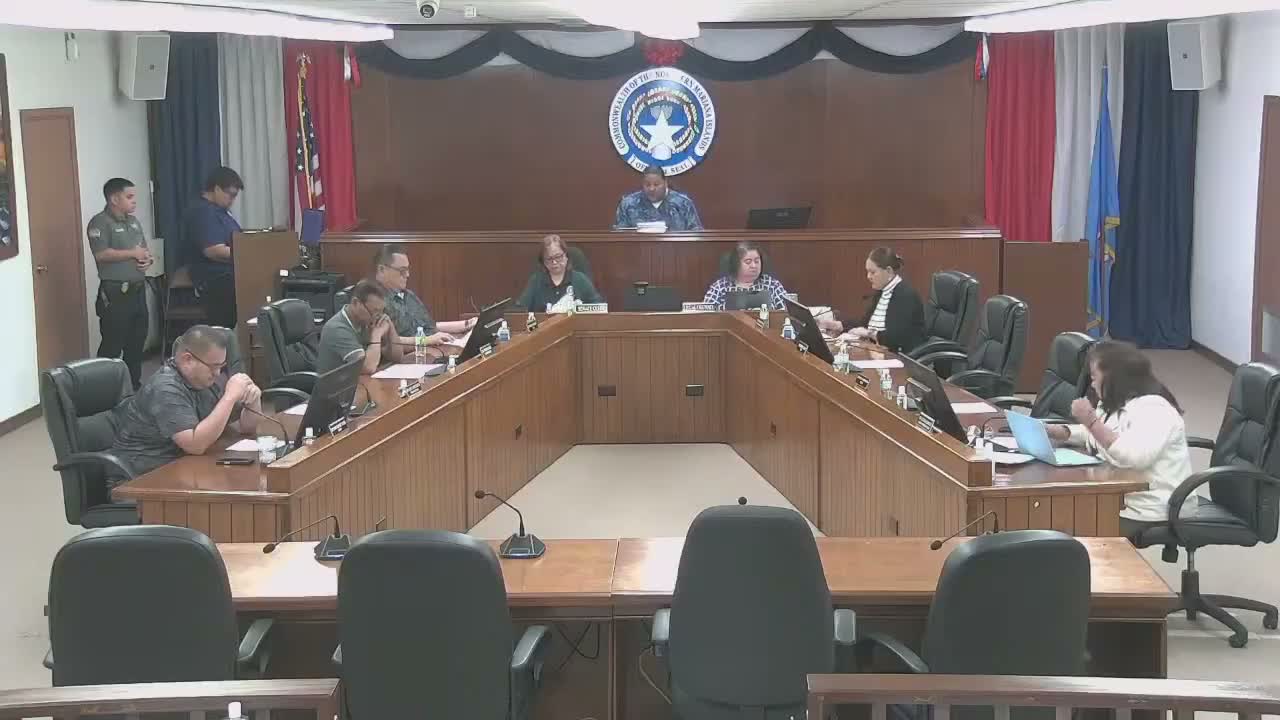
The Senate convened an emergency session and approved House Bill 24-82, HD1 on a 6-1 vote, adopting a measure that adds a transition period of up to 273 days for implementing the legislature’s new finance department.
The bill, read into the record by the floor leader, would amend section 704k of Public Law 24-20 to prevent "disruption or delay of allotments, payments, or expenditures of the legislative branch by adding a transition period of up to 273 days for the implementation of the legislature's finance department and for other purposes," the floor leader said before moving for passage.
Senator Robota spoke in opposition, citing a December 29 memorandum from the secretary of finance that, he said, "informed the legislative branch that all legislative payments will be temporarily suspended" under the cited statutory provision. Robota contended the administration’s memorandum was premature because the statute he referenced "does not take effect until 01/01/2026," and warned that the proposed 273-day transition merely postpones unresolved implementation problems and could increase costs. "This bill is basically the legislature admitting that it passed a framework that was not prepared to implement without systems, without staffing, without funding, or safeguards in place," Robota said, and added he would not vote for the measure.
After the motion was seconded, the clerk conducted a roll-call vote. The roll call recorded one negative vote and six affirmative votes; the presiding officer declared, "With 6 members voting in the affirmative, House Bill 24-82 HD 1 is hereby passed by the Senate." The transcript records the roll call sequence as asked and answered during the session.
The session record also notes the clerk referenced a house communication dated December 31 related to the bill and that senators Hofschneider and Manglena were excused from the emergency session. Following passage, Senator Castro used the floor to thank Anne Cepeda for organizing a community bead workshop during the holidays. The floor leader then moved to adjourn; the session adjourned at 11:23 a.m.
The bill now proceeds according to the legislature’s normal enrollment and transmittal steps for enacted measures. The emergency session record does not specify implementation details beyond the added transition period, nor does it include a named second to the motion; those items are "not specified" in the transcript.
The bill, read into the record by the floor leader, would amend section 704k of Public Law 24-20 to prevent "disruption or delay of allotments, payments, or expenditures of the legislative branch by adding a transition period of up to 273 days for the implementation of the legislature's finance department and for other purposes," the floor leader said before moving for passage.
Senator Robota spoke in opposition, citing a December 29 memorandum from the secretary of finance that, he said, "informed the legislative branch that all legislative payments will be temporarily suspended" under the cited statutory provision. Robota contended the administration’s memorandum was premature because the statute he referenced "does not take effect until 01/01/2026," and warned that the proposed 273-day transition merely postpones unresolved implementation problems and could increase costs. "This bill is basically the legislature admitting that it passed a framework that was not prepared to implement without systems, without staffing, without funding, or safeguards in place," Robota said, and added he would not vote for the measure.
After the motion was seconded, the clerk conducted a roll-call vote. The roll call recorded one negative vote and six affirmative votes; the presiding officer declared, "With 6 members voting in the affirmative, House Bill 24-82 HD 1 is hereby passed by the Senate." The transcript records the roll call sequence as asked and answered during the session.
The session record also notes the clerk referenced a house communication dated December 31 related to the bill and that senators Hofschneider and Manglena were excused from the emergency session. Following passage, Senator Castro used the floor to thank Anne Cepeda for organizing a community bead workshop during the holidays. The floor leader then moved to adjourn; the session adjourned at 11:23 a.m.
The bill now proceeds according to the legislature’s normal enrollment and transmittal steps for enacted measures. The emergency session record does not specify implementation details beyond the added transition period, nor does it include a named second to the motion; those items are "not specified" in the transcript.
View the Full Meeting & All Its Details
This article offers just a summary. Unlock complete video, transcripts, and insights as a Founder Member.
✓
Watch full, unedited meeting videos
✓
Search every word spoken in unlimited transcripts
✓
AI summaries & real-time alerts (all government levels)
✓
Permanent access to expanding government content
30-day money-back guarantee
