Committee advances updated Film SF rebate to make city more competitive for productions
January 14, 2026 | San Francisco County, California
This article was created by AI summarizing key points discussed. AI makes mistakes, so for full details and context, please refer to the video of the full meeting. Please report any errors so we can fix them. Report an error »
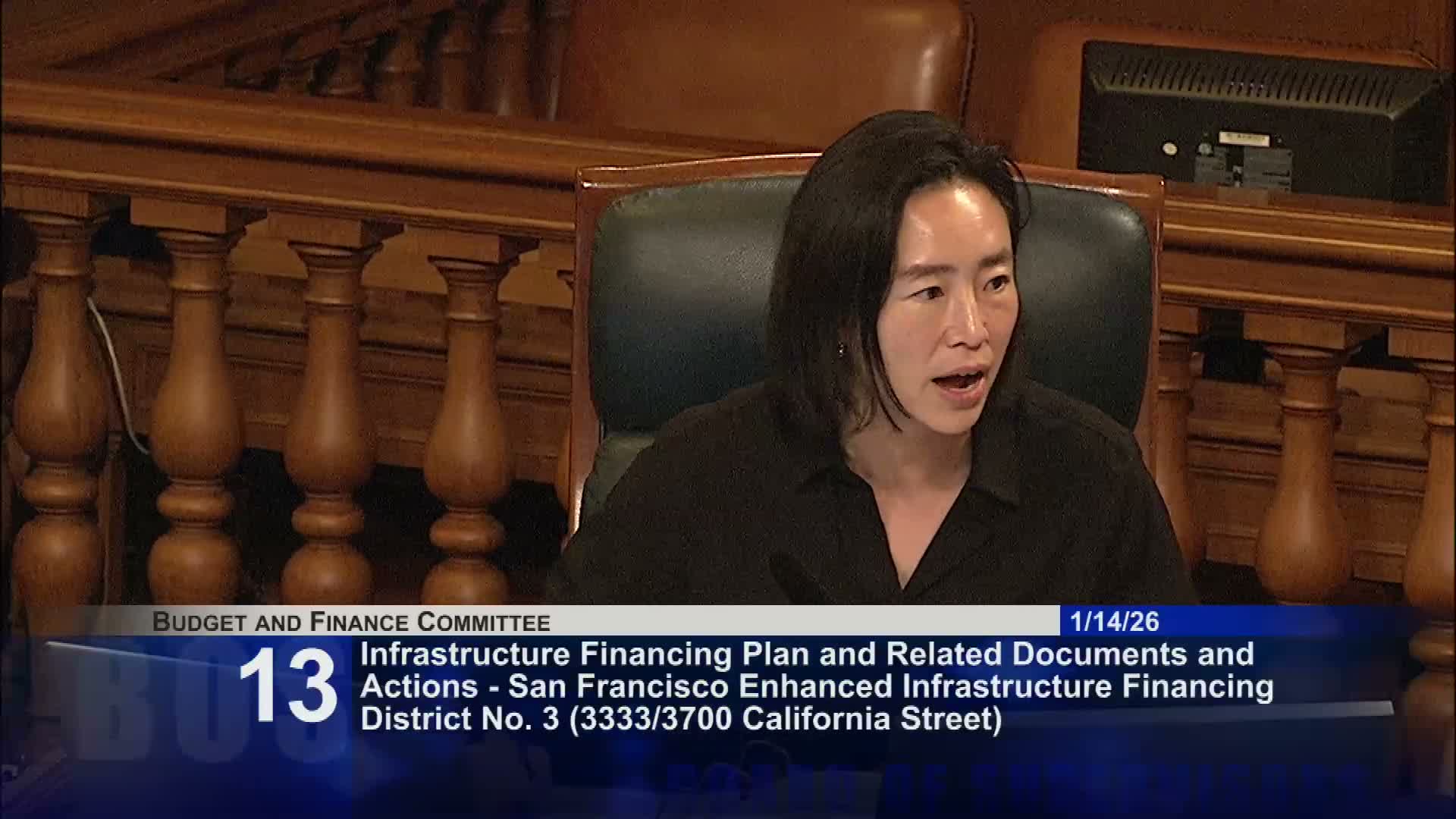
The Budget & Finance Committee on Jan. 14 forwarded to the full Board an ordinance to modernize San Francisco's film incentive program, expanding eligibility, increasing the cap and changing the rebate to a tiered model.
President Mandelmann and Mani Fata, executive director of Film SF, told the committee the current program (last updated in 2006) mainly rebated city fees, was capped at $600,000 and had fallen behind incentives offered elsewhere. The proposed changes would create a tiered rebate: 10% back on qualified local spending up to $1 million, 20% on spending above $1 million, and a 100% rebate of city agency fees. Productions would have to spend a minimum amount locally and shoot at least five days of principal photography in the city to qualify; the ordinance raises the program cap to $1 million and sunsets the program on June 30, 2027 to allow evaluation.
Fata said the updated rules are intended to keep more production work in San Francisco and to help the city's creative economy and local businesses. "For every dollar we've rebated, productions have spent $12.50 in San Francisco," she said in the presentation.
Industry groups and unions testified in strong support: the SF Chamber of Commerce, Teamsters Local 665, IATSE, SAG-AFTRA and local production professionals said the proposal would attract more shoots, bring jobs and support local vendors. The Film Commission's president, Jack Saw, said the change converts a "rebate" into an "incentive" that can be stacked with new state credits to improve San Francisco's competitiveness.
Supervisors asked about fiscal impacts and competitiveness; staff and the Budget Analyst said the film commission has roughly $2 million in carried-over funds and estimated the program's average annual cost under the new rules would rise from about $300,000 historically to roughly $500,000, with an upper-case scenario of about $1 million that could be covered by existing carryover as a one-year test. The committee unanimously voted to send the ordinance to the full Board for consideration.
The ordinance also includes administrative code updates to clarify fee exemptions, film rebate definitions, workforce-training requirements and neighborhood engagement guidelines; staff said the changes will be evaluated when the program sunsets in 2027.
President Mandelmann and Mani Fata, executive director of Film SF, told the committee the current program (last updated in 2006) mainly rebated city fees, was capped at $600,000 and had fallen behind incentives offered elsewhere. The proposed changes would create a tiered rebate: 10% back on qualified local spending up to $1 million, 20% on spending above $1 million, and a 100% rebate of city agency fees. Productions would have to spend a minimum amount locally and shoot at least five days of principal photography in the city to qualify; the ordinance raises the program cap to $1 million and sunsets the program on June 30, 2027 to allow evaluation.
Fata said the updated rules are intended to keep more production work in San Francisco and to help the city's creative economy and local businesses. "For every dollar we've rebated, productions have spent $12.50 in San Francisco," she said in the presentation.
Industry groups and unions testified in strong support: the SF Chamber of Commerce, Teamsters Local 665, IATSE, SAG-AFTRA and local production professionals said the proposal would attract more shoots, bring jobs and support local vendors. The Film Commission's president, Jack Saw, said the change converts a "rebate" into an "incentive" that can be stacked with new state credits to improve San Francisco's competitiveness.
Supervisors asked about fiscal impacts and competitiveness; staff and the Budget Analyst said the film commission has roughly $2 million in carried-over funds and estimated the program's average annual cost under the new rules would rise from about $300,000 historically to roughly $500,000, with an upper-case scenario of about $1 million that could be covered by existing carryover as a one-year test. The committee unanimously voted to send the ordinance to the full Board for consideration.
The ordinance also includes administrative code updates to clarify fee exemptions, film rebate definitions, workforce-training requirements and neighborhood engagement guidelines; staff said the changes will be evaluated when the program sunsets in 2027.
View the Full Meeting & All Its Details
This article offers just a summary. Unlock complete video, transcripts, and insights as a Founder Member.
✓
Watch full, unedited meeting videos
✓
Search every word spoken in unlimited transcripts
✓
AI summaries & real-time alerts (all government levels)
✓
Permanent access to expanding government content
30-day money-back guarantee
