CAMPO updates council on Triangle Bikeway East design, outreach and funding options
January 13, 2026 | Raleigh, Wake County, North Carolina
This article was created by AI summarizing key points discussed. AI makes mistakes, so for full details and context, please refer to the video of the full meeting. Please report any errors so we can fix them. Report an error »
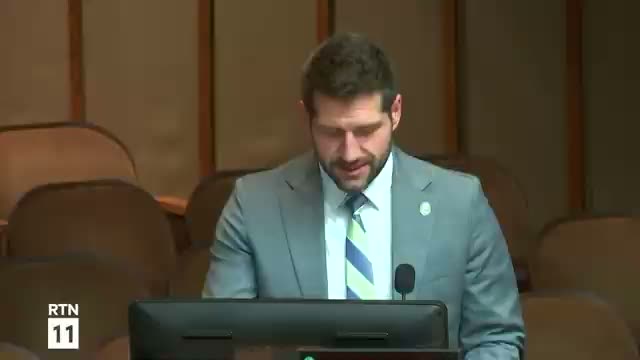
Kara Russell, senior planner at the Capital Area Metropolitan Planning Organization (CAMPO), told the Raleigh City Council that preliminary design work for the Triangle Bikeway East — a planned multiuse path linking Research Triangle Park to West Raleigh — is advancing toward a final alignment and expanded public outreach. "Our survey will go live next week, January 21, and it will run all the way through February 25," Russell said during a council briefing.
The Triangle Bikeway is conceived as a transportation corridor, not only a recreational trail, Russell said, and the preferred alignment adopted in a 2022 feasibility and implementation study follows the I‑40/NC‑54 corridor. CAMPO and Triangle West TPO adopted the study in 2022; CAMPO is managing the preliminary design for the eastern section on a partnership funded for design by Wake County and the Research Triangle Foundation.
Russell said the design work now focuses on the eastern segment from Research Triangle Park to the bridge near the art museum in West Raleigh. Typical cross-section "typicals" under consideration call for a roughly 16‑foot facility — about 10 feet for the bike portion and roughly 6 feet for pedestrians — to support multiple users. On alignment and interstate separation, Russell said the project will seek to stay within right‑of‑way and away from the interstate where possible, noting buffers "typically 50 feet or greater" and that some fence relocation may be required.
On cost, Russell cited the 2022 implementation study's segment estimates and said a combined ballpark for the corridor in that study was about $83–$89 million, but she emphasized the figures are out of date and will be refined as design progresses. "The intent could be that we break it up into smaller chunks," she said, pointing to options for phasing to avoid 'sticker shock.'
Construction funding has not been decided. Russell said options under discussion include federal grant programs, folding segments into NCDOT projects along the corridor, public–private partnerships and nonprofit sponsorships. CAMPO is a managing partner for planning and design but not a construction agency; actual construction sponsors could be NCDOT, local jurisdictions, nonprofit partners or a regional authority, depending on which funding route is chosen.
Council members pressed on operational questions: Councilor Lambert Melton asked whether municipalities would align policies for personal mobility devices so users moving between jurisdictions face consistent rules. Paul Kalm, transportation staff, said policy alignment is an early but important regional conversation. Mayor Porto raised safety concerns and cited recent incidents on greenways, noting that posted speeds are often 10 mph. "I believe generally the speed limit is 10 miles an hour," Porto said; Russell replied that lighting, police and EMS input, and other safety measures will be part of later design discussions.
Russell outlined near‑term public engagement: site visits in 2024 informed feasibility validation, environmental documentation is beginning to support potential federal funding, and the outreach campaign will include community events in RTP, Morrisville and at Laurel Hills Community Center in Raleigh, plus project handouts and QR cards linking to project webpages and the survey. She said CAMPO expects to arrive at a final alignment to carry into 30% design by this summer and noted the 2022 study assumed a 2030 construction year if funding and approvals align.
No formal motions or votes on the project were taken at the briefing. The next procedural steps announced were the public survey (Jan. 21–Feb. 25) and additional stakeholder sessions this spring and summer to refine funding, maintenance and construction sponsorship options.
The Triangle Bikeway is conceived as a transportation corridor, not only a recreational trail, Russell said, and the preferred alignment adopted in a 2022 feasibility and implementation study follows the I‑40/NC‑54 corridor. CAMPO and Triangle West TPO adopted the study in 2022; CAMPO is managing the preliminary design for the eastern section on a partnership funded for design by Wake County and the Research Triangle Foundation.
Russell said the design work now focuses on the eastern segment from Research Triangle Park to the bridge near the art museum in West Raleigh. Typical cross-section "typicals" under consideration call for a roughly 16‑foot facility — about 10 feet for the bike portion and roughly 6 feet for pedestrians — to support multiple users. On alignment and interstate separation, Russell said the project will seek to stay within right‑of‑way and away from the interstate where possible, noting buffers "typically 50 feet or greater" and that some fence relocation may be required.
On cost, Russell cited the 2022 implementation study's segment estimates and said a combined ballpark for the corridor in that study was about $83–$89 million, but she emphasized the figures are out of date and will be refined as design progresses. "The intent could be that we break it up into smaller chunks," she said, pointing to options for phasing to avoid 'sticker shock.'
Construction funding has not been decided. Russell said options under discussion include federal grant programs, folding segments into NCDOT projects along the corridor, public–private partnerships and nonprofit sponsorships. CAMPO is a managing partner for planning and design but not a construction agency; actual construction sponsors could be NCDOT, local jurisdictions, nonprofit partners or a regional authority, depending on which funding route is chosen.
Council members pressed on operational questions: Councilor Lambert Melton asked whether municipalities would align policies for personal mobility devices so users moving between jurisdictions face consistent rules. Paul Kalm, transportation staff, said policy alignment is an early but important regional conversation. Mayor Porto raised safety concerns and cited recent incidents on greenways, noting that posted speeds are often 10 mph. "I believe generally the speed limit is 10 miles an hour," Porto said; Russell replied that lighting, police and EMS input, and other safety measures will be part of later design discussions.
Russell outlined near‑term public engagement: site visits in 2024 informed feasibility validation, environmental documentation is beginning to support potential federal funding, and the outreach campaign will include community events in RTP, Morrisville and at Laurel Hills Community Center in Raleigh, plus project handouts and QR cards linking to project webpages and the survey. She said CAMPO expects to arrive at a final alignment to carry into 30% design by this summer and noted the 2022 study assumed a 2030 construction year if funding and approvals align.
No formal motions or votes on the project were taken at the briefing. The next procedural steps announced were the public survey (Jan. 21–Feb. 25) and additional stakeholder sessions this spring and summer to refine funding, maintenance and construction sponsorship options.
View the Full Meeting & All Its Details
This article offers just a summary. Unlock complete video, transcripts, and insights as a Founder Member.
✓
Watch full, unedited meeting videos
✓
Search every word spoken in unlimited transcripts
✓
AI summaries & real-time alerts (all government levels)
✓
Permanent access to expanding government content
30-day money-back guarantee
