Kansas City, Kansas fire communications center accredited by International Academy of Emergency Dispatch
January 14, 2026 | Wyandotte County, Kansas
This article was created by AI summarizing key points discussed. AI makes mistakes, so for full details and context, please refer to the video of the full meeting. Please report any errors so we can fix them. Report an error »
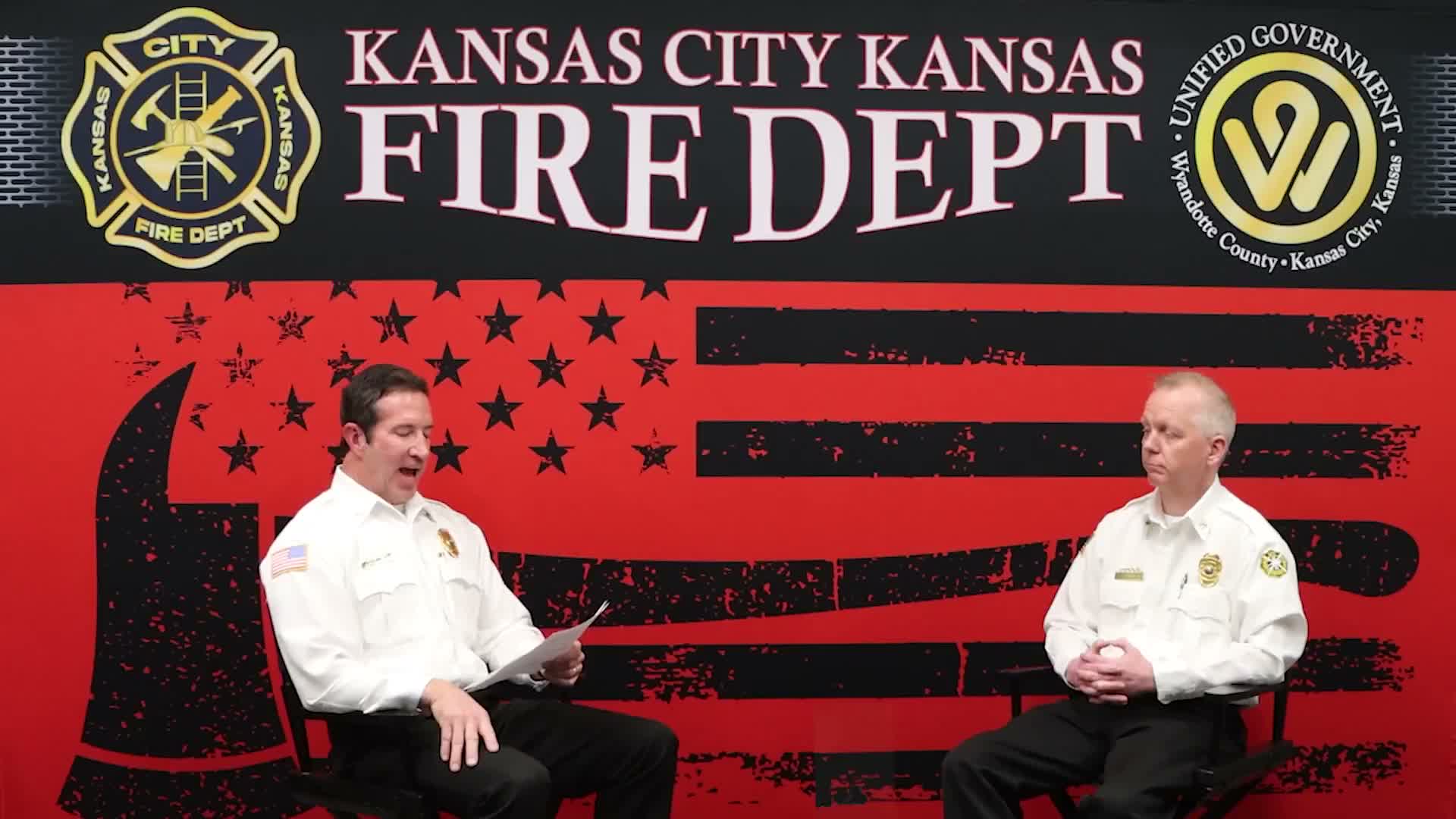
Assistant Chief Sean McLaughlin, head of the Kansas City, Kansas Fire Department communications center, said the unit has been accredited as a Center of Excellence in Emergency Medical Dispatch by the International Academy of Emergency Dispatch (IAED).
"What this accreditation means is that our agency has committed to continuous improvement," McLaughlin said on the department podcast "Putting Out Fires." He described accreditation as a formal validation that the communications center follows standardized, time-tested dispatch protocols and uses metrics to improve performance.
McLaughlin said the center handles roughly 100 to 150 emergency calls per day and that accreditation required sustained performance, internal call review and management oversight. "We take a certain percentage of all the calls that they receive each week, and those are evaluated against a really strict set of standards," he said, describing a process of graded reviews, software-tracked metrics and strength-based feedback to dispatchers.
According to McLaughlin, the work took about five years of incremental improvement. The center maintained required benchmark levels for the minimum period specified by the IAED, submitted an application in September and received official notification of acceptance in December 2025.
Dispatchers use structured questions to gather location, scene-safety and patient information and, when needed, provide callers with pre-arrival instructions — from basic scene safety to guidance on CPR. "They have the tools to give [callers] instructions for anything from trying to exit a vehicle to providing CPR for a person that's in cardiac arrest," McLaughlin said.
Host Assistant Chief Scott Schoneman, a longtime paramedic, said that early instructions from dispatchers are "extremely beneficial" to crews, allowing first responders to begin planning and treatment before arriving on scene. McLaughlin added that the accreditation also emphasizes scene-safety information so responders can stage appropriately if a call appears violent or unsafe.
McLaughlin praised the dispatch staff as "incredibly professional, incredibly skilled" and acknowledged the emotional strain of taking back-to-back traumatic calls. He said management focuses on reinforcing strengths and making incremental improvements rather than overloading staff with corrective feedback.
The department did not provide a worldwide ranking or count in the interview; McLaughlin described the recognition as a prestigious validation of the center's standards and ongoing quality program. The center will continue weekly call reviews and report-tracking to maintain IAED benchmarks.
The podcast episode concluded with Schoneman thanking McLaughlin and congratulating the communications center for the accreditation.
"What this accreditation means is that our agency has committed to continuous improvement," McLaughlin said on the department podcast "Putting Out Fires." He described accreditation as a formal validation that the communications center follows standardized, time-tested dispatch protocols and uses metrics to improve performance.
McLaughlin said the center handles roughly 100 to 150 emergency calls per day and that accreditation required sustained performance, internal call review and management oversight. "We take a certain percentage of all the calls that they receive each week, and those are evaluated against a really strict set of standards," he said, describing a process of graded reviews, software-tracked metrics and strength-based feedback to dispatchers.
According to McLaughlin, the work took about five years of incremental improvement. The center maintained required benchmark levels for the minimum period specified by the IAED, submitted an application in September and received official notification of acceptance in December 2025.
Dispatchers use structured questions to gather location, scene-safety and patient information and, when needed, provide callers with pre-arrival instructions — from basic scene safety to guidance on CPR. "They have the tools to give [callers] instructions for anything from trying to exit a vehicle to providing CPR for a person that's in cardiac arrest," McLaughlin said.
Host Assistant Chief Scott Schoneman, a longtime paramedic, said that early instructions from dispatchers are "extremely beneficial" to crews, allowing first responders to begin planning and treatment before arriving on scene. McLaughlin added that the accreditation also emphasizes scene-safety information so responders can stage appropriately if a call appears violent or unsafe.
McLaughlin praised the dispatch staff as "incredibly professional, incredibly skilled" and acknowledged the emotional strain of taking back-to-back traumatic calls. He said management focuses on reinforcing strengths and making incremental improvements rather than overloading staff with corrective feedback.
The department did not provide a worldwide ranking or count in the interview; McLaughlin described the recognition as a prestigious validation of the center's standards and ongoing quality program. The center will continue weekly call reviews and report-tracking to maintain IAED benchmarks.
The podcast episode concluded with Schoneman thanking McLaughlin and congratulating the communications center for the accreditation.
View the Full Meeting & All Its Details
This article offers just a summary. Unlock complete video, transcripts, and insights as a Founder Member.
✓
Watch full, unedited meeting videos
✓
Search every word spoken in unlimited transcripts
✓
AI summaries & real-time alerts (all government levels)
✓
Permanent access to expanding government content
30-day money-back guarantee
