Vermont award: $195 million from federal rural health transformation grant; state and providers press for clear rules and quick next steps
January 14, 2026 | Health & Welfare, SENATE, Committees, Legislative , Vermont
This article was created by AI summarizing key points discussed. AI makes mistakes, so for full details and context, please refer to the video of the full meeting. Please report any errors so we can fix them. Report an error »
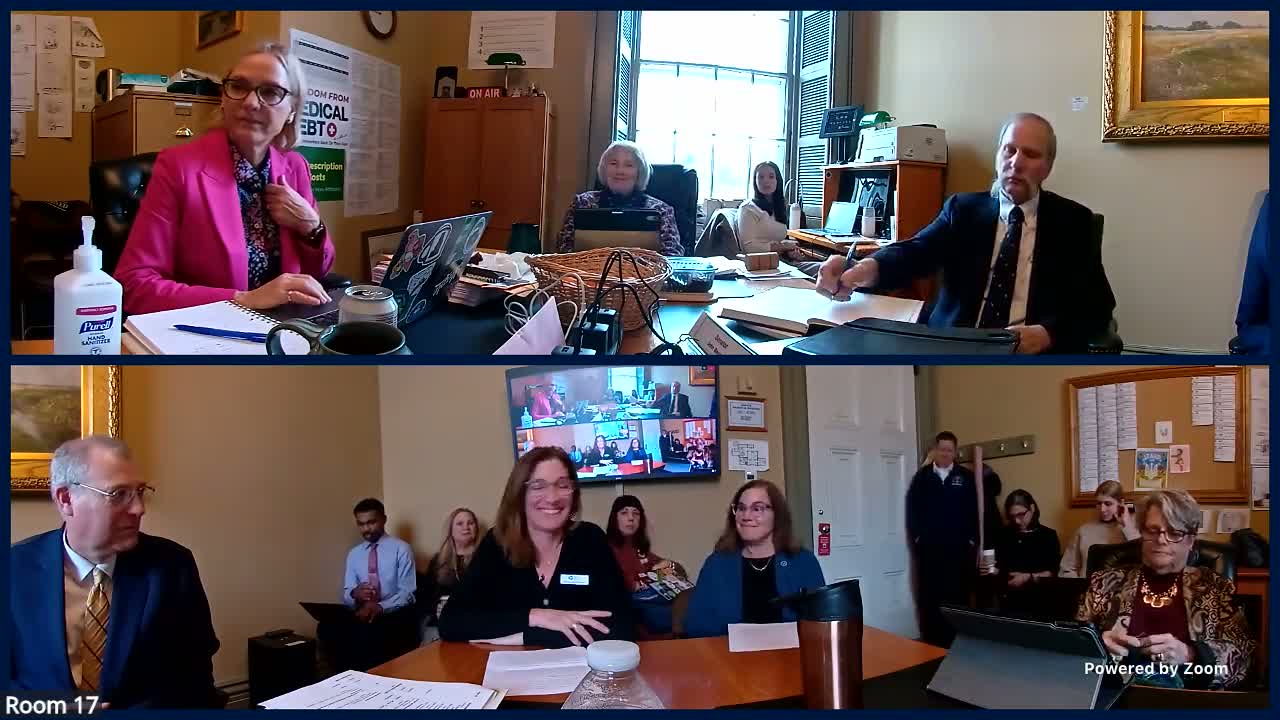
The Senate Health & Welfare committee heard on Jan. 14 from Agency of Human Services officials about Vermont’s award under the federal Rural Health Transformation grant and what comes next.
Jill Mazel Olsen, Medicaid and health systems director at the Agency of Human Services, and Sarah Rosenblum, interim director of health care reform at AHS, told the committee the Centers for Medicare & Medicaid Services set the notice of funding opportunity Sept. 15 and Vermont submitted its application on Nov. 5. "The rural health transformation grant is a $50,000,000,000 initiative from CMS," Olsen said; she reported the state received a $195,000,000 award.
Why it matters: the program is intended to modernize rural care by improving access, quality and sustainability, but it carries strict federal limits and an annual federal redetermination of each state’s award. Rosenblum said states must report yearly on spending and performance, so the $195 million is not guaranteed for the remaining years of the program.
Federal rules and deadlines: AHS told senators that some uses are expressly disallowed — the agency said, "We can't use it to pay for clinician salaries in general" and that the funds cannot be used to supplant existing state funding. Staff also said major facility renovations and workforce housing are likely unallowable as capital improvements under the CMS interpretation; "we can't do major renovations," Olsen said. AHS said unspent or unobligated funds may be redistributed among states and flagged a tight implementation timetable: a revised budget is due Jan. 30, a report is due this August, and AHS said it has until Sept. 30, 2027, to obligate or expend first-year funds.
Who can apply and how dollars get out: AHS emphasized the state will run competitive project grants (requests for proposals) rather than automatically disbursing money to all hospitals. "All providers are eligible to apply," Olsen said, but she explained the award scoring depended partly on immutable rural metrics and partly on application strength; the state must now build the grant machinery to issue RFPs and manage awards. AHS said it will publish a dedicated Rural Health Transformation page, build a listserv and host listening sessions to solicit provider input.
Provider testimony and concerns: Community and mental‑health providers told the committee they want to be included in planning and remain cautious about federal clawbacks. Simone Rishermeyer, executive director of Monarch Care Partners, and Sandy McGuire of Howard Center said the money should support community mental health, substance‑use and developmental‑disability services and urged meaningful engagement. Mary Kate Mollman of Bi‑State Primary Care Association said she and PCAs worked to secure language in the legislation to list federally qualified health centers (FQHCs) as rural health facilities; Bi‑State’s interpretation is that FQHCs are eligible to receive funds regardless of location.
Chittenden County question: Several senators and witnesses raised whether Chittenden County providers could win awards if HRSA or CMS scoring treats county‑level measures as nonrural. Olsen and Rosenblum said CMS has been using HRSA’s rural definition for scoring and the guidance on exact methodology remains incomplete; they stressed that while providers in Chittenden County may apply, CMS guidance will determine which projects score as benefiting rural communities.
What the funds can support: AHS described about 40 project types in its application, including capital purchases that are allowable (for example, new mobile health and dental units), technology upgrades (shared electronic health records, AI transcription), remote patient monitoring and workforce training and education. AHS repeatedly framed the program as best suited to one‑time start‑up costs or transitions to new models rather than ongoing billable services.
Sustainability concern: Jeff McKee, CEO of Community Health Centers serving Chittenden and southern Grand Isle counties, said one‑time grants must be planned so services can be sustained after federal dollars end; he urged the state to design projects that build on existing infrastructure and avoid creating services that cannot be maintained after the five‑year period.
Next steps: AHS said it will meet with CMS to finalize methodology, submit the revised budget on Jan. 30 and begin publishing RFP and outreach materials. The committee paused for a short recess and signaled further follow up, including potential appropriations conversations.
The hearing record shows broad support for using the award to expand access and workforce training, paired with provider concerns about eligibility rules, federal constraints on allowable expenses and the need for careful planning to avoid clawbacks or unsustainable programs.
Jill Mazel Olsen, Medicaid and health systems director at the Agency of Human Services, and Sarah Rosenblum, interim director of health care reform at AHS, told the committee the Centers for Medicare & Medicaid Services set the notice of funding opportunity Sept. 15 and Vermont submitted its application on Nov. 5. "The rural health transformation grant is a $50,000,000,000 initiative from CMS," Olsen said; she reported the state received a $195,000,000 award.
Why it matters: the program is intended to modernize rural care by improving access, quality and sustainability, but it carries strict federal limits and an annual federal redetermination of each state’s award. Rosenblum said states must report yearly on spending and performance, so the $195 million is not guaranteed for the remaining years of the program.
Federal rules and deadlines: AHS told senators that some uses are expressly disallowed — the agency said, "We can't use it to pay for clinician salaries in general" and that the funds cannot be used to supplant existing state funding. Staff also said major facility renovations and workforce housing are likely unallowable as capital improvements under the CMS interpretation; "we can't do major renovations," Olsen said. AHS said unspent or unobligated funds may be redistributed among states and flagged a tight implementation timetable: a revised budget is due Jan. 30, a report is due this August, and AHS said it has until Sept. 30, 2027, to obligate or expend first-year funds.
Who can apply and how dollars get out: AHS emphasized the state will run competitive project grants (requests for proposals) rather than automatically disbursing money to all hospitals. "All providers are eligible to apply," Olsen said, but she explained the award scoring depended partly on immutable rural metrics and partly on application strength; the state must now build the grant machinery to issue RFPs and manage awards. AHS said it will publish a dedicated Rural Health Transformation page, build a listserv and host listening sessions to solicit provider input.
Provider testimony and concerns: Community and mental‑health providers told the committee they want to be included in planning and remain cautious about federal clawbacks. Simone Rishermeyer, executive director of Monarch Care Partners, and Sandy McGuire of Howard Center said the money should support community mental health, substance‑use and developmental‑disability services and urged meaningful engagement. Mary Kate Mollman of Bi‑State Primary Care Association said she and PCAs worked to secure language in the legislation to list federally qualified health centers (FQHCs) as rural health facilities; Bi‑State’s interpretation is that FQHCs are eligible to receive funds regardless of location.
Chittenden County question: Several senators and witnesses raised whether Chittenden County providers could win awards if HRSA or CMS scoring treats county‑level measures as nonrural. Olsen and Rosenblum said CMS has been using HRSA’s rural definition for scoring and the guidance on exact methodology remains incomplete; they stressed that while providers in Chittenden County may apply, CMS guidance will determine which projects score as benefiting rural communities.
What the funds can support: AHS described about 40 project types in its application, including capital purchases that are allowable (for example, new mobile health and dental units), technology upgrades (shared electronic health records, AI transcription), remote patient monitoring and workforce training and education. AHS repeatedly framed the program as best suited to one‑time start‑up costs or transitions to new models rather than ongoing billable services.
Sustainability concern: Jeff McKee, CEO of Community Health Centers serving Chittenden and southern Grand Isle counties, said one‑time grants must be planned so services can be sustained after federal dollars end; he urged the state to design projects that build on existing infrastructure and avoid creating services that cannot be maintained after the five‑year period.
Next steps: AHS said it will meet with CMS to finalize methodology, submit the revised budget on Jan. 30 and begin publishing RFP and outreach materials. The committee paused for a short recess and signaled further follow up, including potential appropriations conversations.
The hearing record shows broad support for using the award to expand access and workforce training, paired with provider concerns about eligibility rules, federal constraints on allowable expenses and the need for careful planning to avoid clawbacks or unsustainable programs.
Don't Miss a Word: See the Full Meeting!
Go beyond summaries. Unlock every video, transcript, and key insight with a Founder Membership.
✓
Get instant access to full meeting videos
✓
Search and clip any phrase from complete transcripts
✓
Receive AI-powered summaries & custom alerts
✓
Enjoy lifetime, unrestricted access to government data
30-day money-back guarantee
