Farm to School advocates ask Senate panel for $500,000 each to sustain local-food and early-childhood programs
January 14, 2026 | Health & Welfare, SENATE, Committees, Legislative , Vermont
This article was created by AI summarizing key points discussed. AI makes mistakes, so for full details and context, please refer to the video of the full meeting. Please report any errors so we can fix them. Report an error »
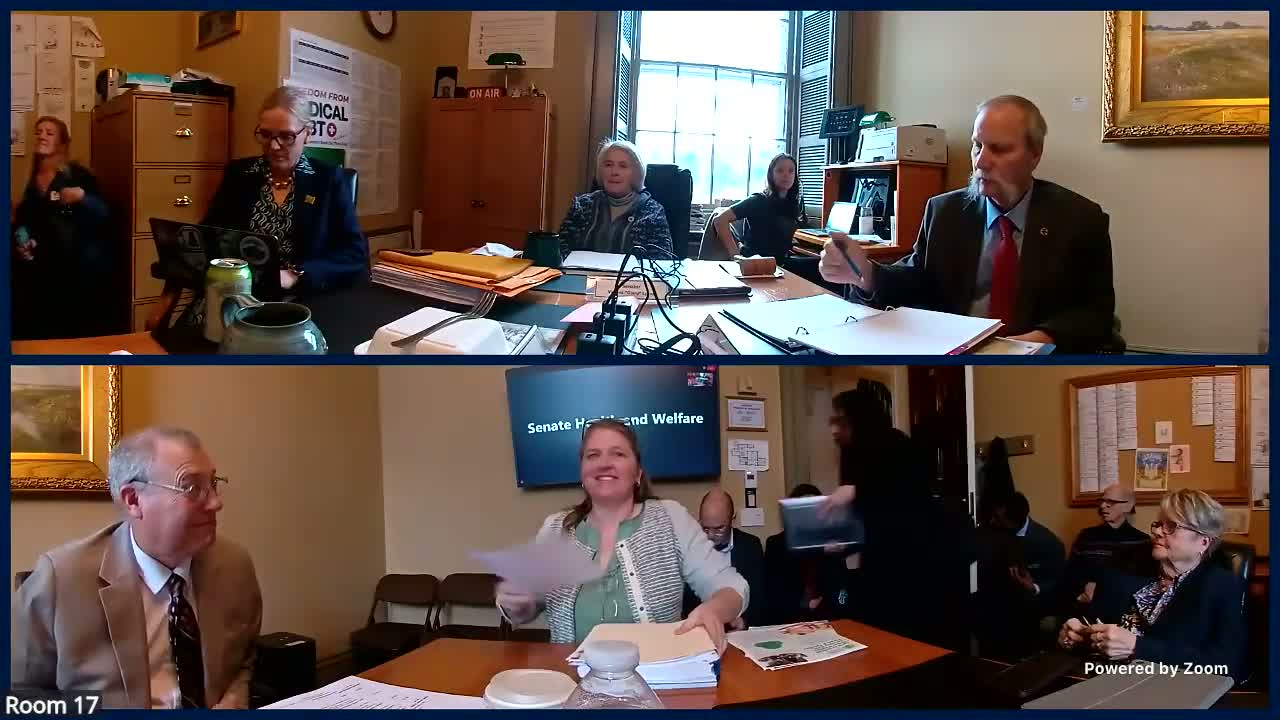
Dana Hudson, coordinator of the Vermont Farm to School and Early Childhood Network (Shelburne Farms), told the Senate Health & Welfare Committee on Jan. 13 that the network seeks level funding appropriations of $500,000 for the Farm to School and Early Childhood grant program and $500,000 for the Local Food Incentive Program.
Why it matters: Advocates said the programs support local farmers, school nutrition and student learning, and they argued continuity of funding matters as the state considers budget placement and potential cuts.
Hudson described three cornerstone activities: a long-running grant program that helps schools build capacity, a local-food incentive program to boost school purchasing of Vermont products, and universal school meals to ensure access. She said Vermont schools spend about $25,000,000 on food annually and that local purchasing has risen from roughly 5% to 14% over the past decade; roughly 150 farms now sell to schools. The network’s stated goal is 30% local purchasing by 2030.
Hudson asked committee members to support level funding for both the Farm to School and Early Childhood grant and the Local Food Incentive Program at $500,000 each. Committee members asked questions about budget placement and noted concern that program appropriations currently sit in the education fund and could face cuts.
A health official who joined the hearing framed the programs as public-health measures: early nutrition education and prescription-food strategies can reduce long-term disease burden and support children’s learning. Committee members expressed interest in hearing more and agreed the programs warrant consideration during budget deliberations.
Ending: Witnesses offered to return with more participants and materials; the committee thanked the speakers and did not take formal action during this session.
Why it matters: Advocates said the programs support local farmers, school nutrition and student learning, and they argued continuity of funding matters as the state considers budget placement and potential cuts.
Hudson described three cornerstone activities: a long-running grant program that helps schools build capacity, a local-food incentive program to boost school purchasing of Vermont products, and universal school meals to ensure access. She said Vermont schools spend about $25,000,000 on food annually and that local purchasing has risen from roughly 5% to 14% over the past decade; roughly 150 farms now sell to schools. The network’s stated goal is 30% local purchasing by 2030.
Hudson asked committee members to support level funding for both the Farm to School and Early Childhood grant and the Local Food Incentive Program at $500,000 each. Committee members asked questions about budget placement and noted concern that program appropriations currently sit in the education fund and could face cuts.
A health official who joined the hearing framed the programs as public-health measures: early nutrition education and prescription-food strategies can reduce long-term disease burden and support children’s learning. Committee members expressed interest in hearing more and agreed the programs warrant consideration during budget deliberations.
Ending: Witnesses offered to return with more participants and materials; the committee thanked the speakers and did not take formal action during this session.
Don't Miss a Word: See the Full Meeting!
Go beyond summaries. Unlock every video, transcript, and key insight with a Founder Membership.
✓
Get instant access to full meeting videos
✓
Search and clip any phrase from complete transcripts
✓
Receive AI-powered summaries & custom alerts
✓
Enjoy lifetime, unrestricted access to government data
30-day money-back guarantee
