Texas Hotel & Lodging Association trains Denison CVB on legal limits and categories for hotel-occupancy tax spending
January 13, 2026 | Denison, Grayson County, Texas
This article was created by AI summarizing key points discussed. AI makes mistakes, so for full details and context, please refer to the video of the full meeting. Please report any errors so we can fix them. Report an error »
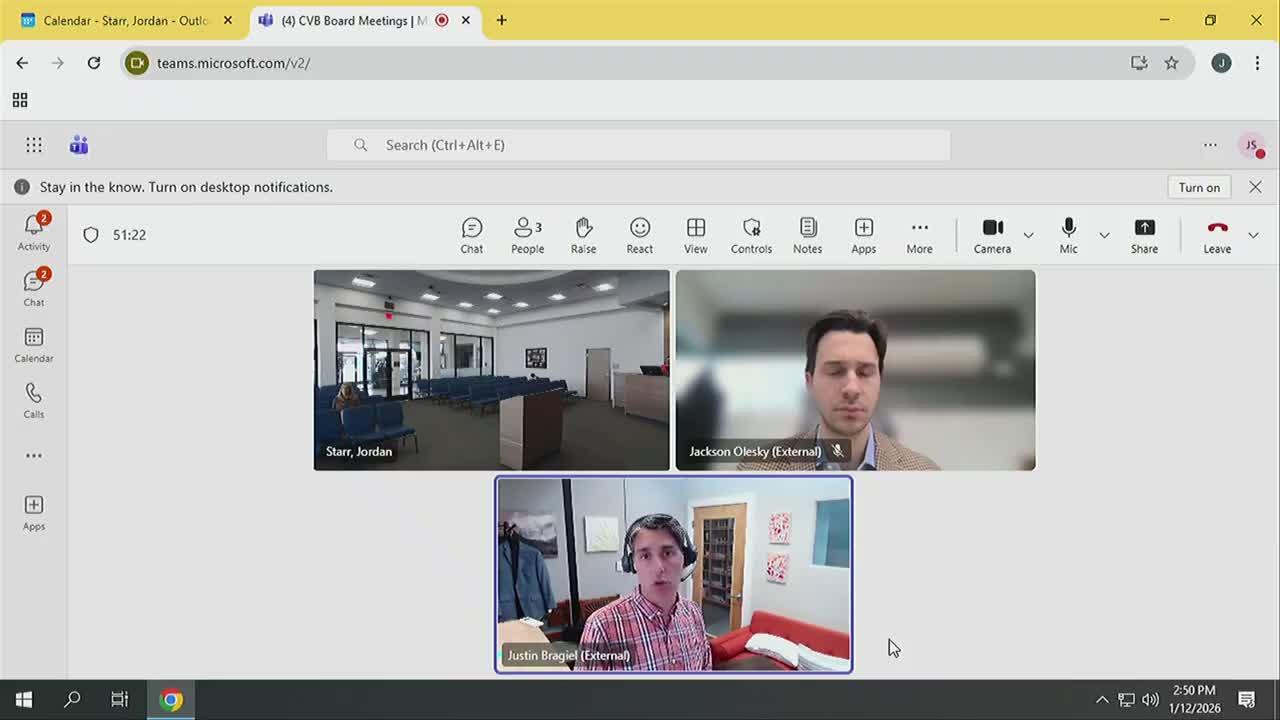
The Denison Convention & Visitors Bureau heard a legal briefing on hotel-occupancy-tax law from Justin Bridal, general counsel and legislative director for the Texas Hotel & Lodging Association, who summarized how state law governs local hotel-tax spending.
"Every expenditure must directly promote and enhance tourism and the hotel and convention industry," Bridal told the board, describing the two-part test cities must meet before spending hotel-tax dollars. He clarified that "directly" establishes a required connection, or nexus, between the expenditure and tourists or hotel activity.
Bridal reviewed the eight categories the Texas tax code allows for hotel-tax spending: (1) convention centers and visitor information centers; (2) registration of convention delegates; (3) advertising and promotion; (4) funding for the arts; (5) historical restoration and preservation; (6) sporting events; (7) wayfinding signage; and (8) transportation systems for tourists that begin or end at a hotel.
He explained two commonly used numerical limits: advertising and promotion carries a minimum expenditure threshold equal to one-seventh of the city’s local 7% hotel tax (about 14.2% of hotel-tax revenue) and both arts and historical restoration categories have a 15% ceiling of annual hotel-tax revenue. Bridal emphasized that projects must fit within one of the code categories and show a connection to tourist or hotel activity.
On practical review, Bridal recommended that the CVB adopt an application and follow-up process that requires applicants to estimate tourism impact and, after events, provide post-event reports showing actual results. He advised the board to use past attendance and lodging data to set performance baselines rather than rely on a single, fixed threshold.
When Jordan asked whether the city should require a minimum number of hotel stays for an event to qualify, Bridal said there is no single statewide number and recommended using local past performance as a baseline and allowing exceptions when the board is incubating new events.
Bridal offered the association’s help to provide seminars, answer legal questions, and consult during the grant review process.
The training clarified statutory boundaries the board must follow when deciding which grant requests to fund with hotel-tax-supported money.
"Every expenditure must directly promote and enhance tourism and the hotel and convention industry," Bridal told the board, describing the two-part test cities must meet before spending hotel-tax dollars. He clarified that "directly" establishes a required connection, or nexus, between the expenditure and tourists or hotel activity.
Bridal reviewed the eight categories the Texas tax code allows for hotel-tax spending: (1) convention centers and visitor information centers; (2) registration of convention delegates; (3) advertising and promotion; (4) funding for the arts; (5) historical restoration and preservation; (6) sporting events; (7) wayfinding signage; and (8) transportation systems for tourists that begin or end at a hotel.
He explained two commonly used numerical limits: advertising and promotion carries a minimum expenditure threshold equal to one-seventh of the city’s local 7% hotel tax (about 14.2% of hotel-tax revenue) and both arts and historical restoration categories have a 15% ceiling of annual hotel-tax revenue. Bridal emphasized that projects must fit within one of the code categories and show a connection to tourist or hotel activity.
On practical review, Bridal recommended that the CVB adopt an application and follow-up process that requires applicants to estimate tourism impact and, after events, provide post-event reports showing actual results. He advised the board to use past attendance and lodging data to set performance baselines rather than rely on a single, fixed threshold.
When Jordan asked whether the city should require a minimum number of hotel stays for an event to qualify, Bridal said there is no single statewide number and recommended using local past performance as a baseline and allowing exceptions when the board is incubating new events.
Bridal offered the association’s help to provide seminars, answer legal questions, and consult during the grant review process.
The training clarified statutory boundaries the board must follow when deciding which grant requests to fund with hotel-tax-supported money.
View the Full Meeting & All Its Details
This article offers just a summary. Unlock complete video, transcripts, and insights as a Founder Member.
✓
Watch full, unedited meeting videos
✓
Search every word spoken in unlimited transcripts
✓
AI summaries & real-time alerts (all government levels)
✓
Permanent access to expanding government content
30-day money-back guarantee
