S.F. supervisors uphold emergency exemption to remove Vaillancourt Fountain, 10–1
January 13, 2026 | San Francisco County, California
This article was created by AI summarizing key points discussed. AI makes mistakes, so for full details and context, please refer to the video of the full meeting. Please report any errors so we can fix them. Report an error »
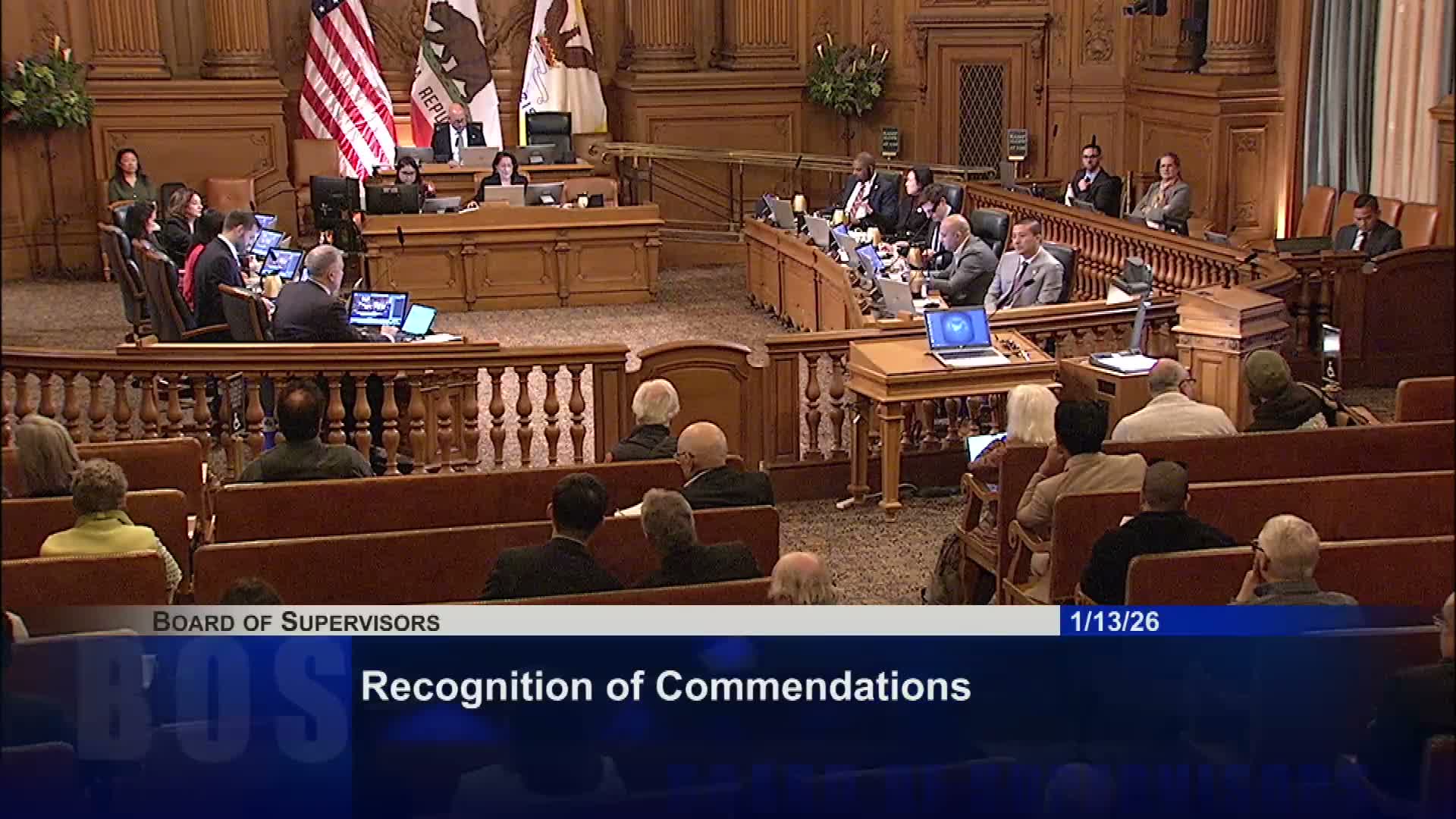
San Francisco’s Board of Supervisors on Jan. 13 affirmed a planning‑department finding that the Vaillancourt Fountain’s deteriorated condition constitutes a safety emergency, approving the measure 10–1 and tabling related motions that would have returned the matter for fuller CEQA review.
The vote followed a lengthy public hearing in which preservation advocates urged the board to require full environmental review before the city removes the 1971 civic artwork, and city staff and engineers presented structural evaluations documenting corrosion, missing reinforcement and a 10‑ton cantilever arm that is reportedly resting on an adjacent arm.
“None of the expert reports before you have recommended approval,” said Susan Brant Holly, an attorney representing the appellants, arguing that the fountain’s condition is the predictable result of deferred maintenance and not a sudden emergency. “The city should not bypass CEQA under the premise of an emergency.”
Planning department staff told the board the record supports an emergency statutory exemption under CEQA Guidelines section 15269. “The project qualifies for an emergency statutory exemption under CEQA guidelines section 15269,” Senior Planner Kei Zushi said, summarizing the department’s written responses to the appeal.
Recreation and Parks and Arts Commission staff described the fountain as a complex 710‑ton precast concrete structure with hollow 10‑ton cantilevered arms and internal steel reinforcement that has corroded after decades of exposure to a humid marine environment. “The fountain presents a public health and safety hazard in its current condition,” project manager Yohanna Harrison Goodwin told the board, citing a condition assessment and a Department of Building Inspection letter that documented corrosion and directed that the site remain vacated and security strengthened.
City staff said removal would allow off‑site, controlled investigation and preserve the option to repair, restore, relocate or repurpose the work. Rec & Park’s capital staff estimated the cost to disassemble and store the fountain at approximately $4,400,000 and said storage could last up to three years while the city assesses options; staff also presented an estimate that restoring and returning the fountain to operation would cost about $29,000,000.
Supporters of the city’s action — including neighborhood groups, downtown property owners and safety advocates — argued the fountain has become an attractive nuisance, has been repeatedly breached despite fencing, and sits on unconsolidated fill and bay mud that amplifies seismic risk. “It is an attractive nuisance, a dangerous condition on city property,” said Alec Bash of the Gateway Tenants Association.
Opponents, including Docomomo and San Francisco Heritage, urged the board to require a full CEQA review to examine alternatives, mitigation, and long‑term preservation. In rebuttal, Susan Brant Holly noted the record shows the removal work is funded by the larger Embarcadero Plaza renovation project and argued that funding linkage and prior planning steps show precommitment to removal.
After questions from supervisors and several rounds of public comment, Supervisor Sauter moved to uphold the Planning Department’s determination and deny the appeal; the motion to affirm item 21 and table items 22 and 23 passed 10–1, with Supervisor Fielder voting no.
The action allows Rec & Park to proceed with disassembly and off‑site storage as an emergency safety measure; the Arts Commission previously approved removal relying on the same exemption. Board members said the vote addressed the narrow CEQA determination — whether the record supports an emergency exemption — not the broader question of the fountain’s long‑term fate.
Next steps include administrative steps to implement disassembly, notifications to the artist (statutory 90‑day notice), off‑site storage logistics and continued opportunities for the public to weigh future options for repair, restoration or re‑installation.
The vote followed a lengthy public hearing in which preservation advocates urged the board to require full environmental review before the city removes the 1971 civic artwork, and city staff and engineers presented structural evaluations documenting corrosion, missing reinforcement and a 10‑ton cantilever arm that is reportedly resting on an adjacent arm.
“None of the expert reports before you have recommended approval,” said Susan Brant Holly, an attorney representing the appellants, arguing that the fountain’s condition is the predictable result of deferred maintenance and not a sudden emergency. “The city should not bypass CEQA under the premise of an emergency.”
Planning department staff told the board the record supports an emergency statutory exemption under CEQA Guidelines section 15269. “The project qualifies for an emergency statutory exemption under CEQA guidelines section 15269,” Senior Planner Kei Zushi said, summarizing the department’s written responses to the appeal.
Recreation and Parks and Arts Commission staff described the fountain as a complex 710‑ton precast concrete structure with hollow 10‑ton cantilevered arms and internal steel reinforcement that has corroded after decades of exposure to a humid marine environment. “The fountain presents a public health and safety hazard in its current condition,” project manager Yohanna Harrison Goodwin told the board, citing a condition assessment and a Department of Building Inspection letter that documented corrosion and directed that the site remain vacated and security strengthened.
City staff said removal would allow off‑site, controlled investigation and preserve the option to repair, restore, relocate or repurpose the work. Rec & Park’s capital staff estimated the cost to disassemble and store the fountain at approximately $4,400,000 and said storage could last up to three years while the city assesses options; staff also presented an estimate that restoring and returning the fountain to operation would cost about $29,000,000.
Supporters of the city’s action — including neighborhood groups, downtown property owners and safety advocates — argued the fountain has become an attractive nuisance, has been repeatedly breached despite fencing, and sits on unconsolidated fill and bay mud that amplifies seismic risk. “It is an attractive nuisance, a dangerous condition on city property,” said Alec Bash of the Gateway Tenants Association.
Opponents, including Docomomo and San Francisco Heritage, urged the board to require a full CEQA review to examine alternatives, mitigation, and long‑term preservation. In rebuttal, Susan Brant Holly noted the record shows the removal work is funded by the larger Embarcadero Plaza renovation project and argued that funding linkage and prior planning steps show precommitment to removal.
After questions from supervisors and several rounds of public comment, Supervisor Sauter moved to uphold the Planning Department’s determination and deny the appeal; the motion to affirm item 21 and table items 22 and 23 passed 10–1, with Supervisor Fielder voting no.
The action allows Rec & Park to proceed with disassembly and off‑site storage as an emergency safety measure; the Arts Commission previously approved removal relying on the same exemption. Board members said the vote addressed the narrow CEQA determination — whether the record supports an emergency exemption — not the broader question of the fountain’s long‑term fate.
Next steps include administrative steps to implement disassembly, notifications to the artist (statutory 90‑day notice), off‑site storage logistics and continued opportunities for the public to weigh future options for repair, restoration or re‑installation.
Don't Miss a Word: See the Full Meeting!
Go beyond summaries. Unlock every video, transcript, and key insight with a Founder Membership.
✓
Get instant access to full meeting videos
✓
Search and clip any phrase from complete transcripts
✓
Receive AI-powered summaries & custom alerts
✓
Enjoy lifetime, unrestricted access to government data
30-day money-back guarantee
