Harney County commissioners report on economic development meetings; housing emerges as priority
January 12, 2026 | Harney County, Oregon
This article was created by AI summarizing key points discussed. AI makes mistakes, so for full details and context, please refer to the video of the full meeting. Please report any errors so we can fix them. Report an error »
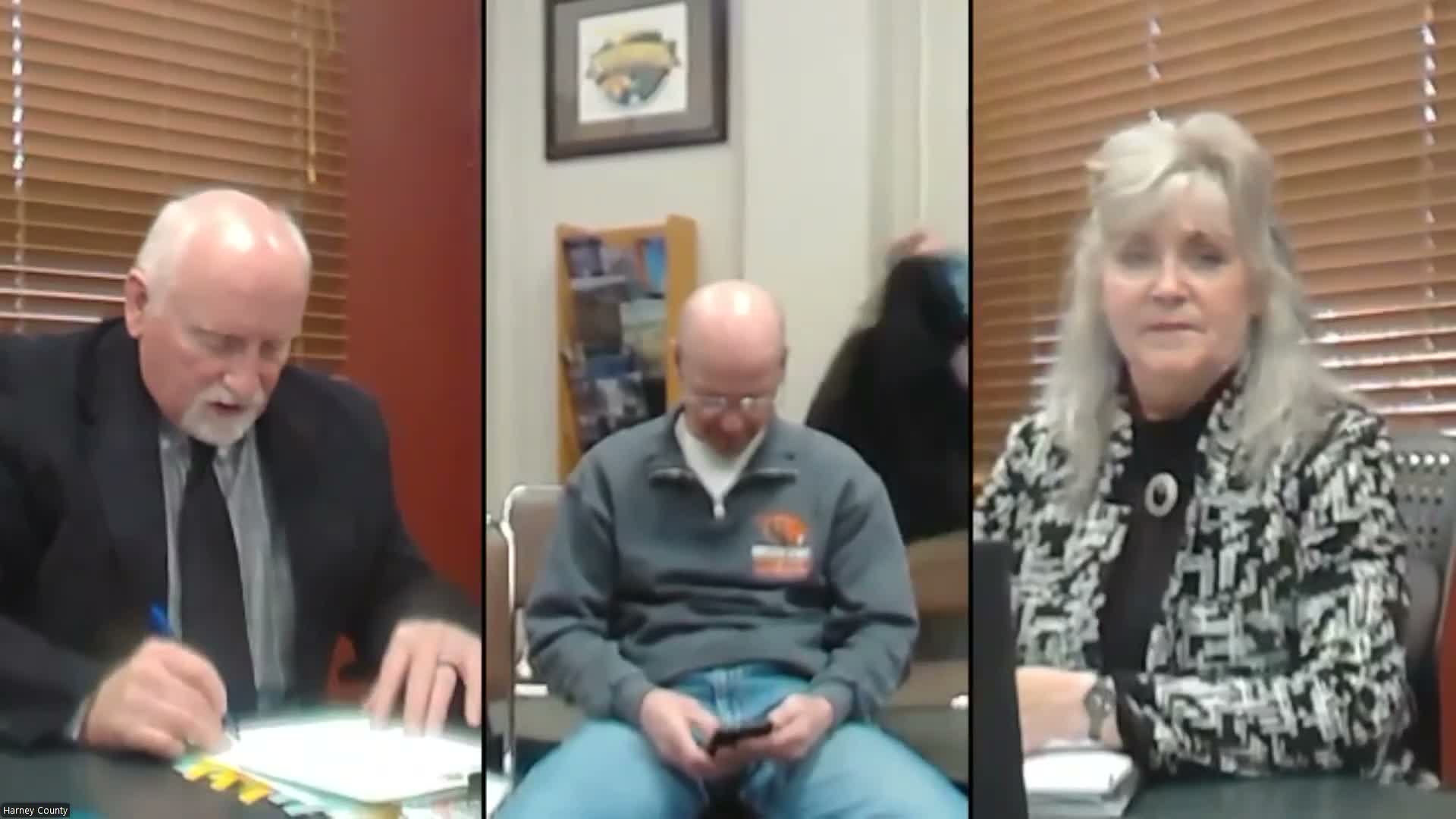
Commissioner Dorril reported to the Harney County Court on Jan. 7 on four facilitated meetings held between Oct. 29 and Dec. 2 that gathered local producers, developers, education partners and service providers to discuss agriculture and industry, small business and tourism, housing and infrastructure, and workforce needs.
Participants raised urgent concerns about recently adopted state groundwater curtailment rules (referred to in the meeting as Division 5-12) and the effect on irrigated hay production and agricultural income. The commissioner said participants were considering litigation and diversification to lower-water crops; one participant estimated potential dramatic revenue loss for certain hay acreage under curtailment scenarios.
Housing was repeatedly identified as the top economic-development opportunity: developers and the county pointed to Miller Springs, a public-private partnership already building homes, and discussed keeping growth paced to local demand. Workforce recruitment—especially for medical and specialized positions—was tied directly to housing availability; the Harney District Hospital and Treasure Valley Community College’s training programs were cited as part of a ‘‘grow your own’’ approach.
Other subjects included distributed energy generation (solar, geothermal, microgrids), tourism assets such as Crane Hot Springs, and timber/mill opportunities conditioned on workforce availability. Commissioners and staff discussed using lottery funds for targeted grant writing and whether to form an economic development advisory committee to coordinate efforts without duplicating existing organizations like Biz Harney or High Desert Partnership.
The court encouraged continued community engagement, potential task-force development, and coordination with regional partners and state agencies.
Participants raised urgent concerns about recently adopted state groundwater curtailment rules (referred to in the meeting as Division 5-12) and the effect on irrigated hay production and agricultural income. The commissioner said participants were considering litigation and diversification to lower-water crops; one participant estimated potential dramatic revenue loss for certain hay acreage under curtailment scenarios.
Housing was repeatedly identified as the top economic-development opportunity: developers and the county pointed to Miller Springs, a public-private partnership already building homes, and discussed keeping growth paced to local demand. Workforce recruitment—especially for medical and specialized positions—was tied directly to housing availability; the Harney District Hospital and Treasure Valley Community College’s training programs were cited as part of a ‘‘grow your own’’ approach.
Other subjects included distributed energy generation (solar, geothermal, microgrids), tourism assets such as Crane Hot Springs, and timber/mill opportunities conditioned on workforce availability. Commissioners and staff discussed using lottery funds for targeted grant writing and whether to form an economic development advisory committee to coordinate efforts without duplicating existing organizations like Biz Harney or High Desert Partnership.
The court encouraged continued community engagement, potential task-force development, and coordination with regional partners and state agencies.
View the Full Meeting & All Its Details
This article offers just a summary. Unlock complete video, transcripts, and insights as a Founder Member.
✓
Watch full, unedited meeting videos
✓
Search every word spoken in unlimited transcripts
✓
AI summaries & real-time alerts (all government levels)
✓
Permanent access to expanding government content
30-day money-back guarantee
