Residents urge Lee County Commission to reconsider SSUT litigation and produce missing records
November 24, 2025 | Lee County, Alabama
This article was created by AI summarizing key points discussed. AI makes mistakes, so for full details and context, please refer to the video of the full meeting. Please report any errors so we can fix them. Report an error »
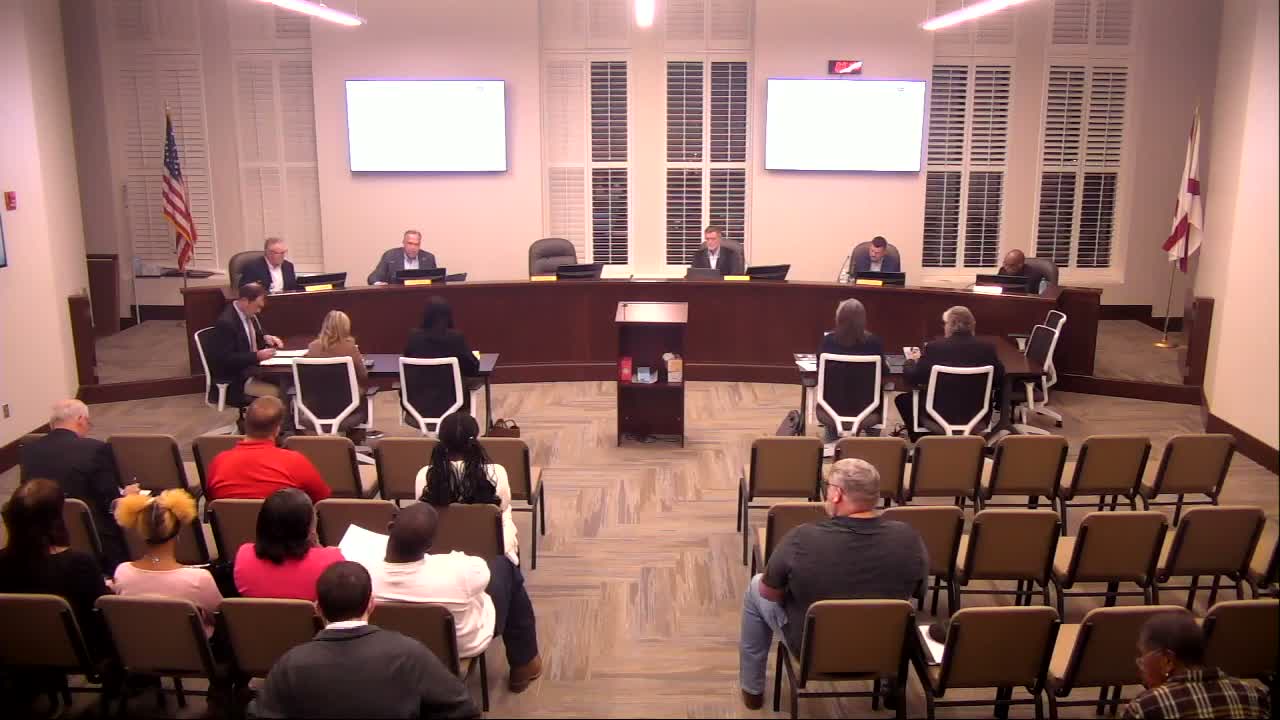
Lance Farrar told the Lee County Commission during public comment that he opposed the county joining litigation to defend the Simplified Sellers Use Tax, saying the move hurts residents. "I see it as basically 1 fox trying to keep another fox out of the hen house that the fox already has," Farrar said, and asked why the county would spend resources to defend the tax rather than protect taxpayers.
John Sophocles, identifying himself as a retired teacher, raised concerns about what he described as double billing connected to contract number 01-981 and suggested the matter could become a class-action issue if not addressed. "The double billing and all that that I've explained in the past is still, in play," Sophocles said, and urged the commission to remove monopolistic practices he said were harming small businesses.
Peter Byrd pressed the commission for greater transparency, asking, "Why can't the taxpayer see the contract?" He argued that county traffic studies and their underlying guidelines should be made public so residents can evaluate county decisions and hold officials accountable. "How can there be accountability if no accounting has been provided?" Byrd said, adding that without clear study guidelines, traffic metrics are meaningless to taxpayers.
The speakers also raised a records-access claim. Farrar said a public-records request he filed returned roughly 20 percent of the documents he sought and asked where the remaining 80 percent are. He warned he may pursue further action to recover or compel production of the records.
The commission did not debate or act on the public comments during the meeting. Several of the issues raised — including alleged missing records, the double-billing claims, and the characterization of traffic studies as fraudulent — were not answered with documentary evidence during the session.
The next procedural step for those matters will depend on staff follow-up or separate agenda items; the commission continued with its regular business after public comment.
John Sophocles, identifying himself as a retired teacher, raised concerns about what he described as double billing connected to contract number 01-981 and suggested the matter could become a class-action issue if not addressed. "The double billing and all that that I've explained in the past is still, in play," Sophocles said, and urged the commission to remove monopolistic practices he said were harming small businesses.
Peter Byrd pressed the commission for greater transparency, asking, "Why can't the taxpayer see the contract?" He argued that county traffic studies and their underlying guidelines should be made public so residents can evaluate county decisions and hold officials accountable. "How can there be accountability if no accounting has been provided?" Byrd said, adding that without clear study guidelines, traffic metrics are meaningless to taxpayers.
The speakers also raised a records-access claim. Farrar said a public-records request he filed returned roughly 20 percent of the documents he sought and asked where the remaining 80 percent are. He warned he may pursue further action to recover or compel production of the records.
The commission did not debate or act on the public comments during the meeting. Several of the issues raised — including alleged missing records, the double-billing claims, and the characterization of traffic studies as fraudulent — were not answered with documentary evidence during the session.
The next procedural step for those matters will depend on staff follow-up or separate agenda items; the commission continued with its regular business after public comment.
View the Full Meeting & All Its Details
This article offers just a summary. Unlock complete video, transcripts, and insights as a Founder Member.
✓
Watch full, unedited meeting videos
✓
Search every word spoken in unlimited transcripts
✓
AI summaries & real-time alerts (all government levels)
✓
Permanent access to expanding government content
30-day money-back guarantee
