Gilroy residents press city on AWS data center water use, code and CEQA process
January 12, 2026 | Gilroy, Santa Clara County, California
This article was created by AI summarizing key points discussed. AI makes mistakes, so for full details and context, please refer to the video of the full meeting. Please report any errors so we can fix them. Report an error »
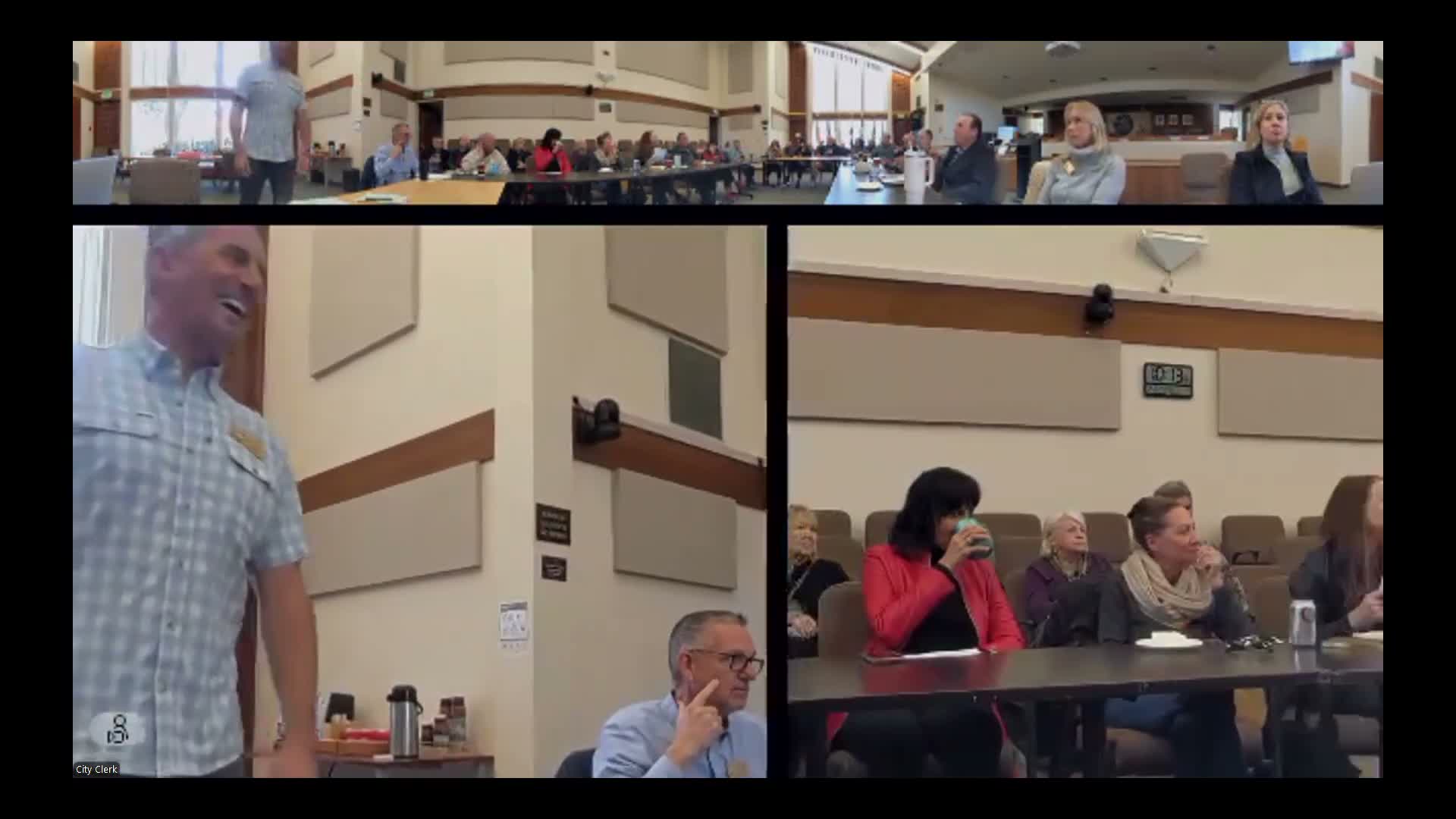
Officials and residents at Gilroy’s Coffee with the Mayor on Saturday spent more than an hour discussing the Amazon Web Services project proposed on the east side of Highway 101, focusing on water demand, environmental review and whether the development could later house higher-intensity uses.
Mayor Braco and several residents highlighted a city fact sheet that summarizes hundreds of pages of the environmental-impact and water reports. "This synthesizes almost 600 pages of an environmental impact report," said Brit, a resident active in public outreach, praising the condensed summary as a tool to help the community understand technical documents.
City officials said the proposal is currently processed under the city’s zoning code as submitted, and that the code allows the type of data-storage facility to proceed under existing rules unless the council amends the code. "They did the process exactly as it is stated in our code," Council member Kelly Remus said, explaining that staff followed legal requirements during review while the council evaluates possible code changes that could require additional planning commission or council review.
Water use prompted the most repeated questions. The mayor disputed widely circulated higher estimates and said the project’s projected potable water demand at full buildout is equivalent to roughly 50 Gilroy homes, not the thousands cited in some public posts. "That is not true… the amount of water that's going to be used by this site when it's fully built out is equivalent to 50 homes in Gilroy," Mayor Braco said.
Officials described the CEQA (California Environmental Quality Act) process in place for the project and noted that CEQA studies are typically funded by the developer; staff and council emphasized that developer-funded studies are reviewed by city consultants and that CEQA does not allow the developer to dictate study findings. "CEQA studies are extremely expensive… the city's not going to pay for them; the developer pays for them, and consultants identify mitigation needs," Remus said.
Residents asked about a binding timeline for converting to recycled (nonpotable) water. Staff responded that there is no single binding timeline because multiple water agencies and infrastructure partners must coordinate, though the city plans to extend purple-pipe delivery to the AWS site within a timeframe of a few years to accommodate future nonpotable use.
The discussion also covered community engagement steps: residents urged clearer maps and easier access to the project documents, and one attendee said they were organizing a teach-in to help neighbors understand data-center operations and potential impacts. Council members said they have asked the city attorney to review whether the zoning code should be amended to require additional public review for similar projects in the future.
Next steps: staff will publish clarified maps and updated fact-sheet material on the city website and follow up with any code-change proposals before the council as the year progresses.
Mayor Braco and several residents highlighted a city fact sheet that summarizes hundreds of pages of the environmental-impact and water reports. "This synthesizes almost 600 pages of an environmental impact report," said Brit, a resident active in public outreach, praising the condensed summary as a tool to help the community understand technical documents.
City officials said the proposal is currently processed under the city’s zoning code as submitted, and that the code allows the type of data-storage facility to proceed under existing rules unless the council amends the code. "They did the process exactly as it is stated in our code," Council member Kelly Remus said, explaining that staff followed legal requirements during review while the council evaluates possible code changes that could require additional planning commission or council review.
Water use prompted the most repeated questions. The mayor disputed widely circulated higher estimates and said the project’s projected potable water demand at full buildout is equivalent to roughly 50 Gilroy homes, not the thousands cited in some public posts. "That is not true… the amount of water that's going to be used by this site when it's fully built out is equivalent to 50 homes in Gilroy," Mayor Braco said.
Officials described the CEQA (California Environmental Quality Act) process in place for the project and noted that CEQA studies are typically funded by the developer; staff and council emphasized that developer-funded studies are reviewed by city consultants and that CEQA does not allow the developer to dictate study findings. "CEQA studies are extremely expensive… the city's not going to pay for them; the developer pays for them, and consultants identify mitigation needs," Remus said.
Residents asked about a binding timeline for converting to recycled (nonpotable) water. Staff responded that there is no single binding timeline because multiple water agencies and infrastructure partners must coordinate, though the city plans to extend purple-pipe delivery to the AWS site within a timeframe of a few years to accommodate future nonpotable use.
The discussion also covered community engagement steps: residents urged clearer maps and easier access to the project documents, and one attendee said they were organizing a teach-in to help neighbors understand data-center operations and potential impacts. Council members said they have asked the city attorney to review whether the zoning code should be amended to require additional public review for similar projects in the future.
Next steps: staff will publish clarified maps and updated fact-sheet material on the city website and follow up with any code-change proposals before the council as the year progresses.
View the Full Meeting & All Its Details
This article offers just a summary. Unlock complete video, transcripts, and insights as a Founder Member.
✓
Watch full, unedited meeting videos
✓
Search every word spoken in unlimited transcripts
✓
AI summaries & real-time alerts (all government levels)
✓
Permanent access to expanding government content
30-day money-back guarantee
