Agency proposes statutory fixes after court narrows agricultural exemption; recommends raising sales threshold to $5,000
January 09, 2026 | Agriculture, Food Resiliency, & Forestry, HOUSE OF REPRESENTATIVES, Committees, Legislative , Vermont
This article was created by AI summarizing key points discussed. AI makes mistakes, so for full details and context, please refer to the video of the full meeting. Please report any errors so we can fix them. Report an error »
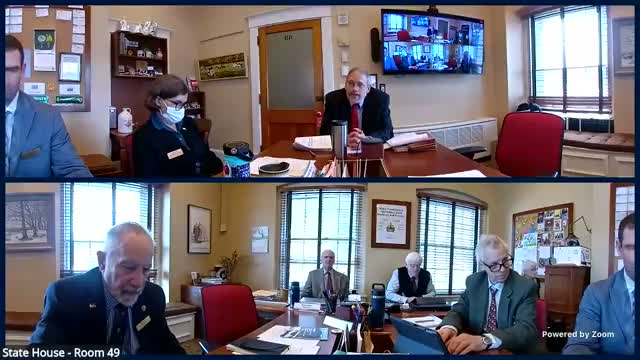
Steve Collier, from the Agency of Agriculture, Food and Markets, told the Legislative Committee on Agriculture, Food Resiliency, & Forestry that a recent Vermont Supreme Court ruling and the 2015 Clean Water Act changes to the Required Agricultural Practices (RAPs) have created uncertainty about what towns may regulate.
Collier said the law’s long history shows farming has been exempt from municipal zoning since the state’s early statewide zoning statute (Act 250) in 1970, and that the RAPs were meant to describe farming activities rather than narrow municipalities’ authority. "They changed the word 'accepted' to 'required,'" Collier said, describing how Act 64 (the Vermont Clean Water Act) renamed previously "accepted agricultural practices" as "required agricultural practices," a shift he and agency staff view as relabeling rather than a substantive change in scope.
The Supreme Court, Collier told the committee, focused on the word 'required' and reached a different interpretation than long-standing agency practice and the environmental court. That decision, he said, has opened ambiguity about which land-use and nuisance regulations towns can apply to farms. "If farms started to have to follow [comprehensive municipal zoning], it's a brave new world for them," Collier said, adding that rules on hours, lighting or noise could substantially change operations.
Collier offered a concrete example: a small Essex operation with roughly a half-acre that sold more than $2,000 of duck eggs was treated as a farm subject to the RAPs under the current sales threshold—an outcome he described as anomalous and a policy concern.
To address those anomalies and reduce conflicting local regulation, Collier said the agency will ask the legislature to amend statutory language and the RAPs criteria. As a negotiated compromise with the Vermont League of Cities and Towns, the agency proposes raising the sales threshold that helps determine RAPs coverage from $2,000 to $5,000. "We think it's reasonable to up that to $5,000," he said. The League had previously proposed a higher figure, and some farm groups may ask to keep the threshold lower.
Collier also described the agency’s current "farm determination" process—an informal registration-style assessment that farmers can request so the agency can tell an operation and the town whether the RAPs apply—and said the agency typically relies on self-reported information unless a dispute prompts a site visit.
He told the committee the legislature can change RAPs criteria more quickly through statute than waiting for a full rulemaking process, and the agency plans to return with model statutory language and an amended RAPs package for the committee to consider at the next meeting.
The hearing included questions about silviculture and forestry jurisdiction, the boundaries between state and local authority, and whether noise or hours-of-operation ordinances could legally apply to farms. Collier said certain forestry activities remain under the Department of Forests, Parks and Recreation and that jurisdictions vary by activity; he cautioned that some overlaps will require clearer statutory delineation.
The committee did not take formal votes during the session. Collier closed by thanking members and confirming he would bring proposed statutory language to the committee at its next meeting.
Collier said the law’s long history shows farming has been exempt from municipal zoning since the state’s early statewide zoning statute (Act 250) in 1970, and that the RAPs were meant to describe farming activities rather than narrow municipalities’ authority. "They changed the word 'accepted' to 'required,'" Collier said, describing how Act 64 (the Vermont Clean Water Act) renamed previously "accepted agricultural practices" as "required agricultural practices," a shift he and agency staff view as relabeling rather than a substantive change in scope.
The Supreme Court, Collier told the committee, focused on the word 'required' and reached a different interpretation than long-standing agency practice and the environmental court. That decision, he said, has opened ambiguity about which land-use and nuisance regulations towns can apply to farms. "If farms started to have to follow [comprehensive municipal zoning], it's a brave new world for them," Collier said, adding that rules on hours, lighting or noise could substantially change operations.
Collier offered a concrete example: a small Essex operation with roughly a half-acre that sold more than $2,000 of duck eggs was treated as a farm subject to the RAPs under the current sales threshold—an outcome he described as anomalous and a policy concern.
To address those anomalies and reduce conflicting local regulation, Collier said the agency will ask the legislature to amend statutory language and the RAPs criteria. As a negotiated compromise with the Vermont League of Cities and Towns, the agency proposes raising the sales threshold that helps determine RAPs coverage from $2,000 to $5,000. "We think it's reasonable to up that to $5,000," he said. The League had previously proposed a higher figure, and some farm groups may ask to keep the threshold lower.
Collier also described the agency’s current "farm determination" process—an informal registration-style assessment that farmers can request so the agency can tell an operation and the town whether the RAPs apply—and said the agency typically relies on self-reported information unless a dispute prompts a site visit.
He told the committee the legislature can change RAPs criteria more quickly through statute than waiting for a full rulemaking process, and the agency plans to return with model statutory language and an amended RAPs package for the committee to consider at the next meeting.
The hearing included questions about silviculture and forestry jurisdiction, the boundaries between state and local authority, and whether noise or hours-of-operation ordinances could legally apply to farms. Collier said certain forestry activities remain under the Department of Forests, Parks and Recreation and that jurisdictions vary by activity; he cautioned that some overlaps will require clearer statutory delineation.
The committee did not take formal votes during the session. Collier closed by thanking members and confirming he would bring proposed statutory language to the committee at its next meeting.
View the Full Meeting & All Its Details
This article offers just a summary. Unlock complete video, transcripts, and insights as a Founder Member.
✓
Watch full, unedited meeting videos
✓
Search every word spoken in unlimited transcripts
✓
AI summaries & real-time alerts (all government levels)
✓
Permanent access to expanding government content
30-day money-back guarantee
