San Joaquin staff asks council to reconsider Central Business District zoning on Main Street
January 08, 2026 | Santaquin South , Juab County, Utah
This article was created by AI summarizing key points discussed. AI makes mistakes, so for full details and context, please refer to the video of the full meeting. Please report any errors so we can fix them. Report an error »
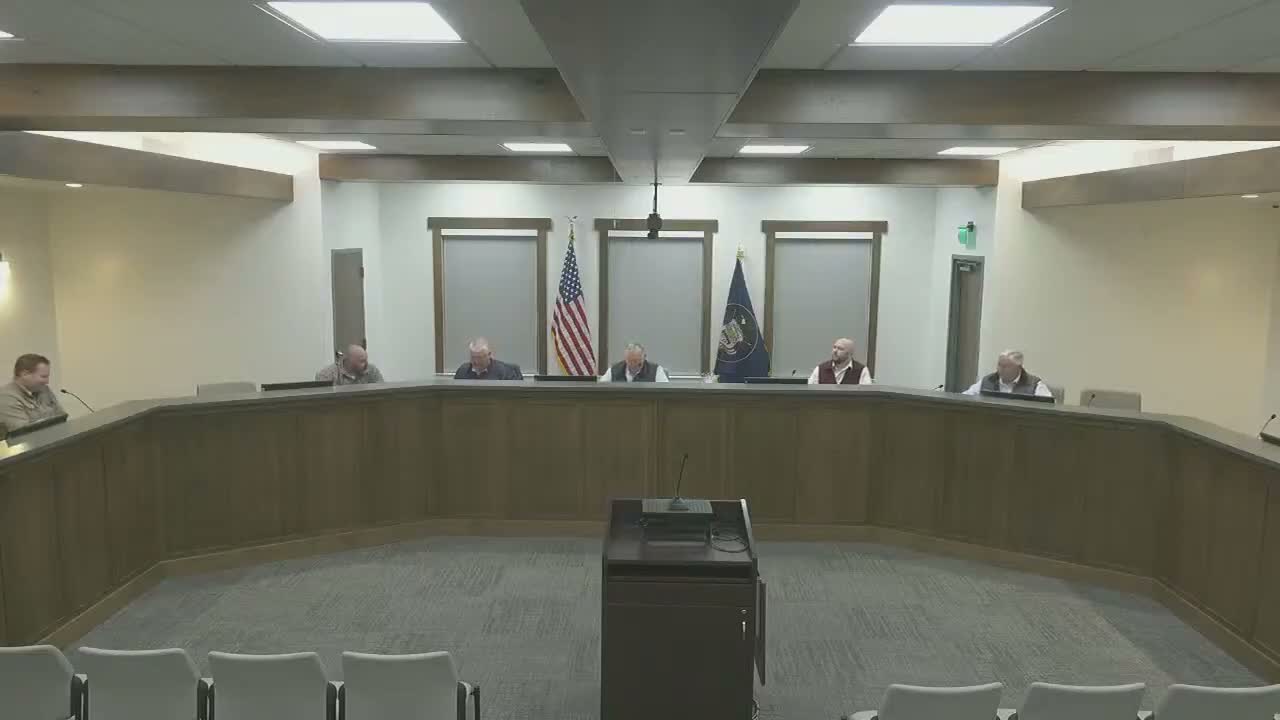
City staff introduced a non-action proposal at the San Joaquin City Council’s Jan. 6 work session to reconsider whether the city should keep a distinct Central Business District (CBD) designation in the Main Street Business District or instead apply the Main Street Commercial (MSC) standards more broadly.
“Should we continue to have a central business district in the city?” a staff presenter asked, framing the conversation as an introductory review of the code rather than a formal proposal. Staff said the CBD sits within the Main Street Business District alongside Main Street Commercial (MSC) and Main Street Residential (MSR) and is differentiated by a handful of more stringent rules — setbacks, height minimums and architectural standards intended to concentrate intensity at the intersection of Main Street and Center Street.
Staff and several council members pointed to recent development and changes on Main Street when questioning whether the CBD still serves its intended purpose. Staff described UDOT and road widening constraints — Main Street is also US Highway 6 and has been widened to five lanes — that limit the city’s ability to implement a pedestrian-oriented Main Street design. Staff also cited recent rezonings (the library to public facilities) and the AutoZone site as examples of how the corridor has evolved.
City staff said developers have reported the CBD is “more restrictive and it is more costly,” and that relaxing some requirements could remove barriers for projects that developers otherwise delay or decline. Council members raised concerns about preserving design quality while removing barriers; one member noted the council previously removed a second-story mandate for AutoZone to enable construction without compromising appearance.
Staff outlined several options for translating that direction into specific code changes: convert frontage facing Main Street to MSC and the rear of blocks to MSR; convert the whole CBD area to MSC; or develop a hybrid, block-by-block approach. Staff recommended drafting a comprehensive amendment to the Main Street Business District chapter rather than piecemeal edits, because the CBD is referenced in multiple places throughout the code.
Council members expressed general support for moving forward with a study and directed staff to prepare draft language. Several members asked that the planning commission get a fresh, independent look — staff said they could invite commissioners to a work-session discussion or send the draft to the planning commission with the required public hearing notifications for a formal zone-change process. Staff estimated the review and formal notice process could take a couple of months.
Next steps: staff will prepare draft ordinance language reflecting council direction, consult with planning commissioners or bring the draft back at another work session per council preference, and then initiate the formal planning commission/public hearing process for any ordinance amendment.
Ending: The council did not take formal legislative action at the work session; staff was directed to prepare a proposal and follow the planning commission and public-notice steps for any ordinance change.
“Should we continue to have a central business district in the city?” a staff presenter asked, framing the conversation as an introductory review of the code rather than a formal proposal. Staff said the CBD sits within the Main Street Business District alongside Main Street Commercial (MSC) and Main Street Residential (MSR) and is differentiated by a handful of more stringent rules — setbacks, height minimums and architectural standards intended to concentrate intensity at the intersection of Main Street and Center Street.
Staff and several council members pointed to recent development and changes on Main Street when questioning whether the CBD still serves its intended purpose. Staff described UDOT and road widening constraints — Main Street is also US Highway 6 and has been widened to five lanes — that limit the city’s ability to implement a pedestrian-oriented Main Street design. Staff also cited recent rezonings (the library to public facilities) and the AutoZone site as examples of how the corridor has evolved.
City staff said developers have reported the CBD is “more restrictive and it is more costly,” and that relaxing some requirements could remove barriers for projects that developers otherwise delay or decline. Council members raised concerns about preserving design quality while removing barriers; one member noted the council previously removed a second-story mandate for AutoZone to enable construction without compromising appearance.
Staff outlined several options for translating that direction into specific code changes: convert frontage facing Main Street to MSC and the rear of blocks to MSR; convert the whole CBD area to MSC; or develop a hybrid, block-by-block approach. Staff recommended drafting a comprehensive amendment to the Main Street Business District chapter rather than piecemeal edits, because the CBD is referenced in multiple places throughout the code.
Council members expressed general support for moving forward with a study and directed staff to prepare draft language. Several members asked that the planning commission get a fresh, independent look — staff said they could invite commissioners to a work-session discussion or send the draft to the planning commission with the required public hearing notifications for a formal zone-change process. Staff estimated the review and formal notice process could take a couple of months.
Next steps: staff will prepare draft ordinance language reflecting council direction, consult with planning commissioners or bring the draft back at another work session per council preference, and then initiate the formal planning commission/public hearing process for any ordinance amendment.
Ending: The council did not take formal legislative action at the work session; staff was directed to prepare a proposal and follow the planning commission and public-notice steps for any ordinance change.
Don't Miss a Word: See the Full Meeting!
Go beyond summaries. Unlock every video, transcript, and key insight with a Founder Membership.
✓
Get instant access to full meeting videos
✓
Search and clip any phrase from complete transcripts
✓
Receive AI-powered summaries & custom alerts
✓
Enjoy lifetime, unrestricted access to government data
30-day money-back guarantee
