House Judiciary advances bills targeting charitable bail funds and cashless-bail jurisdictions
January 08, 2026 | Judiciary: House Committee, Standing Committees - House & Senate, Congressional Hearings Compilation, Legislative, Federal
This article was created by AI summarizing key points discussed. AI makes mistakes, so for full details and context, please refer to the video of the full meeting. Please report any errors so we can fix them. Report an error »
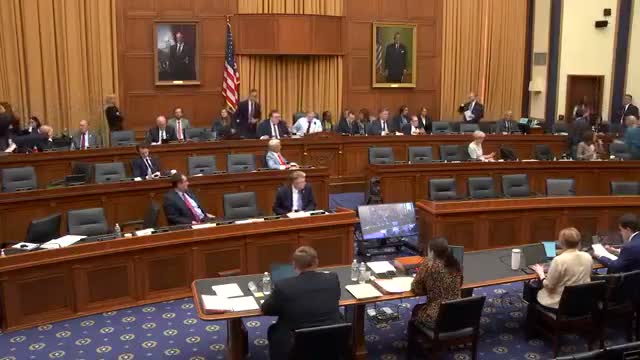
Representative Michael Fitzgerald, the sponsor of HR 62 60, framed his bill as a narrow consumer- and public-safety measure and told the Judiciary Committee it would "define bail bonds as an insurance product," bringing charitable bail funds under insurance regulation and federal background-check requirements under the Federal Comprehensive Crime Control Act of 1994. Fitzgerald said charitable bail funds grew dramatically after 2020 and argued that crowdsourced donations are "nearly indistinguishable from crowdsourcing websites," sometimes enabling defendants accused of violent crimes to be released with little oversight.
Supporters emphasized oversight and accountability. Fitzgerald said the change would not ban nonprofit bail assistance and that family or friends posting cash bail would not be affected. He urged colleagues to support the bill and described his substitute amendment as a technical change to the bill's short title.
Democrats on the committee, including the ranking member, pushed back sharply. Representative [miss Ballant] opposed moving forward on the measure while the committee was debating the Minneapolis fatal shooting of Renee Nicole Goode, calling the timing "completely and totally inappropriate" and arguing the bill would not address root causes of violent crime. Other Democrats warned the measure could sweep in churches, faith groups and small nonprofits that pool resources to help people who cannot afford bail.
The markup produced divided procedural votes and at least one recorded roll call. The committee adopted an amendment in the nature of a substitute and the Clerk reported a tally of recorded votes on the amendment as 15 ayes and 9 noes; the chair declared the amendment agreed to and ordered the bill reported favorably to the House. Committee members were given two days to submit views for the record.
Separately, the committee considered HR 52 13 (identified in debate as the No Federal Funds for Cashless Bail Act), a measure that would bar the attorney general from awarding Byrne JAG grants to jurisdictions that have cashless-bail policies for certain violent offenses. Proponents described Byrne JAG funding as a way to avoid rewarding jurisdictions they view as "soft on crime." Critics, including the ranking member, described the bill as a punitive federal overreach that would gut funding for prosecutors, victim services and local public-safety partnerships.
Representative [from New Jersey] offered an amendment to narrow the bill to preserve Byrne JAG funds for jurisdictions that use risk-based pretrial detention systems; that amendment failed on a recorded vote. The committee ultimately adopted an amendment in the nature of a substitute and ordered HR 52 13 reported favorably after a roll-call vote recorded in the transcript.
What happens next: Both bills were ordered to be reported favorably to the House after committee action. Members will have two days to submit additional views for the committee record before the reports are finalized. The committee's votes do not change underlying law; any final action requires full House consideration and, if passed by the House, reconciliation with any Senate action.
Provenance: topicintro SEG 010, topfinish SEG 2274.
Speakers quoted are from the committee record and named in committee proceedings.
Supporters emphasized oversight and accountability. Fitzgerald said the change would not ban nonprofit bail assistance and that family or friends posting cash bail would not be affected. He urged colleagues to support the bill and described his substitute amendment as a technical change to the bill's short title.
Democrats on the committee, including the ranking member, pushed back sharply. Representative [miss Ballant] opposed moving forward on the measure while the committee was debating the Minneapolis fatal shooting of Renee Nicole Goode, calling the timing "completely and totally inappropriate" and arguing the bill would not address root causes of violent crime. Other Democrats warned the measure could sweep in churches, faith groups and small nonprofits that pool resources to help people who cannot afford bail.
The markup produced divided procedural votes and at least one recorded roll call. The committee adopted an amendment in the nature of a substitute and the Clerk reported a tally of recorded votes on the amendment as 15 ayes and 9 noes; the chair declared the amendment agreed to and ordered the bill reported favorably to the House. Committee members were given two days to submit views for the record.
Separately, the committee considered HR 52 13 (identified in debate as the No Federal Funds for Cashless Bail Act), a measure that would bar the attorney general from awarding Byrne JAG grants to jurisdictions that have cashless-bail policies for certain violent offenses. Proponents described Byrne JAG funding as a way to avoid rewarding jurisdictions they view as "soft on crime." Critics, including the ranking member, described the bill as a punitive federal overreach that would gut funding for prosecutors, victim services and local public-safety partnerships.
Representative [from New Jersey] offered an amendment to narrow the bill to preserve Byrne JAG funds for jurisdictions that use risk-based pretrial detention systems; that amendment failed on a recorded vote. The committee ultimately adopted an amendment in the nature of a substitute and ordered HR 52 13 reported favorably after a roll-call vote recorded in the transcript.
What happens next: Both bills were ordered to be reported favorably to the House after committee action. Members will have two days to submit additional views for the committee record before the reports are finalized. The committee's votes do not change underlying law; any final action requires full House consideration and, if passed by the House, reconciliation with any Senate action.
Provenance: topicintro SEG 010, topfinish SEG 2274.
Speakers quoted are from the committee record and named in committee proceedings.
Don't Miss a Word: See the Full Meeting!
Go beyond summaries. Unlock every video, transcript, and key insight with a Founder Membership.
✓
Get instant access to full meeting videos
✓
Search and clip any phrase from complete transcripts
✓
Receive AI-powered summaries & custom alerts
✓
Enjoy lifetime, unrestricted access to government data
30-day money-back guarantee
