Air pollution board member briefs commission on role; commissioners press for local monitoring and updated rules
January 07, 2026 | Shelby County, Alabama
This article was created by AI summarizing key points discussed. AI makes mistakes, so for full details and context, please refer to the video of the full meeting. Please report any errors so we can fix them. Report an error »
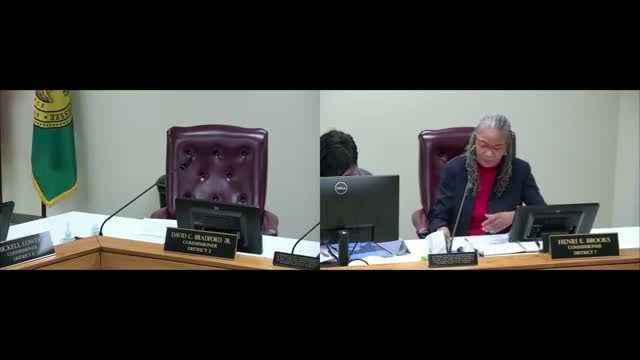
A member of Shelby County's Air Pollution Control Board briefed the General Government committee on Wednesday about the board's duties and invited closer collaboration with county commissioners on air monitoring and local regulatory priorities.
Randall Womack outlined the board's principal roles: hearing appeals of Health Department enforcement actions (such as civil penalty assessments for demolition or renovation notification violations), resolving confidentiality disputes associated with permit applications, reviewing variance requests when regulatory levels differ, and assessing Title V (major source) fee programs that fund the permitting function. He said some of the board's statutory language dates to earlier code adoptions and that appeals and variance requests are relatively uncommon but significant when they occur.
Commissioners used the session to press for two items: (1) a clear timeline for updating local air code provisions that have been historically adopted from state and city code (the county code notes a 2003 amendment of the air-code section); and (2) regular updates on the county's new South Memphis air-monitoring unit, a roughly $400,000 deployment the commission funded. The board member and staff said the health department operates monitoring and that the board can participate in briefings; Commissioners said they will invite air-division staff to future committee meetings for monthly updates and asked the board to help define technical needs and rule gaps.
The committee chair will send a set of follow-up questions to the air-board representative and requested written responses on rule amendments, monitoring plans and how the board incorporates evolving federal and state air standards into local practice.
Randall Womack outlined the board's principal roles: hearing appeals of Health Department enforcement actions (such as civil penalty assessments for demolition or renovation notification violations), resolving confidentiality disputes associated with permit applications, reviewing variance requests when regulatory levels differ, and assessing Title V (major source) fee programs that fund the permitting function. He said some of the board's statutory language dates to earlier code adoptions and that appeals and variance requests are relatively uncommon but significant when they occur.
Commissioners used the session to press for two items: (1) a clear timeline for updating local air code provisions that have been historically adopted from state and city code (the county code notes a 2003 amendment of the air-code section); and (2) regular updates on the county's new South Memphis air-monitoring unit, a roughly $400,000 deployment the commission funded. The board member and staff said the health department operates monitoring and that the board can participate in briefings; Commissioners said they will invite air-division staff to future committee meetings for monthly updates and asked the board to help define technical needs and rule gaps.
The committee chair will send a set of follow-up questions to the air-board representative and requested written responses on rule amendments, monitoring plans and how the board incorporates evolving federal and state air standards into local practice.
Don't Miss a Word: See the Full Meeting!
Go beyond summaries. Unlock every video, transcript, and key insight with a Founder Membership.
✓
Get instant access to full meeting videos
✓
Search and clip any phrase from complete transcripts
✓
Receive AI-powered summaries & custom alerts
✓
Enjoy lifetime, unrestricted access to government data
30-day money-back guarantee
