Consultant: Goldsboro’s reserves are strong but CIP will require short-term reserves and modeled debt
January 05, 2026 | Goldsboro, Wayne County, North Carolina
This article was created by AI summarizing key points discussed. AI makes mistakes, so for full details and context, please refer to the video of the full meeting. Please report any errors so we can fix them. Report an error »
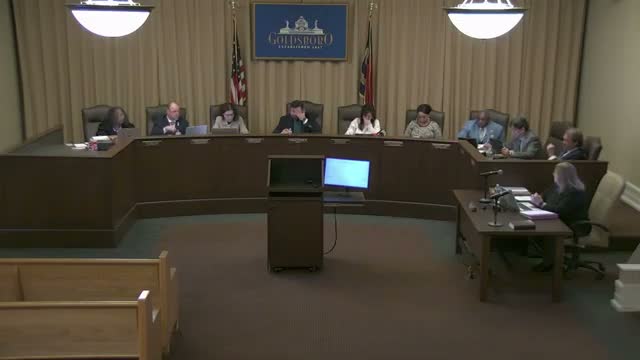
Davenport consultant Ted Cole briefed the Goldsboro City Council on Jan. 5 about the city’s capital improvement plan (CIP), fund balances and debt capacity.
Cole said Goldsboro holds AA credit ratings from Moody’s and Standard & Poor’s and has rebuilt its unassigned fund balance to levels well above the city's policy minimums. He said FY26 includes roughly $8.5 million in capital projects funded by cash, grants and insurance proceeds with no new debt assumed for the year, but that fully funding the FY26 program likely requires roughly $3.3 million of reserves above standard annual funding.
Looking farther ahead, Cole said the city’s funding-level A general fund projects total about $29 million between FY27 and FY32, and the total identified projects across levels A–C are about $52 million. His model assumes issuing about $22 million in new debt (modeled at a conservative 5% interest rate) for high-priority projects and using nearly $7 million in supplemental funding over the decade to keep annual debt service manageable.
Cole and staff recommended the council consider raising the fund-balance target and treating some one-time resources as dedicated capital funding or using a mix of PAYGO (cash) and debt to manage affordability. He noted that maintaining a consistent annual debt-service appropriation (the presentation used $4.0M as a baseline) as older debt rolls off creates capacity for new projects but that budgeting choices, future revenue growth and any tax-rate changes would affect long-term affordability.
Councilmembers asked questions about assumptions (revenue growth, property revaluation cycles), PAYGO versus debt funding, and possible changes to fund-balance policy. Staff said the CIP and debt policy will be discussed at the upcoming retreat and in budget committee meetings.
Next steps: staff and the budget committee will incorporate council priorities and modeled funding options into the retreat and 2026 budget process.
Cole said Goldsboro holds AA credit ratings from Moody’s and Standard & Poor’s and has rebuilt its unassigned fund balance to levels well above the city's policy minimums. He said FY26 includes roughly $8.5 million in capital projects funded by cash, grants and insurance proceeds with no new debt assumed for the year, but that fully funding the FY26 program likely requires roughly $3.3 million of reserves above standard annual funding.
Looking farther ahead, Cole said the city’s funding-level A general fund projects total about $29 million between FY27 and FY32, and the total identified projects across levels A–C are about $52 million. His model assumes issuing about $22 million in new debt (modeled at a conservative 5% interest rate) for high-priority projects and using nearly $7 million in supplemental funding over the decade to keep annual debt service manageable.
Cole and staff recommended the council consider raising the fund-balance target and treating some one-time resources as dedicated capital funding or using a mix of PAYGO (cash) and debt to manage affordability. He noted that maintaining a consistent annual debt-service appropriation (the presentation used $4.0M as a baseline) as older debt rolls off creates capacity for new projects but that budgeting choices, future revenue growth and any tax-rate changes would affect long-term affordability.
Councilmembers asked questions about assumptions (revenue growth, property revaluation cycles), PAYGO versus debt funding, and possible changes to fund-balance policy. Staff said the CIP and debt policy will be discussed at the upcoming retreat and in budget committee meetings.
Next steps: staff and the budget committee will incorporate council priorities and modeled funding options into the retreat and 2026 budget process.
Don't Miss a Word: See the Full Meeting!
Go beyond summaries. Unlock every video, transcript, and key insight with a Founder Membership.
✓
Get instant access to full meeting videos
✓
Search and clip any phrase from complete transcripts
✓
Receive AI-powered summaries & custom alerts
✓
Enjoy lifetime, unrestricted access to government data
30-day money-back guarantee
