Scott County reports widespread arsenic in private wells, expands testing, cites treatment support
December 22, 2025 | Scott County , Minnesota
This article was created by AI summarizing key points discussed. AI makes mistakes, so for full details and context, please refer to the video of the full meeting. Please report any errors so we can fix them. Report an error »
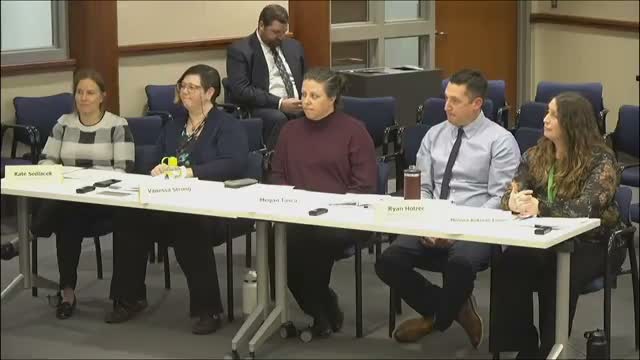
Scott County staff told commissioners that private-well testing and outreach have revealed arsenic in wells across the county and described programs to diagnose and mitigate contamination.
Case with logic, the county’s environmental services manager, explained how residents can obtain well-test kits, submit samples to a lab and receive results. County staff then share aggregate findings with watershed planners and refer homeowners to state agencies when results suggest action.
The panel reviewed a 2019 outreach effort prompted by Department of Health guidance about arsenic. The county mailed targeted postcards to homeowners on wells and received a large response; staff said the combination of targeted messaging and outreach caused a notable spike in test-kit submissions that year. Staff described arsenic as naturally occurring, present across multiple areas and depths, and said the county is encouraging testing and has added arsenic to required tests for new wells.
A participant in the meeting noted that about 25% of testers had results exceeding drinking‑water levels; staff characterized Scott County as having high arsenic occurrence and recommended homeowners pursue testing and treatment when indicated. County staff described treatment options including point-of-use or whole-house reverse-osmosis systems and noted a joint program, funded by the Department of Agriculture and administered regionally with Dakota and Washington counties, that helps residents obtain treatment units. Panelists said the average cost for an RO system for a primary drinking faucet runs about $2,500 and that grant programs can offset that expense for qualifying households.
Staff also discussed other contaminants: the Department of Agriculture identified localized detections of cyanazine and helped arrange mitigation testing and treatment options for affected residents.
Commissioners asked about decommissioning unused wells and how groundwater and stormwater programs interact; staff said the county offers cost‑share decommissioning and integrates groundwater results into the WMO plan update.
The board did not take a formal vote; staff said the testing program, referral process and regional mitigation efforts will continue during the WMO plan update.
Case with logic, the county’s environmental services manager, explained how residents can obtain well-test kits, submit samples to a lab and receive results. County staff then share aggregate findings with watershed planners and refer homeowners to state agencies when results suggest action.
The panel reviewed a 2019 outreach effort prompted by Department of Health guidance about arsenic. The county mailed targeted postcards to homeowners on wells and received a large response; staff said the combination of targeted messaging and outreach caused a notable spike in test-kit submissions that year. Staff described arsenic as naturally occurring, present across multiple areas and depths, and said the county is encouraging testing and has added arsenic to required tests for new wells.
A participant in the meeting noted that about 25% of testers had results exceeding drinking‑water levels; staff characterized Scott County as having high arsenic occurrence and recommended homeowners pursue testing and treatment when indicated. County staff described treatment options including point-of-use or whole-house reverse-osmosis systems and noted a joint program, funded by the Department of Agriculture and administered regionally with Dakota and Washington counties, that helps residents obtain treatment units. Panelists said the average cost for an RO system for a primary drinking faucet runs about $2,500 and that grant programs can offset that expense for qualifying households.
Staff also discussed other contaminants: the Department of Agriculture identified localized detections of cyanazine and helped arrange mitigation testing and treatment options for affected residents.
Commissioners asked about decommissioning unused wells and how groundwater and stormwater programs interact; staff said the county offers cost‑share decommissioning and integrates groundwater results into the WMO plan update.
The board did not take a formal vote; staff said the testing program, referral process and regional mitigation efforts will continue during the WMO plan update.
Don't Miss a Word: See the Full Meeting!
Go beyond summaries. Unlock every video, transcript, and key insight with a Founder Membership.
✓
Get instant access to full meeting videos
✓
Search and clip any phrase from complete transcripts
✓
Receive AI-powered summaries & custom alerts
✓
Enjoy lifetime, unrestricted access to government data
30-day money-back guarantee
