Council adopts updated ethics resolution, tightens filing deadlines and raises small gift thresholds
December 02, 2025 | Columbus City, Bartholomew County, Indiana
This article was created by AI summarizing key points discussed. AI makes mistakes, so for full details and context, please refer to the video of the full meeting. Please report any errors so we can fix them. Report an error »
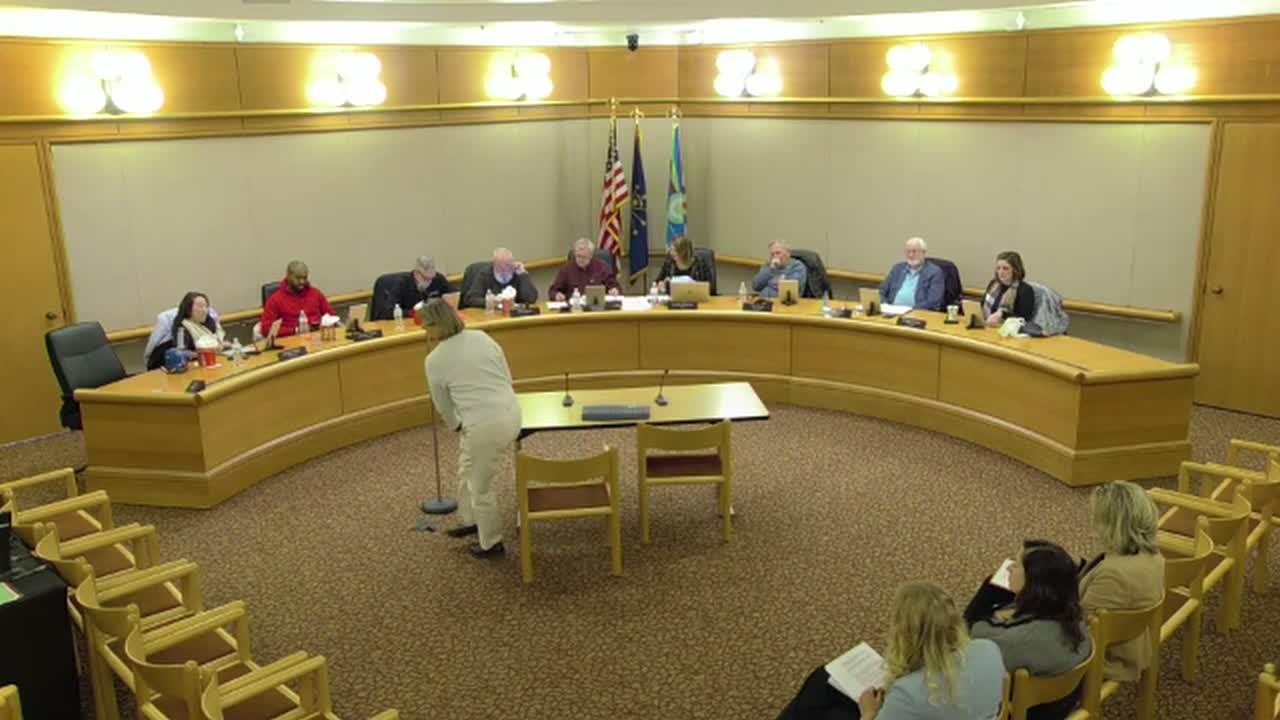
The Columbus Common Council voted unanimously to adopt an updated Code of Conduct and ethics resolution on Dec. 2, revising a document last updated in 2013 to clarify disclosure timing, training requirements and advisory processes for city officials and employees.
Jeff Rucker and Alex Wittig, who led the update, said the goal was to modernize terminology, reduce redundancy and tighten processes so the city can better track conflict-of-interest filings and offer clearer guidance. Rucker said the effort included nine drafts and collaboration with administration staff to ensure the policy can be implemented in practice.
On several points, council members asked how the resolution would be enforced. One council member said "the enforcement record mechanism is the ballot box, ultimately," and presenters noted that state law and the Indiana Criminal Code provide legal enforcement beyond the resolution. Arlette Tinsley, the city’s HR director, said the ethics resolution is referenced in the personnel handbook and that advisory opinions issued by staff "have a protective function" when employees follow them in good faith.
Key changes the council highlighted include a requirement that conflict-of-interest and related forms be submitted annually by Feb. 1 and an explicit provision requiring updated disclosure if a conflict changes during the year. The resolution also tightened training language by adding a biennial refresher requirement and adjusted small-gift thresholds: the single acceptable gift was increased to $50 and the annual amount a person may accept without additional review was raised to $250.
Council and public speakers asked for concrete enforcement mechanisms; presenters said the resolution’s main enforcement comes through state statutes, personnel processes and political accountability, while the new advisory-opinion mechanism and clearer routing of forms should reduce accidental noncompliance.
The resolution passed on a recorded vote of 8-0. Council directed staff to implement the filing and training protocols and to publish guidance on the advisory-opinion process.
Jeff Rucker and Alex Wittig, who led the update, said the goal was to modernize terminology, reduce redundancy and tighten processes so the city can better track conflict-of-interest filings and offer clearer guidance. Rucker said the effort included nine drafts and collaboration with administration staff to ensure the policy can be implemented in practice.
On several points, council members asked how the resolution would be enforced. One council member said "the enforcement record mechanism is the ballot box, ultimately," and presenters noted that state law and the Indiana Criminal Code provide legal enforcement beyond the resolution. Arlette Tinsley, the city’s HR director, said the ethics resolution is referenced in the personnel handbook and that advisory opinions issued by staff "have a protective function" when employees follow them in good faith.
Key changes the council highlighted include a requirement that conflict-of-interest and related forms be submitted annually by Feb. 1 and an explicit provision requiring updated disclosure if a conflict changes during the year. The resolution also tightened training language by adding a biennial refresher requirement and adjusted small-gift thresholds: the single acceptable gift was increased to $50 and the annual amount a person may accept without additional review was raised to $250.
Council and public speakers asked for concrete enforcement mechanisms; presenters said the resolution’s main enforcement comes through state statutes, personnel processes and political accountability, while the new advisory-opinion mechanism and clearer routing of forms should reduce accidental noncompliance.
The resolution passed on a recorded vote of 8-0. Council directed staff to implement the filing and training protocols and to publish guidance on the advisory-opinion process.
Don't Miss a Word: See the Full Meeting!
Go beyond summaries. Unlock every video, transcript, and key insight with a Founder Membership.
✓
Get instant access to full meeting videos
✓
Search and clip any phrase from complete transcripts
✓
Receive AI-powered summaries & custom alerts
✓
Enjoy lifetime, unrestricted access to government data
30-day money-back guarantee
