Polk County staff urge board to sign revised behavioral-health CFAA after statewide negotiations
December 29, 2025 | Polk County, Oregon
This article was created by AI summarizing key points discussed. AI makes mistakes, so for full details and context, please refer to the video of the full meeting. Please report any errors so we can fix them. Report an error »
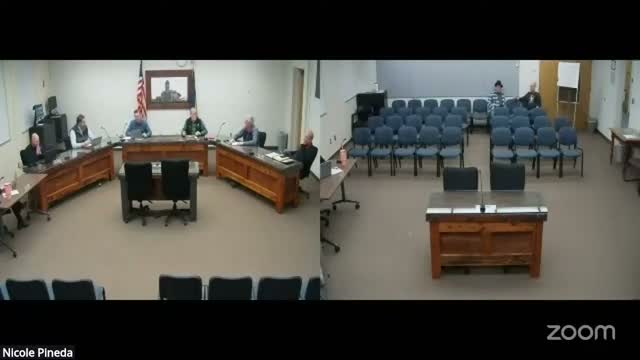
Polk County staff provided the Board of Commissioners an overview of a newly negotiated County Financial Assistance Agreement (CFAA) with the state and recommended the county sign the updated contract once a clean copy arrives.
In a briefing, an unidentified county staff member who led negotiations described how older CFAA versions used dozens of discrete "program elements" tied to specific funding buckets, creating administrative burdens and situations in which money earmarked for one service element could not be reallocated to meet other needs. The staff member said the state proposed replacing that model with a single funding "bucket" and an approved local plan that would outline services and a budget for county delivery. "You develop a local plan that is set to us for approval, and then you can kind of cater what services you need to provide to your local community under a local plan," the staff member said.
County negotiators, the staff member said, pushed back when the state removed language that tied obligations to available funding. "We wouldn't be obligated to use general fund dollars for any services under the contract," the staff member said was clarified in the redline on page 9. The speaker also said the contract was clarified so Polk County would not be required to create or operate residential treatment facilities under the CFAA.
The staff member described a state-proposed hierarchy that would have prioritized "aid and assist" and civil-commitment services so strictly that some counties' CFAA funds could be consumed by those high‑acuity cases, leaving no money for other community behavioral-health services. As negotiated, the contract now ties prioritization and spending to a locally approved plan and budget rather than an inflexible statewide spending hierarchy, the staff member said (page 10 referenced).
Negotiators also secured language narrowing the state's ability to declare breach and to unilaterally change contract components. The staff member said breach determinations now require a "reasonable" standard and the state cannot unilaterally modify a county's approved local plan. The staff member said the term proposed by the state (about five years) was shortened to an 18‑month contract to allow counties to reassess whether the new structure works.
On next steps, the staff member said behavioral-health contract staff had not yet received a final clean copy but expected any executed agreement to be backdated to Jan. 1. "I would, recommend signing the contract as negotiated, assuming the clean copy is reflective of what's been negotiated," the staff member said.
Commissioners and other attendees responded with praise for the unified county negotiating approach and for the work of attorneys and staff from multiple counties. One commissioner noted the extensive taxpayer costs of prolonged negotiations and litigation, saying it likely totaled "tens of millions of dollars across the state". No formal board vote on the CFAA was recorded during the meeting; the staff recommendation was to sign pending verification that the final contract matches the negotiated redline.
The board did not take formal action on the CFAA at the Dec. 24 meeting; staff said they would confirm the clean contract copy and advise the commissioners before execution.
In a briefing, an unidentified county staff member who led negotiations described how older CFAA versions used dozens of discrete "program elements" tied to specific funding buckets, creating administrative burdens and situations in which money earmarked for one service element could not be reallocated to meet other needs. The staff member said the state proposed replacing that model with a single funding "bucket" and an approved local plan that would outline services and a budget for county delivery. "You develop a local plan that is set to us for approval, and then you can kind of cater what services you need to provide to your local community under a local plan," the staff member said.
County negotiators, the staff member said, pushed back when the state removed language that tied obligations to available funding. "We wouldn't be obligated to use general fund dollars for any services under the contract," the staff member said was clarified in the redline on page 9. The speaker also said the contract was clarified so Polk County would not be required to create or operate residential treatment facilities under the CFAA.
The staff member described a state-proposed hierarchy that would have prioritized "aid and assist" and civil-commitment services so strictly that some counties' CFAA funds could be consumed by those high‑acuity cases, leaving no money for other community behavioral-health services. As negotiated, the contract now ties prioritization and spending to a locally approved plan and budget rather than an inflexible statewide spending hierarchy, the staff member said (page 10 referenced).
Negotiators also secured language narrowing the state's ability to declare breach and to unilaterally change contract components. The staff member said breach determinations now require a "reasonable" standard and the state cannot unilaterally modify a county's approved local plan. The staff member said the term proposed by the state (about five years) was shortened to an 18‑month contract to allow counties to reassess whether the new structure works.
On next steps, the staff member said behavioral-health contract staff had not yet received a final clean copy but expected any executed agreement to be backdated to Jan. 1. "I would, recommend signing the contract as negotiated, assuming the clean copy is reflective of what's been negotiated," the staff member said.
Commissioners and other attendees responded with praise for the unified county negotiating approach and for the work of attorneys and staff from multiple counties. One commissioner noted the extensive taxpayer costs of prolonged negotiations and litigation, saying it likely totaled "tens of millions of dollars across the state". No formal board vote on the CFAA was recorded during the meeting; the staff recommendation was to sign pending verification that the final contract matches the negotiated redline.
The board did not take formal action on the CFAA at the Dec. 24 meeting; staff said they would confirm the clean contract copy and advise the commissioners before execution.
View the Full Meeting & All Its Details
This article offers just a summary. Unlock complete video, transcripts, and insights as a Founder Member.
✓
Watch full, unedited meeting videos
✓
Search every word spoken in unlimited transcripts
✓
AI summaries & real-time alerts (all government levels)
✓
Permanent access to expanding government content
30-day money-back guarantee
