Utah startup outlines AI platform to make power grids more resilient and efficient
December 12, 2025 | Utah Business and Commerce, State Agencies, Organizations, Utah Executive Branch, Utah
This article was created by AI summarizing key points discussed. AI makes mistakes, so for full details and context, please refer to the video of the full meeting. Please report any errors so we can fix them. Report an error »
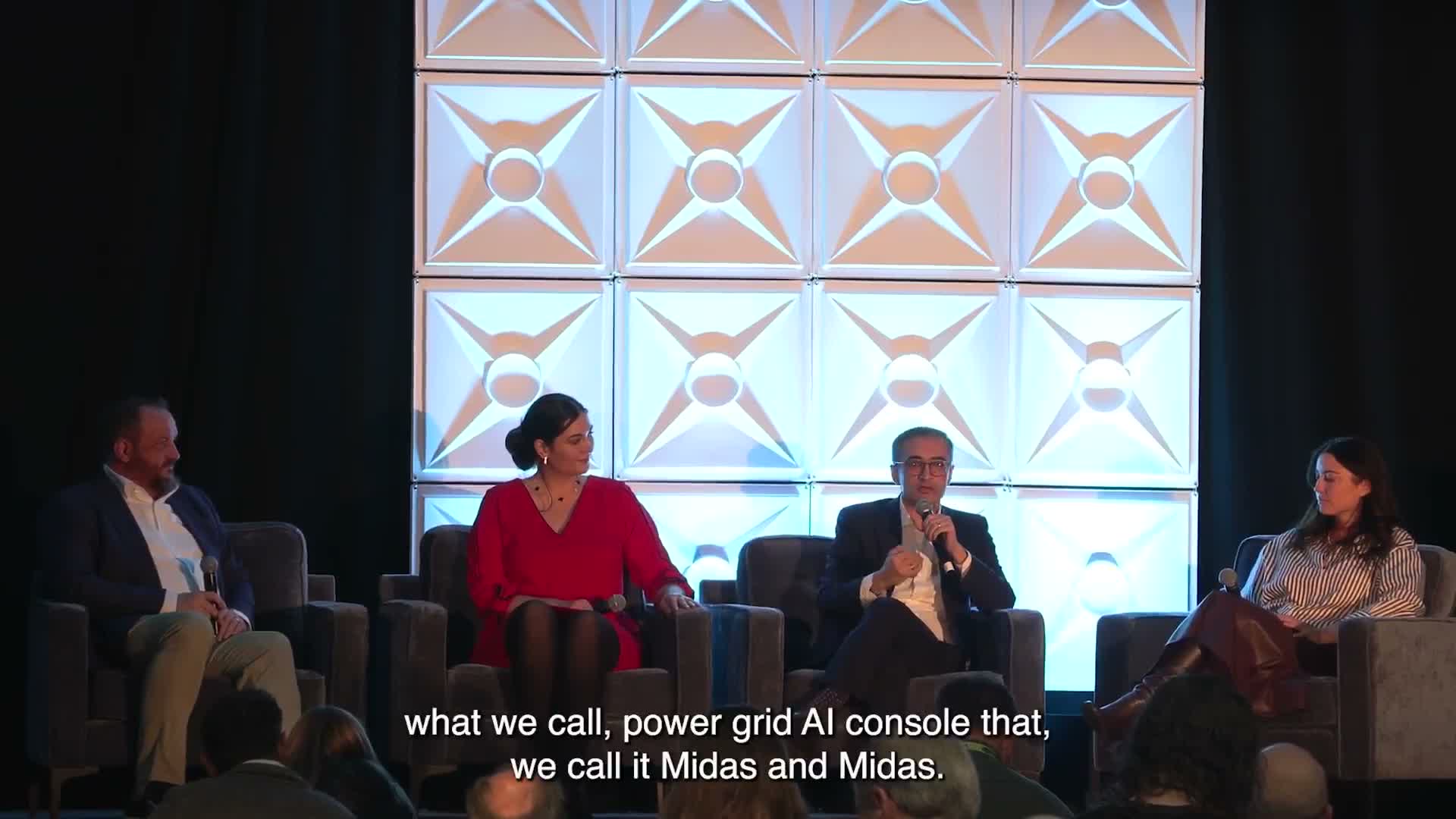
Masud Parvani, founder and president of Bridal Elevated Energy, described how artificial intelligence can help utilities manage new uncertainties on the power grid, including aging equipment, extreme weather and rapidly increasing loads.
“The grid is doing fine,” Parvani said, “but we are integrating a lot of uncertainty … AI helps us bring those data that exist on the grid and make sense of those data for the better operation of the grid.” He said Bridal Elevated built a Power Grid AI console called Midas to aggregate siloed utility data into one interoperable platform and enable analytics ranging from load forecasting to deep reinforcement‑learning control.
Parvani cited an early pilot with Heber Power and Light, which serves Heber City and Midway, saying the utility accepted the risk of using new technology and has seen “up to a tune of 15 to 20% in operating cost on a real time basis.” He acknowledged barriers remain: data integration challenges, convincing operators to trust algorithmic decisions, and regulatory constraints.
Panel moderator Angela Smith, chief operating officer of the Nucleus Institute, framed the discussion by noting Nucleus’s $40,000,000 deep‑tech fund aimed at commercializing university research. Smith also referenced a partnership with Atlassian and Utah’s push to exit data centers by 2025, saying the state completed its cloud migration ahead of schedule.
Parvani said his approach emphasizes tools that keep humans “in the loop” but reduce cognitive load for operators, who often monitor multiple screens, each with independent data streams. He argued the Midas platform’s principal value is interoperability: bringing scattered telemetry, control and operational data into one dashboard so models can act on a comprehensive view.
Parvani also pointed to adoption risks: “There is always a risk in using the first user of a technology,” he said, urging careful pilots with willing utilities. He said regulatory and cultural acceptance will be as important as technical performance.
The panel closed with a focus on human‑centered design for critical infrastructure: panelists said AI should augment operator judgment and improve customer reliability rather than remove human accountability. No formal agreements, votes or regulatory decisions were announced during the session; panelists described pilot work and business plans.
“The grid is doing fine,” Parvani said, “but we are integrating a lot of uncertainty … AI helps us bring those data that exist on the grid and make sense of those data for the better operation of the grid.” He said Bridal Elevated built a Power Grid AI console called Midas to aggregate siloed utility data into one interoperable platform and enable analytics ranging from load forecasting to deep reinforcement‑learning control.
Parvani cited an early pilot with Heber Power and Light, which serves Heber City and Midway, saying the utility accepted the risk of using new technology and has seen “up to a tune of 15 to 20% in operating cost on a real time basis.” He acknowledged barriers remain: data integration challenges, convincing operators to trust algorithmic decisions, and regulatory constraints.
Panel moderator Angela Smith, chief operating officer of the Nucleus Institute, framed the discussion by noting Nucleus’s $40,000,000 deep‑tech fund aimed at commercializing university research. Smith also referenced a partnership with Atlassian and Utah’s push to exit data centers by 2025, saying the state completed its cloud migration ahead of schedule.
Parvani said his approach emphasizes tools that keep humans “in the loop” but reduce cognitive load for operators, who often monitor multiple screens, each with independent data streams. He argued the Midas platform’s principal value is interoperability: bringing scattered telemetry, control and operational data into one dashboard so models can act on a comprehensive view.
Parvani also pointed to adoption risks: “There is always a risk in using the first user of a technology,” he said, urging careful pilots with willing utilities. He said regulatory and cultural acceptance will be as important as technical performance.
The panel closed with a focus on human‑centered design for critical infrastructure: panelists said AI should augment operator judgment and improve customer reliability rather than remove human accountability. No formal agreements, votes or regulatory decisions were announced during the session; panelists described pilot work and business plans.
View the Full Meeting & All Its Details
This article offers just a summary. Unlock complete video, transcripts, and insights as a Founder Member.
✓
Watch full, unedited meeting videos
✓
Search every word spoken in unlimited transcripts
✓
AI summaries & real-time alerts (all government levels)
✓
Permanent access to expanding government content
30-day money-back guarantee
