Utah university researchers outline AI projects, public–private partnerships and student benefits
December 12, 2025 | Utah Business and Commerce, State Agencies, Organizations, Utah Executive Branch, Utah
This article was created by AI summarizing key points discussed. AI makes mistakes, so for full details and context, please refer to the video of the full meeting. Please report any errors so we can fix them. Report an error »
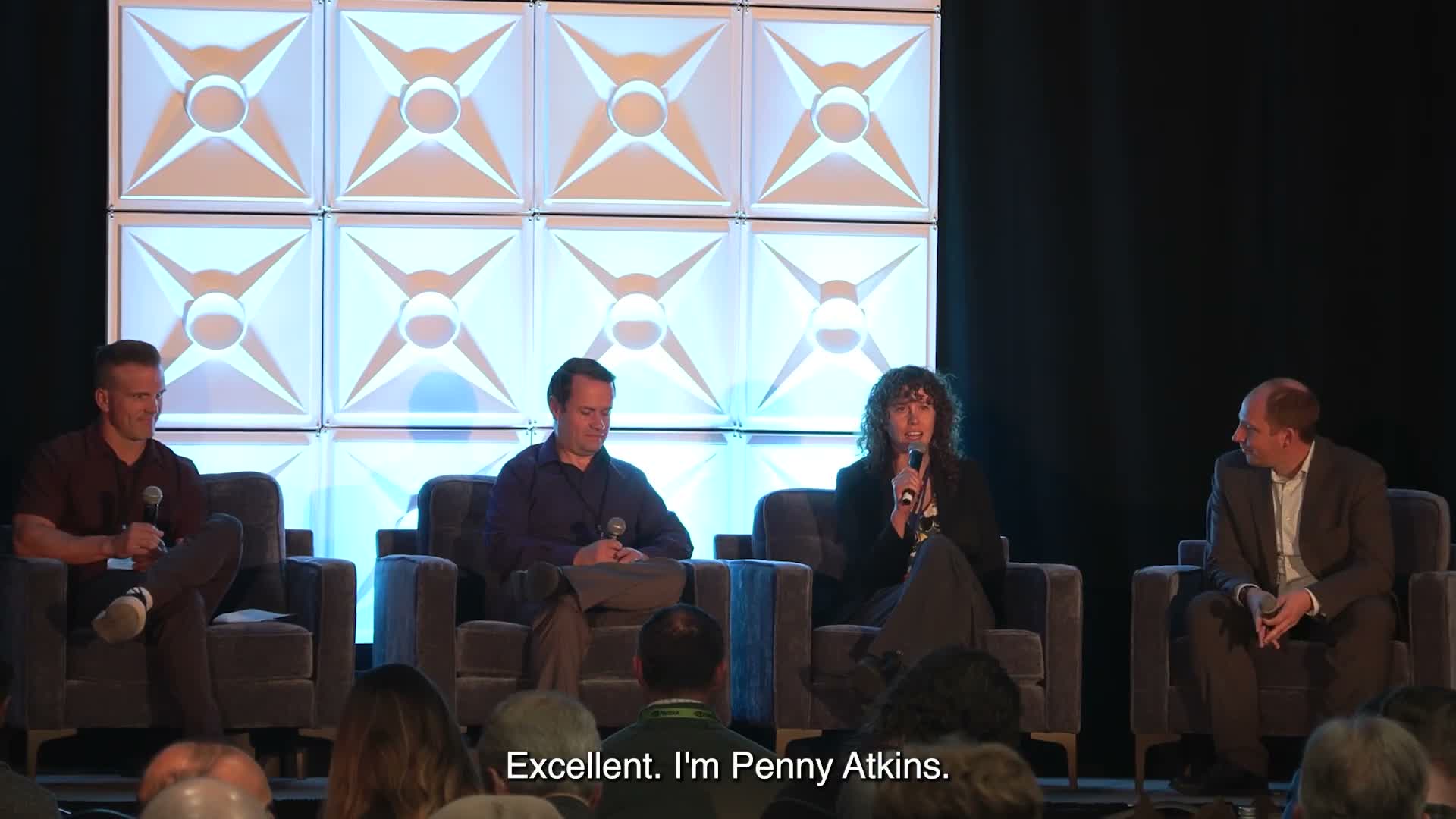
Panelists from the University of Utah, Utah State University and Brigham Young University described a range of AI research projects intended to serve state needs and train students.
"We're bringing folks from across campus together," said Penny Atkins, director of research and science at the Scientific Computing and Imaging (SCI) Institute at the University of Utah, describing the university's Responsible AI initiative and its focus on community engagement. Atkins pointed to environment, health care and teaching and learning as thematic research areas and listed concrete projects, including using satellite images to predict soil moisture and detect invasive species, applying AI in emergency and psychiatric care settings, and a classroom experiment that flipped a chatbot so students "teach the chatbot about math," which Atkins said produced learning gains.
Kevin Moon, director of the Data Science and AI Center at Utah State University, described students working with Bear Lake Watch on sensor data analysis, a student team building river-rapid detection tools for flow monitoring with the USGS, and research on snow-load estimation that has influenced military construction standards. Moon also described the Analytics Solutions Center and Extension partnerships that coach small businesses on whether and how to adopt AI.
Porter Jenkins, assistant professor of computer science at BYU, described research on reducing online toxicity with large-language models, partnerships to improve machine translation for low-resource languages in collaboration with the Church of Jesus Christ of Latter-day Saints, and his work on uncertainty-aware systems that surface model confidence for safety. "We need to think more from a first principle standpoint in a constrained economic environment and actually drive forward progress with inventions and new ideas," Jenkins said when panelists discussed whether academia should mirror industry scaling.
Panelists emphasized experiential learning: internships and student teams in real-world projects that producers jobs and PhD placements, and an SCI Institute hackathon focused on air quality that engaged students across disciplines through no-code and advanced tracks. The panel framed public–private partnerships and a community consortium model as tools to move university research into local practice, while leaving governance, funding details and procurement steps to follow-up conversations.
"We're bringing folks from across campus together," said Penny Atkins, director of research and science at the Scientific Computing and Imaging (SCI) Institute at the University of Utah, describing the university's Responsible AI initiative and its focus on community engagement. Atkins pointed to environment, health care and teaching and learning as thematic research areas and listed concrete projects, including using satellite images to predict soil moisture and detect invasive species, applying AI in emergency and psychiatric care settings, and a classroom experiment that flipped a chatbot so students "teach the chatbot about math," which Atkins said produced learning gains.
Kevin Moon, director of the Data Science and AI Center at Utah State University, described students working with Bear Lake Watch on sensor data analysis, a student team building river-rapid detection tools for flow monitoring with the USGS, and research on snow-load estimation that has influenced military construction standards. Moon also described the Analytics Solutions Center and Extension partnerships that coach small businesses on whether and how to adopt AI.
Porter Jenkins, assistant professor of computer science at BYU, described research on reducing online toxicity with large-language models, partnerships to improve machine translation for low-resource languages in collaboration with the Church of Jesus Christ of Latter-day Saints, and his work on uncertainty-aware systems that surface model confidence for safety. "We need to think more from a first principle standpoint in a constrained economic environment and actually drive forward progress with inventions and new ideas," Jenkins said when panelists discussed whether academia should mirror industry scaling.
Panelists emphasized experiential learning: internships and student teams in real-world projects that producers jobs and PhD placements, and an SCI Institute hackathon focused on air quality that engaged students across disciplines through no-code and advanced tracks. The panel framed public–private partnerships and a community consortium model as tools to move university research into local practice, while leaving governance, funding details and procurement steps to follow-up conversations.
View the Full Meeting & All Its Details
This article offers just a summary. Unlock complete video, transcripts, and insights as a Founder Member.
✓
Watch full, unedited meeting videos
✓
Search every word spoken in unlimited transcripts
✓
AI summaries & real-time alerts (all government levels)
✓
Permanent access to expanding government content
30-day money-back guarantee
