Jones County work session narrows text amendment for data centers as moratorium expiration looms
December 11, 2025 | Jones County, Georgia
This article was created by AI summarizing key points discussed. AI makes mistakes, so for full details and context, please refer to the video of the full meeting. Please report any errors so we can fix them. Report an error »
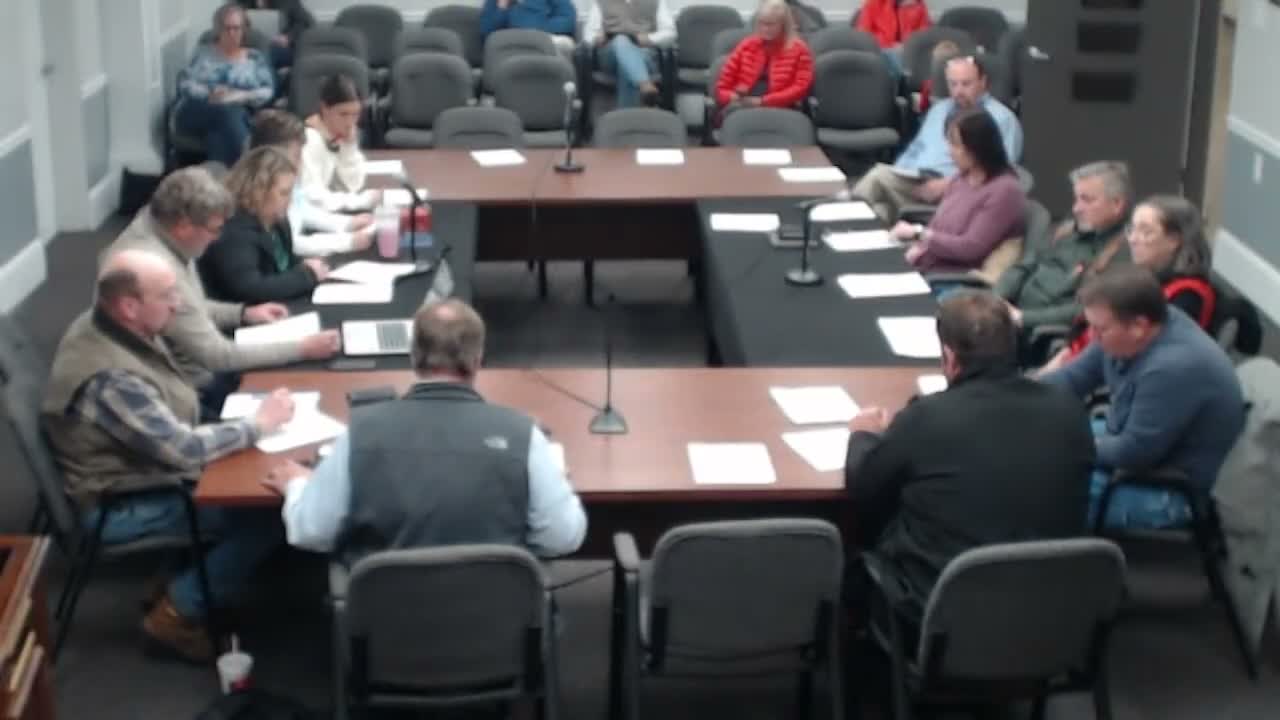
Unidentified Speaker 1 opened a Jones County work session saying the meeting would focus on a text amendment to regulate data centers and asked participants to limit public cross-talk so the planning discussion could proceed. Speaker 3, who presented the draft, said the ordinance creates three categories—minor, major and campus—with conditional-use allowances tied to tier and zoning district.
The draft sets a 75-foot building height limit for data centers outside the industrial park, up from the county's general 35-foot maximum, and proposes tiered lot-size minimums: minor centers would conform to underlying zoning, majors at about 5 acres and campus centers at about 100 acres. "We have the height restriction of 75 feet," Speaker 3 said while reviewing the draft. The presenters recommended applying buffering from residentially zoned property rather than imposing wide separations between industrial tenants, to avoid underutilizing the industrial park.
Noise standards and how to measure ambient conditions drew extended debate. Speaker 3 explained the 45 dB daytime / 35 dB nighttime figures in the draft derived from prior rural applications, while others argued those caps are impractical near busy corridors. Speaker 6 noted that sites adjacent to highways and manufacturing can exceed those levels and suggested baseline modeling tied to each site's ambient readings. Speaker 3 proposed applicants could present baseline noise modeling and be limited to not exceeding that modeled baseline; he also noted "there is an exception for emergency generator testing limited to weekdays between 11 and 1PM."
On-site power and generator use were addressed in the draft. Presenters said alternative on-site generation is permitted but any increase in nonemergency generation beyond the amount approved at the conditional-use phase would require a new conditional-use review. A previously discussed set of emergency-generation hour limits (numbers like 72 continuous hours and 180 hours intermittent were reviewed) will need reconciliation with state rules, staff warned.
Water and environmental protections were also central. The draft requires closed-loop cooling and expressly prohibits evaporative cooling and on-site wells for data-center supply; staff emphasized applicants must provide spill-mitigation plans and that state and federal agencies regulate air and water pollution. Environmental-impact study language was described as revised to require clearer, site-specific information and to reserve county authority to require additional studies (archaeological, natural resources, air, water, energy) where appropriate.
Procedural items and next steps focused on the moratorium that temporarily halts data-center applications. Speaker 3 said the moratorium is expected to expire around Jan. 19 and noted planning commission and board dates (planning commission scheduled to meet Jan. 26; final board action could be Feb. 3 if recommended). Speaker 1 said he had "gotten many emails about extending the moratorium for 180 days" but added, "I don't see any need in extending the moratorium," urging staff to forward the draft to planning and zoning for a recommendation. The group asked county counsel about notification requirements if commissioners choose to advertise a short extension or call a special meeting.
The work session did not record a motion or vote to extend the moratorium; participants agreed to pursue legal guidance about notification and to carry the text-amendment discussion to the planning commission and then back to the board for formal action.
Next steps: staff will seek counsel on moratorium-notification requirements, the planning commission will review the draft on its scheduled date, and the commission’s recommendation will determine whether the board can adopt the text amendment before the moratorium expires.
The draft sets a 75-foot building height limit for data centers outside the industrial park, up from the county's general 35-foot maximum, and proposes tiered lot-size minimums: minor centers would conform to underlying zoning, majors at about 5 acres and campus centers at about 100 acres. "We have the height restriction of 75 feet," Speaker 3 said while reviewing the draft. The presenters recommended applying buffering from residentially zoned property rather than imposing wide separations between industrial tenants, to avoid underutilizing the industrial park.
Noise standards and how to measure ambient conditions drew extended debate. Speaker 3 explained the 45 dB daytime / 35 dB nighttime figures in the draft derived from prior rural applications, while others argued those caps are impractical near busy corridors. Speaker 6 noted that sites adjacent to highways and manufacturing can exceed those levels and suggested baseline modeling tied to each site's ambient readings. Speaker 3 proposed applicants could present baseline noise modeling and be limited to not exceeding that modeled baseline; he also noted "there is an exception for emergency generator testing limited to weekdays between 11 and 1PM."
On-site power and generator use were addressed in the draft. Presenters said alternative on-site generation is permitted but any increase in nonemergency generation beyond the amount approved at the conditional-use phase would require a new conditional-use review. A previously discussed set of emergency-generation hour limits (numbers like 72 continuous hours and 180 hours intermittent were reviewed) will need reconciliation with state rules, staff warned.
Water and environmental protections were also central. The draft requires closed-loop cooling and expressly prohibits evaporative cooling and on-site wells for data-center supply; staff emphasized applicants must provide spill-mitigation plans and that state and federal agencies regulate air and water pollution. Environmental-impact study language was described as revised to require clearer, site-specific information and to reserve county authority to require additional studies (archaeological, natural resources, air, water, energy) where appropriate.
Procedural items and next steps focused on the moratorium that temporarily halts data-center applications. Speaker 3 said the moratorium is expected to expire around Jan. 19 and noted planning commission and board dates (planning commission scheduled to meet Jan. 26; final board action could be Feb. 3 if recommended). Speaker 1 said he had "gotten many emails about extending the moratorium for 180 days" but added, "I don't see any need in extending the moratorium," urging staff to forward the draft to planning and zoning for a recommendation. The group asked county counsel about notification requirements if commissioners choose to advertise a short extension or call a special meeting.
The work session did not record a motion or vote to extend the moratorium; participants agreed to pursue legal guidance about notification and to carry the text-amendment discussion to the planning commission and then back to the board for formal action.
Next steps: staff will seek counsel on moratorium-notification requirements, the planning commission will review the draft on its scheduled date, and the commission’s recommendation will determine whether the board can adopt the text amendment before the moratorium expires.
Don't Miss a Word: See the Full Meeting!
Go beyond summaries. Unlock every video, transcript, and key insight with a Founder Membership.
✓
Get instant access to full meeting videos
✓
Search and clip any phrase from complete transcripts
✓
Receive AI-powered summaries & custom alerts
✓
Enjoy lifetime, unrestricted access to government data
30-day money-back guarantee
