Albany County planning staff to study short-term rentals; commissioners debate definitions and enforcement
December 11, 2025 | Albany County, Wyoming
This article was created by AI summarizing key points discussed. AI makes mistakes, so for full details and context, please refer to the video of the full meeting. Please report any errors so we can fix them. Report an error »
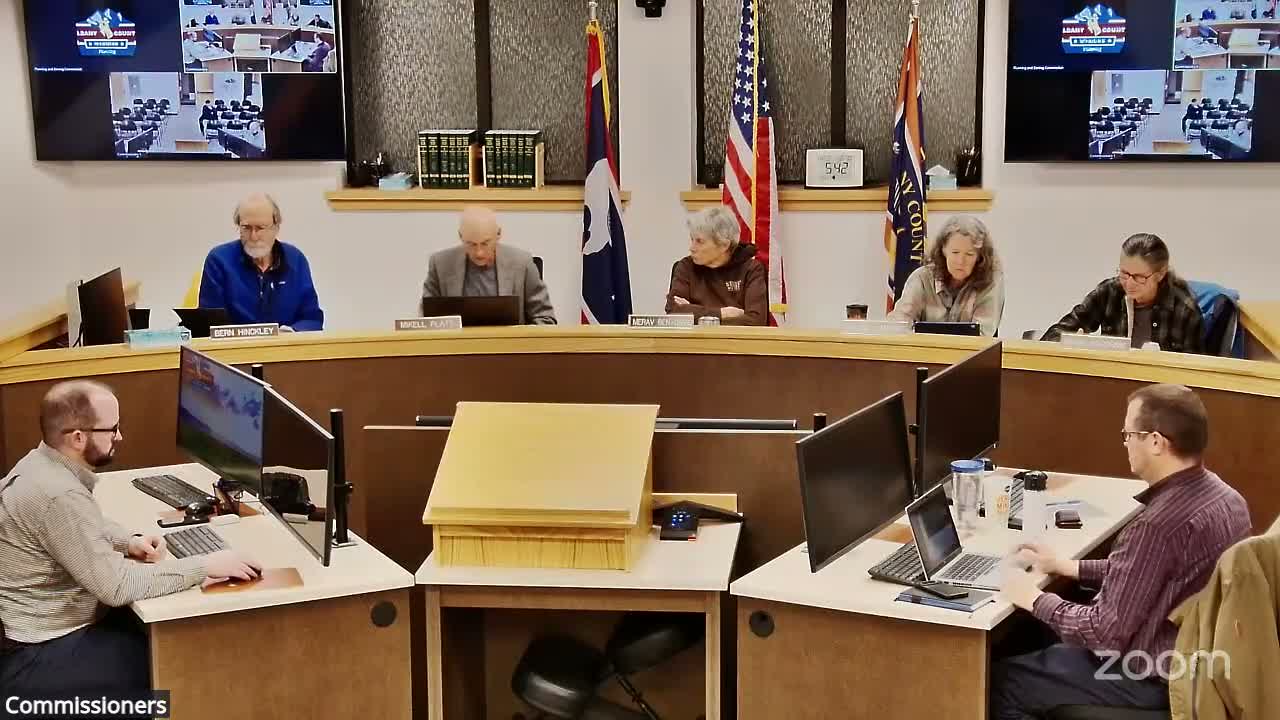
Albany County planning staff on Dec. 10 told the county Planning Commission they have gathered roughly 100 responses to an online survey about short‑term rentals and recommended further work to define the use and how it should appear in the county land‑use table.
Staff said the immediate work items are (1) adopt clear definitions (short‑term rental vs. bed‑and‑breakfast) and (2) decide whether short‑term rentals should be added to the land‑use table and if so under what conditions. Staff described the outreach as preliminary and emphasized the survey is not a scientific sample: most responses so far are from the Centennial ZIP code area.
Commissioners debated two principal approaches: remove the legacy "bed and breakfast" entry and replace it with a broader "short‑term rental" category (using the Wyoming statutory definition for lodging under 30 days), or keep bed‑and‑breakfast distinct and create a precise definition for short‑term rentals. Commissioner Vern argued the current table is inconsistent — "we are requiring you to have a conditional use permit if you do have somebody there looking after the place and providing breakfast and not if you don't" — and suggested adopting the state's short‑term‑rental definition and using conditional use or home‑business standards to address neighborhood impacts.
Legal staff cautioned that the county's zoning statute does not clearly authorize a recurring annual licensing regime for uses; conditional‑use permits and zoning certificates operate differently from a license that could be revoked at renewal. Commissioners also discussed enforcement limits: criminal nuisance and trespass remain a sheriff's office responsibility, and county zoning enforcement cannot perform on‑site searches without cause.
Commissioners asked staff to broaden survey distribution (post on the main county webpage and contact road, water and fire districts) and to consult with local law enforcement about practical enforcement tools. Staff said they will return with survey results, clarified definitions (including the state's lodging‑tax definition), and draft redlines for any recommended comp‑plan amendments or zoning changes for future review and public hearing.
Staff said the immediate work items are (1) adopt clear definitions (short‑term rental vs. bed‑and‑breakfast) and (2) decide whether short‑term rentals should be added to the land‑use table and if so under what conditions. Staff described the outreach as preliminary and emphasized the survey is not a scientific sample: most responses so far are from the Centennial ZIP code area.
Commissioners debated two principal approaches: remove the legacy "bed and breakfast" entry and replace it with a broader "short‑term rental" category (using the Wyoming statutory definition for lodging under 30 days), or keep bed‑and‑breakfast distinct and create a precise definition for short‑term rentals. Commissioner Vern argued the current table is inconsistent — "we are requiring you to have a conditional use permit if you do have somebody there looking after the place and providing breakfast and not if you don't" — and suggested adopting the state's short‑term‑rental definition and using conditional use or home‑business standards to address neighborhood impacts.
Legal staff cautioned that the county's zoning statute does not clearly authorize a recurring annual licensing regime for uses; conditional‑use permits and zoning certificates operate differently from a license that could be revoked at renewal. Commissioners also discussed enforcement limits: criminal nuisance and trespass remain a sheriff's office responsibility, and county zoning enforcement cannot perform on‑site searches without cause.
Commissioners asked staff to broaden survey distribution (post on the main county webpage and contact road, water and fire districts) and to consult with local law enforcement about practical enforcement tools. Staff said they will return with survey results, clarified definitions (including the state's lodging‑tax definition), and draft redlines for any recommended comp‑plan amendments or zoning changes for future review and public hearing.
Don't Miss a Word: See the Full Meeting!
Go beyond summaries. Unlock every video, transcript, and key insight with a Founder Membership.
✓
Get instant access to full meeting videos
✓
Search and clip any phrase from complete transcripts
✓
Receive AI-powered summaries & custom alerts
✓
Enjoy lifetime, unrestricted access to government data
30-day money-back guarantee
