Witnesses clash over Palestinian Authority payments, settler violence and policy remedies
December 11, 2025 | Foreign Affairs: House Committee, Standing Committees - House & Senate, Congressional Hearings Compilation, Legislative, Federal
This article was created by AI summarizing key points discussed. AI makes mistakes, so for full details and context, please refer to the video of the full meeting. Please report any errors so we can fix them. Report an error »
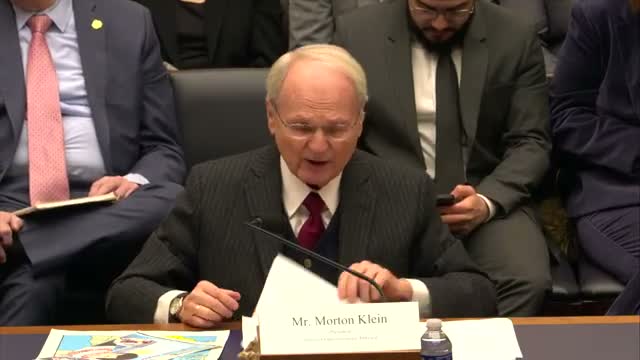
A House Foreign Affairs Subcommittee hearing on Judea and Samaria featured contested claims about Palestinian Authority practices and recent trends in settler expansion and violence, with members asking witnesses what policy levers Congress should use.
Morton Klein alleged the Palestinian Authority continues to fund militants, telling the committee that "The Palestinian Authority pays $400,000,000 a year for lifetime pensions for a terrorist to murder Jews and Christians." Professor Eugene Kantorovich echoed skepticism that reforms represented a substantive change in PA behavior, saying reforms appeared aimed at complying with U.S. legislation rather than reflecting a change of heart.
Representative Dean raised recent settlement activity and violence: he told the committee that "in August 2025, the Israeli government granted approval to build more than 3,000 housing units in Ewan" and that "October 25 saw the highest levels of settler violence in the West Bank on record, totaling 264 attacks." Dr. John Alterman acknowledged rising settler violence and said parts of the evidence are in classified channels, but he agreed that extremist elements exist on both sides.
Members debated appropriate congressional responses. Some, including witnesses aligned with Morton Klein's view, urged conditioning funds and demanding charter changes and other reforms in Palestinian institutions. Others cautioned that verification is necessary and that the U.S. should preserve pathways for negotiations while pressing for de‑escalation and improvements in daily life.
The hearing recorded no formal policymaking votes. Members asked witnesses to provide further documentation and to answer additional questions in writing.
Morton Klein alleged the Palestinian Authority continues to fund militants, telling the committee that "The Palestinian Authority pays $400,000,000 a year for lifetime pensions for a terrorist to murder Jews and Christians." Professor Eugene Kantorovich echoed skepticism that reforms represented a substantive change in PA behavior, saying reforms appeared aimed at complying with U.S. legislation rather than reflecting a change of heart.
Representative Dean raised recent settlement activity and violence: he told the committee that "in August 2025, the Israeli government granted approval to build more than 3,000 housing units in Ewan" and that "October 25 saw the highest levels of settler violence in the West Bank on record, totaling 264 attacks." Dr. John Alterman acknowledged rising settler violence and said parts of the evidence are in classified channels, but he agreed that extremist elements exist on both sides.
Members debated appropriate congressional responses. Some, including witnesses aligned with Morton Klein's view, urged conditioning funds and demanding charter changes and other reforms in Palestinian institutions. Others cautioned that verification is necessary and that the U.S. should preserve pathways for negotiations while pressing for de‑escalation and improvements in daily life.
The hearing recorded no formal policymaking votes. Members asked witnesses to provide further documentation and to answer additional questions in writing.
View the Full Meeting & All Its Details
This article offers just a summary. Unlock complete video, transcripts, and insights as a Founder Member.
✓
Watch full, unedited meeting videos
✓
Search every word spoken in unlimited transcripts
✓
AI summaries & real-time alerts (all government levels)
✓
Permanent access to expanding government content
30-day money-back guarantee
