Housing updates: staff show bond spending, HUD program stability and options for creating ongoing housing funding
December 19, 2025 | Flagstaff City, Coconino County, Arizona
This article was created by AI summarizing key points discussed. AI makes mistakes, so for full details and context, please refer to the video of the full meeting. Please report any errors so we can fix them. Report an error »
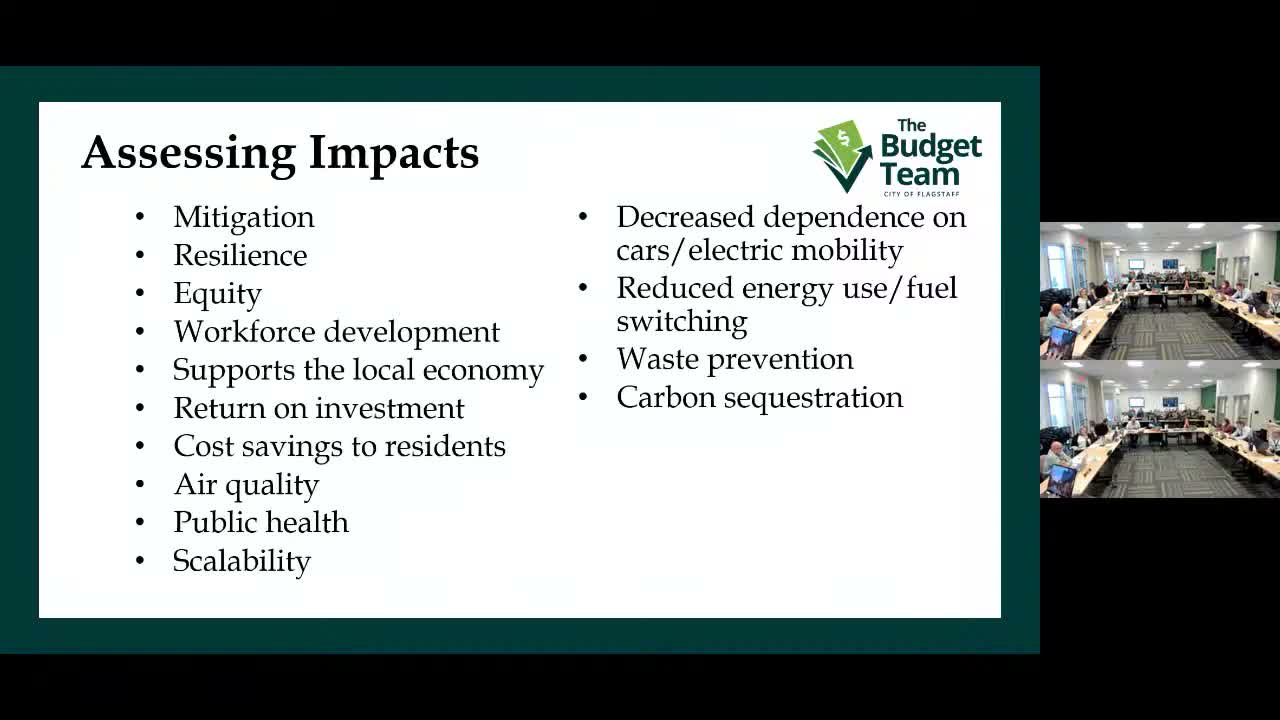
Housing staff used the retreat to present an overview of the city’s housing programs, bond-funded incentives and options for longer-term funding.
The presentation separated the city’s two housing roles: the HUD-funded housing authority (public housing and Section 8 vouchers) and a new housing-investment team that handles bonding, incentives and owner-occupancy programs. Staff showed historical revenue lines for the housing authority and said voucher program administrative funding and housing-assistance payments have grown in recent years largely because rents have risen, not because HUD changed rules. Staff reported the public-housing and voucher programs were stable at the time of the briefing.
On bond-funded programs, staff gave a progress update: rental-incentive funding, adaptive-reuse commitments and home-buyer assistance have been allocated across projects; some previously committed funds were reallocated when project scopes changed. Staff also said 22% of newly built units since the 10-year plan adoption (through Sept. 30) were affordable — measured as delivered units, not promises — and that forthcoming projects may raise that percentage.
Policy choices for council: housing staff asked whether council would like staff to develop three specific budget proposals for future consideration: (1) establishing an ongoing dedicated funding source for housing (tax, fee or other), (2) expanding the city’s incentive policy to support middle-market and workforce housing including regulatory incentives, and (3) exploring employer-assisted housing for city employees (or a broader employer-assisted program). Staff said each option would require analysis of legal and funding constraints and that they could prepare feasibility studies and program-level cost estimates if council wants to proceed.
Council interest: several members asked for options and expressed interest in exploring a dedicated ongoing funding source and expanded incentive policy; some also suggested feasibility and legal analysis before advancing employer-assisted housing ideas.
Next steps: staff will return with proposals and cost estimates for council direction if the council requests them during the budget process.
The presentation separated the city’s two housing roles: the HUD-funded housing authority (public housing and Section 8 vouchers) and a new housing-investment team that handles bonding, incentives and owner-occupancy programs. Staff showed historical revenue lines for the housing authority and said voucher program administrative funding and housing-assistance payments have grown in recent years largely because rents have risen, not because HUD changed rules. Staff reported the public-housing and voucher programs were stable at the time of the briefing.
On bond-funded programs, staff gave a progress update: rental-incentive funding, adaptive-reuse commitments and home-buyer assistance have been allocated across projects; some previously committed funds were reallocated when project scopes changed. Staff also said 22% of newly built units since the 10-year plan adoption (through Sept. 30) were affordable — measured as delivered units, not promises — and that forthcoming projects may raise that percentage.
Policy choices for council: housing staff asked whether council would like staff to develop three specific budget proposals for future consideration: (1) establishing an ongoing dedicated funding source for housing (tax, fee or other), (2) expanding the city’s incentive policy to support middle-market and workforce housing including regulatory incentives, and (3) exploring employer-assisted housing for city employees (or a broader employer-assisted program). Staff said each option would require analysis of legal and funding constraints and that they could prepare feasibility studies and program-level cost estimates if council wants to proceed.
Council interest: several members asked for options and expressed interest in exploring a dedicated ongoing funding source and expanded incentive policy; some also suggested feasibility and legal analysis before advancing employer-assisted housing ideas.
Next steps: staff will return with proposals and cost estimates for council direction if the council requests them during the budget process.
Don't Miss a Word: See the Full Meeting!
Go beyond summaries. Unlock every video, transcript, and key insight with a Founder Membership.
✓
Get instant access to full meeting videos
✓
Search and clip any phrase from complete transcripts
✓
Receive AI-powered summaries & custom alerts
✓
Enjoy lifetime, unrestricted access to government data
30-day money-back guarantee
