Southborough health board hears risks to water, homes from proposed battery storage at 150 Porterville Road
December 09, 2025 | Town of Southborough, Worcester County, Massachusetts
This article was created by AI summarizing key points discussed. AI makes mistakes, so for full details and context, please refer to the video of the full meeting. Please report any errors so we can fix them. Report an error »
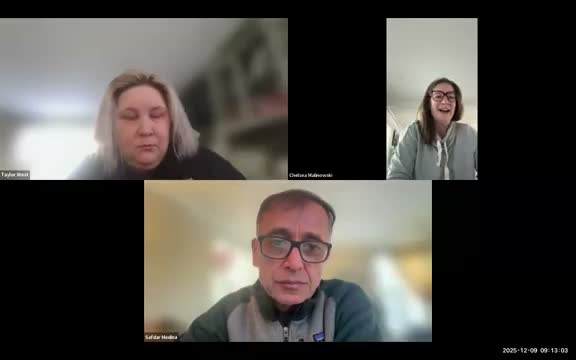
Mike Hugo, the director of strategy and government relations at the Massachusetts Association of Health Boards, told the Town of Southborough Board of Health on Dec. 25 that boards of health have uniquely broad legal authority to act when a facility may pose a public‑health nuisance. “You have totally unique powers that are, to a large degree, not challengeable anywhere except in court,” Hugo said during a 20‑minute briefing.
Hugo briefed the board on hazards tied to battery energy storage systems — including thermal runaway, fire, smoke constituents and off‑gassing — and on legal standards boards use to judge nuisances and “noisome trade.” He told the board that collecting robust data is essential to withstand legal challenge: “The more data that you collect and talk about, the more difficult it will be for anybody who’s opposing your action to file a case in court.”
The presentation focused on a proposed battery installation sited at 150 Porterville Road, directly across from the town transfer station. Hugo cited nearby assets and distances included in developer materials and the briefing slides: Sudbury Reservoir (cited as roughly 702 to 1,519 feet from parts of the site), an office building about 175 feet away, and a daycare about 204 feet away. He warned that runoff from firefighting water could carry constituents toward the reservoir and that continuous cooling fans can create chronic noise that may disturb sleep.
A resident who identified herself as Mimi said the developers’ filing lists the project at “a 14.616 megawatt hour station.” Hugo described that size as “pretty small” in industry terms but said outcomes depend on design, siting and emergency response planning. He recommended the board obtain studies on off‑gassing and fire suppression, and offered MAHB’s help locating peer‑reviewed research.
Board members and staff pressed Hugo on empirical risk rates, acceptable sizing thresholds and firefighting resource needs. Chelsea, the meeting chair, noted she was particularly concerned about the drinking‑water supply. Hugo said some installations can be sited with limited impact, but others have caused multi‑day fires and substantial smoke; he urged the board to evaluate traffic, access, proximity to sensitive receptors, and environmental justice implications.
Several participants asked about updated safety features introduced since high‑profile incidents in 2019; Lisa, a resident, reminded the board that new suppression and monitoring systems have been added industry‑wide and urged the board to review post‑2019 standards. Hugo acknowledged technological improvements but said they do not eliminate all risks and that local conditions — site layout, distance to residences, and water resources — will drive the board’s analysis.
Hugo said he planned to attend the Planning Board and ZBA discussions and offered to share slides and studies with staff. The ZBA was scheduled to hear the developer’s application the next day. The board did not take an enforcement action during the meeting; Hugo and staff suggested follow‑up research and data collection as next steps.
Hugo briefed the board on hazards tied to battery energy storage systems — including thermal runaway, fire, smoke constituents and off‑gassing — and on legal standards boards use to judge nuisances and “noisome trade.” He told the board that collecting robust data is essential to withstand legal challenge: “The more data that you collect and talk about, the more difficult it will be for anybody who’s opposing your action to file a case in court.”
The presentation focused on a proposed battery installation sited at 150 Porterville Road, directly across from the town transfer station. Hugo cited nearby assets and distances included in developer materials and the briefing slides: Sudbury Reservoir (cited as roughly 702 to 1,519 feet from parts of the site), an office building about 175 feet away, and a daycare about 204 feet away. He warned that runoff from firefighting water could carry constituents toward the reservoir and that continuous cooling fans can create chronic noise that may disturb sleep.
A resident who identified herself as Mimi said the developers’ filing lists the project at “a 14.616 megawatt hour station.” Hugo described that size as “pretty small” in industry terms but said outcomes depend on design, siting and emergency response planning. He recommended the board obtain studies on off‑gassing and fire suppression, and offered MAHB’s help locating peer‑reviewed research.
Board members and staff pressed Hugo on empirical risk rates, acceptable sizing thresholds and firefighting resource needs. Chelsea, the meeting chair, noted she was particularly concerned about the drinking‑water supply. Hugo said some installations can be sited with limited impact, but others have caused multi‑day fires and substantial smoke; he urged the board to evaluate traffic, access, proximity to sensitive receptors, and environmental justice implications.
Several participants asked about updated safety features introduced since high‑profile incidents in 2019; Lisa, a resident, reminded the board that new suppression and monitoring systems have been added industry‑wide and urged the board to review post‑2019 standards. Hugo acknowledged technological improvements but said they do not eliminate all risks and that local conditions — site layout, distance to residences, and water resources — will drive the board’s analysis.
Hugo said he planned to attend the Planning Board and ZBA discussions and offered to share slides and studies with staff. The ZBA was scheduled to hear the developer’s application the next day. The board did not take an enforcement action during the meeting; Hugo and staff suggested follow‑up research and data collection as next steps.
Don't Miss a Word: See the Full Meeting!
Go beyond summaries. Unlock every video, transcript, and key insight with a Founder Membership.
✓
Get instant access to full meeting videos
✓
Search and clip any phrase from complete transcripts
✓
Receive AI-powered summaries & custom alerts
✓
Enjoy lifetime, unrestricted access to government data
30-day money-back guarantee
