Appeals Court Probes Whether Subsequent‑offender Proceeding Was a Plea or a Trial in Commonwealth v. Vincent
December 11, 2025 | Judicial - Appeals Court Oral Arguments, Judicial, Massachusetts
This article was created by AI summarizing key points discussed. AI makes mistakes, so for full details and context, please refer to the video of the full meeting. Please report any errors so we can fix them. Report an error »
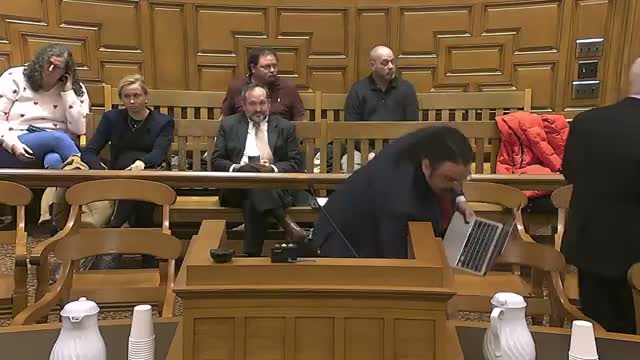
The Massachusetts Appeals Court took extended argument Dec. 11 in Commonwealth v. Vincent over two linked questions: whether Brook Lane is a 'public way' under settled tests, and whether the subsequent‑offender portion of the record amounted to an inadequately documented plea or a trial that the court may decide on the existing record.
Defense counsel Joseph Schneiderman focused his opening on the objective indicia of a public way, arguing Brook Lane lacked paving, municipal maintenance, and public amenities that courts have deemed important. He urged the panel not to accept Route 8 as a newly raised theory on appeal and contended that the Commonwealth’s case relied on speculation rather than admissible proof.
Schneiderman also argued the later colloquy concerning waiver of a jury and proceeding under sentence failed to establish that Mr. Vincent knowingly, voluntarily and intelligently waived rights attendant to a subsequent‑offender proceeding. He said this type of adequacy question is typically developed in a motion for a new trial or motion to withdraw a plea and that remand to the trial court may be required.
The Commonwealth’s Laurie Levinson said the record shows the judge repeatedly treated the matter as a trial, that counsel and the defendant indicated an intent to proceed under sentence in open court, and that photographs and testimony (including a trial judge’s finding that Route 8 is a public way) supported the public‑way determination. Levinson conceded the proceeding was confusing at times but argued the inquiry should focus on whether there was a substantial risk of a miscarriage of justice.
Panel questions centered on how to treat an ambiguous docket entry that refers to a waiver of trial and a finding of guilt and whether the court can decide voluntariness of a plea colloquy in the first instance or must remand for a trial‑court determination. The justices also pressed counsel on Lattimore and related precedents for what objective facts are required to show a way is open to the public.
The panel thanked counsel and submitted the case for decision.
Defense counsel Joseph Schneiderman focused his opening on the objective indicia of a public way, arguing Brook Lane lacked paving, municipal maintenance, and public amenities that courts have deemed important. He urged the panel not to accept Route 8 as a newly raised theory on appeal and contended that the Commonwealth’s case relied on speculation rather than admissible proof.
Schneiderman also argued the later colloquy concerning waiver of a jury and proceeding under sentence failed to establish that Mr. Vincent knowingly, voluntarily and intelligently waived rights attendant to a subsequent‑offender proceeding. He said this type of adequacy question is typically developed in a motion for a new trial or motion to withdraw a plea and that remand to the trial court may be required.
The Commonwealth’s Laurie Levinson said the record shows the judge repeatedly treated the matter as a trial, that counsel and the defendant indicated an intent to proceed under sentence in open court, and that photographs and testimony (including a trial judge’s finding that Route 8 is a public way) supported the public‑way determination. Levinson conceded the proceeding was confusing at times but argued the inquiry should focus on whether there was a substantial risk of a miscarriage of justice.
Panel questions centered on how to treat an ambiguous docket entry that refers to a waiver of trial and a finding of guilt and whether the court can decide voluntariness of a plea colloquy in the first instance or must remand for a trial‑court determination. The justices also pressed counsel on Lattimore and related precedents for what objective facts are required to show a way is open to the public.
The panel thanked counsel and submitted the case for decision.
Don't Miss a Word: See the Full Meeting!
Go beyond summaries. Unlock every video, transcript, and key insight with a Founder Membership.
✓
Get instant access to full meeting videos
✓
Search and clip any phrase from complete transcripts
✓
Receive AI-powered summaries & custom alerts
✓
Enjoy lifetime, unrestricted access to government data
30-day money-back guarantee
