Department outlines OSEP findings and corrective actions; discontinues duplicate mediation process and advances fiscal and tracking systems
December 05, 2025 | Education, Iowa Department of (IDOE), Executive, Iowa
This article was created by AI summarizing key points discussed. AI makes mistakes, so for full details and context, please refer to the video of the full meeting. Please report any errors so we can fix them. Report an error »
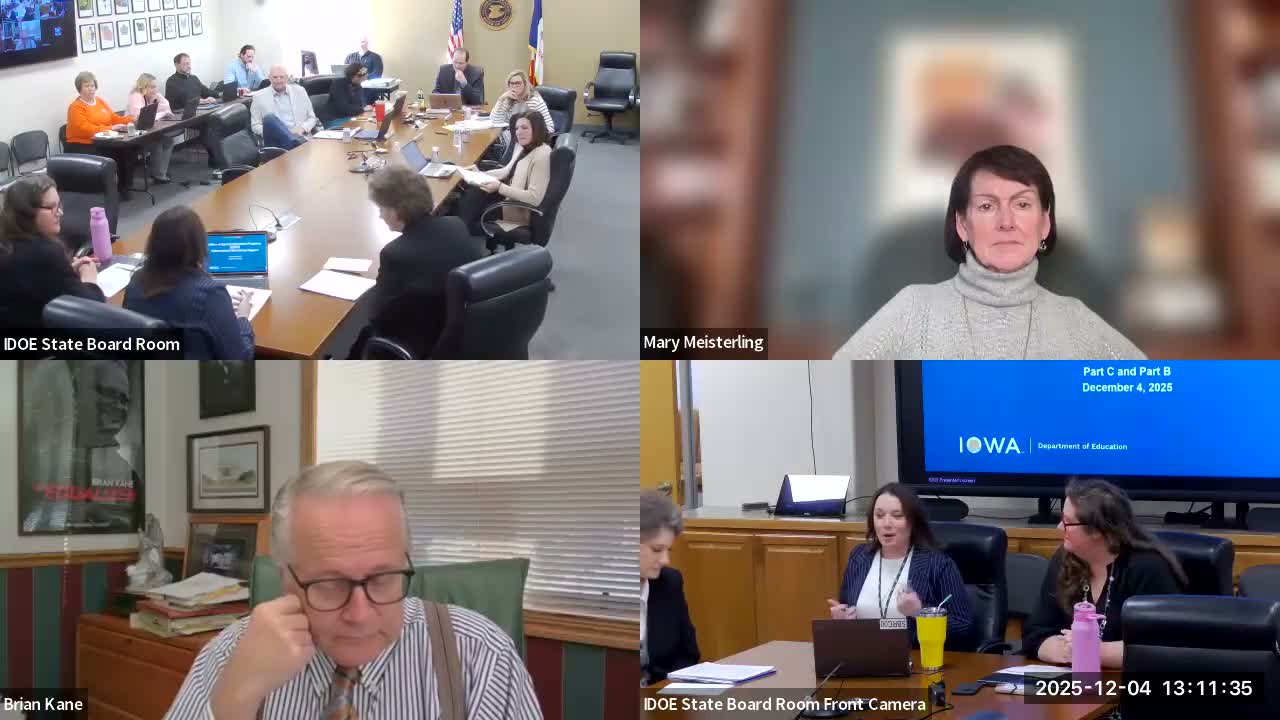
Department leaders briefed the board on findings from the U.S. Department of Education's Office of Special Education Programs (OSEP) differentiated monitoring and support reviews for Part C (birth'age 3) and Part B (age 3'21) services, noting both strengths and corrective actions.
OSEP's review recognized system strengths: Iowa's integrated data and continuous improvement system (Achieve), cross-agency coordination for birth-to-21 services, and robust technical assistance and professional development. But the reports also identified findings in general supervision: fiscal management (ensuring federal funds are used as payer of last resort and improving subrecipient fiscal reporting), timely identification and correction of noncompliance, dispute-resolution procedures (potential timeline conflicts when multiple mediation processes existed), and discipline practices ("informal removals" and coding that can mask suspensions and delay procedural safeguards).
Department officials said they implemented corrective actions while OSEP was still on-site, including directing Area Education Agencies to discontinue their separate mediation processes to eliminate potential delays or conflicts in families' procedural-timeline rights. The department described steps to tighten fiscal monitoring: replacing the paper-based subgrant application with an online fiscal application, hiring a dedicated fiscal monitor, and establishing a multi-year fiscal review cycle for AEAs and districts.
Officials also described staffing increases for dispute resolution and investigation (new mediator and state investigator positions) and enhancements to the Achieve system to track complaints, monitoring timelines and documentation, as well as planned webinars and guidance on discipline coding and in/out-of-school suspension definitions. The department said many corrective actions were already underway or completed and committed to provide OSEP with updated evidence of remediation.
Board members asked for clarity on timelines, the intersection of new state legislation (House File 2612) with the monitoring findings, and how the department will ensure districts receive guidance and training; department leaders pointed to ongoing webinars, regional coaching, and the Achieve enhancements as primary supports.
OSEP's review recognized system strengths: Iowa's integrated data and continuous improvement system (Achieve), cross-agency coordination for birth-to-21 services, and robust technical assistance and professional development. But the reports also identified findings in general supervision: fiscal management (ensuring federal funds are used as payer of last resort and improving subrecipient fiscal reporting), timely identification and correction of noncompliance, dispute-resolution procedures (potential timeline conflicts when multiple mediation processes existed), and discipline practices ("informal removals" and coding that can mask suspensions and delay procedural safeguards).
Department officials said they implemented corrective actions while OSEP was still on-site, including directing Area Education Agencies to discontinue their separate mediation processes to eliminate potential delays or conflicts in families' procedural-timeline rights. The department described steps to tighten fiscal monitoring: replacing the paper-based subgrant application with an online fiscal application, hiring a dedicated fiscal monitor, and establishing a multi-year fiscal review cycle for AEAs and districts.
Officials also described staffing increases for dispute resolution and investigation (new mediator and state investigator positions) and enhancements to the Achieve system to track complaints, monitoring timelines and documentation, as well as planned webinars and guidance on discipline coding and in/out-of-school suspension definitions. The department said many corrective actions were already underway or completed and committed to provide OSEP with updated evidence of remediation.
Board members asked for clarity on timelines, the intersection of new state legislation (House File 2612) with the monitoring findings, and how the department will ensure districts receive guidance and training; department leaders pointed to ongoing webinars, regional coaching, and the Achieve enhancements as primary supports.
View the Full Meeting & All Its Details
This article offers just a summary. Unlock complete video, transcripts, and insights as a Founder Member.
✓
Watch full, unedited meeting videos
✓
Search every word spoken in unlimited transcripts
✓
AI summaries & real-time alerts (all government levels)
✓
Permanent access to expanding government content
30-day money-back guarantee
