West Bend to pilot Elmbrook small-group math framework after declines in elementary scores
December 03, 2025 | West Bend School District, School Districts, Wisconsin
This article was created by AI summarizing key points discussed. AI makes mistakes, so for full details and context, please refer to the video of the full meeting. Please report any errors so we can fix them. Report an error »
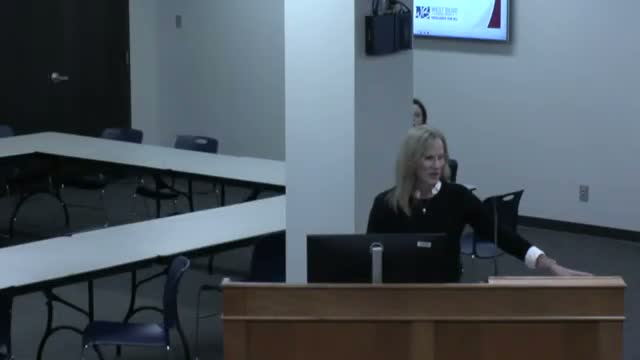
Kelly Downs, director of curriculum instruction for the West Bend School District, told the curriculum committee Dec. 2 that the district will pilot a small-group math framework copied from Elmbrook School District to address declining elementary math proficiency.
Downs said K–5 STAR proficiency averaged an 11-point decline from 2024 to 2025, and district Forward exam math scores for third and fifth graders averaged a five-point decrease from 2023 to 2024. "We needed to do something in our elementary schools," Downs said, and she described a framework that blends Young's brain-research ideas with John Hattie's meta-analysis to raise instructional effect sizes in short, targeted small groups.
The pilot began with volunteer teachers (two per elementary building when the initiative started) who received initial training on Oct. 21 from Elmbrook authors Julie Wessel and Michelle Malinin and follow-up coaching from Sarah Fleishman of CESA 6. Downs said the program's seven components emphasize activating prior knowledge, explicit vocabulary instruction and short (10–15 minute) targeted lessons; Elmbrook reported large post-assessment gains in their district.
West Bend's immediate aims this year are to have teachers implement the framework, use formative assessment to group students, and begin tracking outcomes; the stated quantitative target for students in interventions is a 10% proficiency increase on STAR and Forward assessments. Downs said teachers will be offered at least one individual coaching session and that district leaders will videotape selected lessons to build a library of model instruction.
Funding to support substitute coverage during training was provided in part by a Kepner grant, Downs said. Next steps include continued coaching, expansion of anchor classrooms, and a design process that includes participating teachers' input on how the model scales.
What happens next: teachers will continue coaching sessions through the spring, principals will support implementation, and staff will report back to the committee with early formative results and recommendations for a rollout plan.
Downs said K–5 STAR proficiency averaged an 11-point decline from 2024 to 2025, and district Forward exam math scores for third and fifth graders averaged a five-point decrease from 2023 to 2024. "We needed to do something in our elementary schools," Downs said, and she described a framework that blends Young's brain-research ideas with John Hattie's meta-analysis to raise instructional effect sizes in short, targeted small groups.
The pilot began with volunteer teachers (two per elementary building when the initiative started) who received initial training on Oct. 21 from Elmbrook authors Julie Wessel and Michelle Malinin and follow-up coaching from Sarah Fleishman of CESA 6. Downs said the program's seven components emphasize activating prior knowledge, explicit vocabulary instruction and short (10–15 minute) targeted lessons; Elmbrook reported large post-assessment gains in their district.
West Bend's immediate aims this year are to have teachers implement the framework, use formative assessment to group students, and begin tracking outcomes; the stated quantitative target for students in interventions is a 10% proficiency increase on STAR and Forward assessments. Downs said teachers will be offered at least one individual coaching session and that district leaders will videotape selected lessons to build a library of model instruction.
Funding to support substitute coverage during training was provided in part by a Kepner grant, Downs said. Next steps include continued coaching, expansion of anchor classrooms, and a design process that includes participating teachers' input on how the model scales.
What happens next: teachers will continue coaching sessions through the spring, principals will support implementation, and staff will report back to the committee with early formative results and recommendations for a rollout plan.
Don't Miss a Word: See the Full Meeting!
Go beyond summaries. Unlock every video, transcript, and key insight with a Founder Membership.
✓
Get instant access to full meeting videos
✓
Search and clip any phrase from complete transcripts
✓
Receive AI-powered summaries & custom alerts
✓
Enjoy lifetime, unrestricted access to government data
30-day money-back guarantee
