Bristol warns biosolids compost sales halted amid PFAS concerns; disposal options costly
December 11, 2025 | Town of Bristol, Bristol County, Rhode Island
This article was created by AI summarizing key points discussed. AI makes mistakes, so for full details and context, please refer to the video of the full meeting. Please report any errors so we can fix them. Report an error »
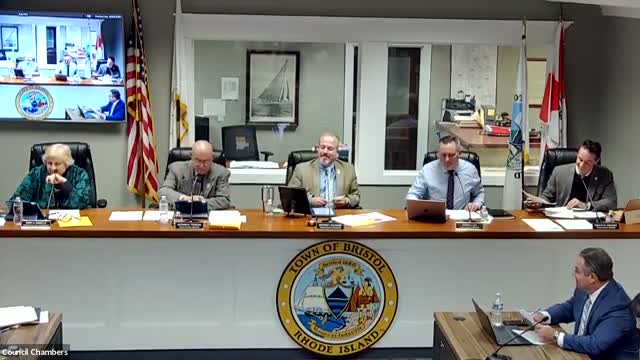
Town staff told the council on Dec. 10 that the market for Bristol's biosolids compost has collapsed in recent months amid increased attention to PFAS (per- and polyfluoroalkyl substances) in biosolids and new restrictions in neighboring states. The town’s administrator reported that buyers have declined to purchase the product, Massachusetts has new PFAS sampling requirements, and Maine and Connecticut have curtailed land application of biosolids.
Public works and administration staff said Rhode Island currently has no numeric PFAS limit for biosolids, and Bristol’s product remains in compliance with Rhode Island Department of Environmental Management permits. Nevertheless, the regional market has eroded: companies that previously accepted the town’s compost are no longer buying, and states that formerly accepted material have tightened rules.
The administrator said the town has explored alternatives, including incineration or sending material to distant processors; current estimates for those options range into the "hundreds of thousands" of dollars annually for disposal. The town is the only community in the state still producing biosolids compost; others are incinerating or shipping their biosolids to processors out of state.
Council received the report and voted to receive and file pending staff follow-up; administrators said they will return with detailed options, costs, and proposed budgets at a future meeting. The town emphasized it remains in regulatory compliance while it develops plans.
Next steps: Administration and DPW will evaluate disposal alternatives, cost implications for the FY26/27 budget, and regulatory pathways. Staff will present specific options and estimated costs at a subsequent meeting.
Public works and administration staff said Rhode Island currently has no numeric PFAS limit for biosolids, and Bristol’s product remains in compliance with Rhode Island Department of Environmental Management permits. Nevertheless, the regional market has eroded: companies that previously accepted the town’s compost are no longer buying, and states that formerly accepted material have tightened rules.
The administrator said the town has explored alternatives, including incineration or sending material to distant processors; current estimates for those options range into the "hundreds of thousands" of dollars annually for disposal. The town is the only community in the state still producing biosolids compost; others are incinerating or shipping their biosolids to processors out of state.
Council received the report and voted to receive and file pending staff follow-up; administrators said they will return with detailed options, costs, and proposed budgets at a future meeting. The town emphasized it remains in regulatory compliance while it develops plans.
Next steps: Administration and DPW will evaluate disposal alternatives, cost implications for the FY26/27 budget, and regulatory pathways. Staff will present specific options and estimated costs at a subsequent meeting.
Don't Miss a Word: See the Full Meeting!
Go beyond summaries. Unlock every video, transcript, and key insight with a Founder Membership.
✓
Get instant access to full meeting videos
✓
Search and clip any phrase from complete transcripts
✓
Receive AI-powered summaries & custom alerts
✓
Enjoy lifetime, unrestricted access to government data
30-day money-back guarantee
