Advisory committee affirms vision and goals for Joliet comprehensive plan; workshops scheduled
December 04, 2025 | Joliet, Will County, Illinois
This article was created by AI summarizing key points discussed. AI makes mistakes, so for full details and context, please refer to the video of the full meeting. Please report any errors so we can fix them. Report an error »
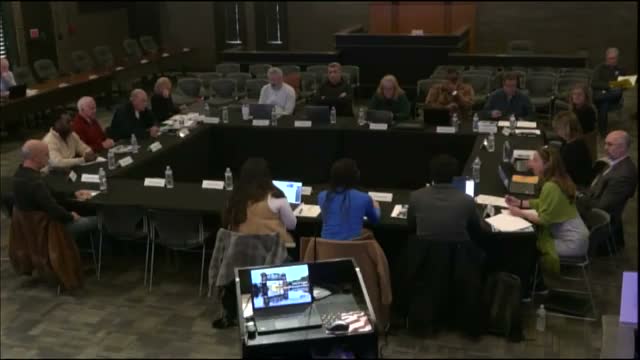
Leslie Roth, a consultant for the Joliet comprehensive plan, told the Comprehensive Plan Advisory Committee at its Dec. 3 meeting that public engagement has produced "over 2,000 unique responses" to a community survey and that the first public workshop drew more than 100 participants at Joliet West High School.
Roth described the phase‑2 document of the plan — the vision, goals and objectives — as the foundation for phase 3, which will develop key recommendations and an implementation roadmap. "This is a really pivotal time in the comprehensive planning process," she said, emphasizing that the vision statements will serve as the project's "North Star." She also noted that outreach materials were translated and that mailers were used to reach underrepresented ZIP codes.
Committee members broadly confirmed the plan's draft goals across topic areas. Roth read aloud goals for economic development (including bolstering downtown and expanding access to quality jobs), land use (character areas and a parcel-level future land use map), multimodal mobility, environment and natural resources, utilities and infrastructure, and people, culture and belonging. On housing and neighborhoods, members emphasized implementation feasibility and prioritized a focus on near‑term, achievable steps.
On transportation, members urged clearer language and asked that goals specify which users — motorists, freight, transit riders, cyclists and pedestrians — are intended to benefit. One advisory member suggested elevating safety as an overarching goal applying to all roadway users. Roth and other committee members agreed to refine wording and to ensure the vision statement is visible alongside the goals in presentation materials.
Members discussed environmental concerns raised by maps Roth displayed, including floodplain and ecological corridors and a PM2.5 air‑quality overlay that showed higher particulates in parts of the north side. Several members recommended explicit objectives tying transportation strategies (for example, reduced truck idling) to air‑quality and public‑health goals.
Broadband and utilities also drew attention. Committee members asked the plan to highlight equitable access and to encourage multiple internet providers to improve service and affordability; Roth said the document already includes a broadband map and related objectives and that staff will expand language on providers and service gaps.
Roth presented seven priorities distilled from engagement — strong neighborhoods and housing stability; economic opportunity and local investment; mobility and access; cultural and historic identity; sustainability and resilience; equity; and community connection — and said staff will convene working groups in December and January and hold a public workshop in February to rank and refine those priorities.
Staff announced thematic workshops beginning the week after the meeting (housing and neighborhoods, transportation/mobility) and said the second public workshop is likely to be held at the downtown Joliet Library (Burnham Room) on either Feb. 11 or Feb. 26, with preregistration requested. Officials also announced a Jan. 9 roundtable with school district superintendents to discuss land use and workforce implications.
Procedural business at the meeting included approval of the Nov. 5, 2025 minutes by roll call and a motion to adjourn at the end of the agenda; the chair noted there were no public comments on agenda items.
Next steps: staff and consultant teams said they will refine goals and objectives language, prepare more granular (parcel-level) future land‑use mapping for developers and planners, convene working groups and host the February public workshop to develop the phase‑3 key recommendations that will feed the draft plan and subsequent implementation work.
Roth described the phase‑2 document of the plan — the vision, goals and objectives — as the foundation for phase 3, which will develop key recommendations and an implementation roadmap. "This is a really pivotal time in the comprehensive planning process," she said, emphasizing that the vision statements will serve as the project's "North Star." She also noted that outreach materials were translated and that mailers were used to reach underrepresented ZIP codes.
Committee members broadly confirmed the plan's draft goals across topic areas. Roth read aloud goals for economic development (including bolstering downtown and expanding access to quality jobs), land use (character areas and a parcel-level future land use map), multimodal mobility, environment and natural resources, utilities and infrastructure, and people, culture and belonging. On housing and neighborhoods, members emphasized implementation feasibility and prioritized a focus on near‑term, achievable steps.
On transportation, members urged clearer language and asked that goals specify which users — motorists, freight, transit riders, cyclists and pedestrians — are intended to benefit. One advisory member suggested elevating safety as an overarching goal applying to all roadway users. Roth and other committee members agreed to refine wording and to ensure the vision statement is visible alongside the goals in presentation materials.
Members discussed environmental concerns raised by maps Roth displayed, including floodplain and ecological corridors and a PM2.5 air‑quality overlay that showed higher particulates in parts of the north side. Several members recommended explicit objectives tying transportation strategies (for example, reduced truck idling) to air‑quality and public‑health goals.
Broadband and utilities also drew attention. Committee members asked the plan to highlight equitable access and to encourage multiple internet providers to improve service and affordability; Roth said the document already includes a broadband map and related objectives and that staff will expand language on providers and service gaps.
Roth presented seven priorities distilled from engagement — strong neighborhoods and housing stability; economic opportunity and local investment; mobility and access; cultural and historic identity; sustainability and resilience; equity; and community connection — and said staff will convene working groups in December and January and hold a public workshop in February to rank and refine those priorities.
Staff announced thematic workshops beginning the week after the meeting (housing and neighborhoods, transportation/mobility) and said the second public workshop is likely to be held at the downtown Joliet Library (Burnham Room) on either Feb. 11 or Feb. 26, with preregistration requested. Officials also announced a Jan. 9 roundtable with school district superintendents to discuss land use and workforce implications.
Procedural business at the meeting included approval of the Nov. 5, 2025 minutes by roll call and a motion to adjourn at the end of the agenda; the chair noted there were no public comments on agenda items.
Next steps: staff and consultant teams said they will refine goals and objectives language, prepare more granular (parcel-level) future land‑use mapping for developers and planners, convene working groups and host the February public workshop to develop the phase‑3 key recommendations that will feed the draft plan and subsequent implementation work.
Don't Miss a Word: See the Full Meeting!
Go beyond summaries. Unlock every video, transcript, and key insight with a Founder Membership.
✓
Get instant access to full meeting videos
✓
Search and clip any phrase from complete transcripts
✓
Receive AI-powered summaries & custom alerts
✓
Enjoy lifetime, unrestricted access to government data
30-day money-back guarantee
