Beaverton School District mounts $200,000 pantry push, expands pop-up markets and grocery-card aid
November 21, 2025 | Beaverton SD 48J, School Districts, Oregon
This article was created by AI summarizing key points discussed. AI makes mistakes, so for full details and context, please refer to the video of the full meeting. Please report any errors so we can fix them. Report an error »
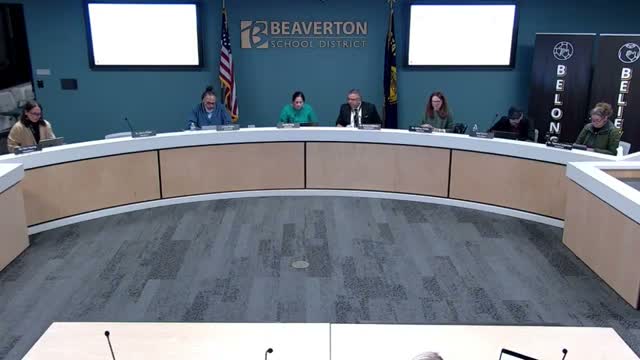
Shelly Bailey Shaw, who led BSD’s rapid food-insecurity response, told the school board the district “initiated a food pantry project 2 weeks ago” with plans to “purchase roughly $200,000 worth of staples to fill 56 pantries district wide.” The effort — directed by the superintendent — aimed to place a pantry in every school plus Career and Technical programs and early college sites so families in need would have local access to groceries.
The district leaned on community partners and district staff to move supplies quickly. Shaw said Grocery Outlet owners Todd and Jen Walsh prioritized BSD orders; the store received three of four semi-truck deliveries that week that had to be sorted over four days. District volunteers — roughly 60 staff members plus some spouses — packed about 123 pallets that were handed to the district courier team for delivery to schools.
Nut graf: The one-time $200,000 purchase complements BSD’s existing network of 11 public pop-up markets operated with Oregon Food Bank and Urban Gleaners; presenters said last year the Oregon Food Bank distributed about $168,000 worth of food through BSD and Urban Gleaners distributed more than $1,000,000. BEF’s Feed My Body, Feed My Brain campaign is raising grocery gift cards for families identified by school counselors; Shaw said BEF had raised about $65,000 toward a $100,000 goal.
District officials described a range of locally tailored distribution methods. "Some have invited community to come in and just choose and take what they want," Shaw said about practices at smaller schools such as McKay, while other schools compile ordered boxes assembled by parent-teacher organizations. Information about markets and pantries is shared through ParentSquare, school newsletters and direct outreach from counselors and social workers.
Board members pressed on logistics and sustainability. When asked how long pantry supplies will last and whether the district will provide ongoing funding, Shaw said, “As far as district funds, we don’t have any plans at this point to put more district funds toward that,” and encouraged principals to continue seeking community donations if local needs persist. The superintendent had authorized the one-time $200,000 allocation for the immediate response.
Directors and administrators credited Grocery Outlet, the courier team and hundreds of staff-hours for enabling the fast rollout and noted that schools choose distribution methods that best meet their communities’ needs. The district also emphasized that food markets are open to the public and a twelfth market at Aloha High School is reserved for students.
Ending: Board members thanked staff and community partners and requested follow-up updates from principals on how long supplies last and whether additional supports are needed. No formal board action was taken during the presentation; staff will continue to implement distribution and report back to the board.
The district leaned on community partners and district staff to move supplies quickly. Shaw said Grocery Outlet owners Todd and Jen Walsh prioritized BSD orders; the store received three of four semi-truck deliveries that week that had to be sorted over four days. District volunteers — roughly 60 staff members plus some spouses — packed about 123 pallets that were handed to the district courier team for delivery to schools.
Nut graf: The one-time $200,000 purchase complements BSD’s existing network of 11 public pop-up markets operated with Oregon Food Bank and Urban Gleaners; presenters said last year the Oregon Food Bank distributed about $168,000 worth of food through BSD and Urban Gleaners distributed more than $1,000,000. BEF’s Feed My Body, Feed My Brain campaign is raising grocery gift cards for families identified by school counselors; Shaw said BEF had raised about $65,000 toward a $100,000 goal.
District officials described a range of locally tailored distribution methods. "Some have invited community to come in and just choose and take what they want," Shaw said about practices at smaller schools such as McKay, while other schools compile ordered boxes assembled by parent-teacher organizations. Information about markets and pantries is shared through ParentSquare, school newsletters and direct outreach from counselors and social workers.
Board members pressed on logistics and sustainability. When asked how long pantry supplies will last and whether the district will provide ongoing funding, Shaw said, “As far as district funds, we don’t have any plans at this point to put more district funds toward that,” and encouraged principals to continue seeking community donations if local needs persist. The superintendent had authorized the one-time $200,000 allocation for the immediate response.
Directors and administrators credited Grocery Outlet, the courier team and hundreds of staff-hours for enabling the fast rollout and noted that schools choose distribution methods that best meet their communities’ needs. The district also emphasized that food markets are open to the public and a twelfth market at Aloha High School is reserved for students.
Ending: Board members thanked staff and community partners and requested follow-up updates from principals on how long supplies last and whether additional supports are needed. No formal board action was taken during the presentation; staff will continue to implement distribution and report back to the board.
View the Full Meeting & All Its Details
This article offers just a summary. Unlock complete video, transcripts, and insights as a Founder Member.
✓
Watch full, unedited meeting videos
✓
Search every word spoken in unlimited transcripts
✓
AI summaries & real-time alerts (all government levels)
✓
Permanent access to expanding government content
30-day money-back guarantee
